
Catalogue Search | MBRL


Are you sure you want to remove the book from the shelf?

{{itemTitle}}
86
result(s) for
"Feldman, Marian H."
Sort by:


The Middle East Galleries at the University of Pennsylvania Museum of Archaeology and Anthropology, Philadelphia: A Permanent Exhibit
The University of Pennsylvania Museum of Archaeology and Anthropology informally called the Penn Museum, occupies a storied place in the development of the discipline of Near Eastern Studies in the US. Well over a century after its founding, the Penn Museum has embarked on a major campaign to transform the museum, both physically through a reinstallation of all its galleries, and conceptually, in a greater integration of its teaching, research, and public faces. In April 2018, the first phase of this transformation was unveiled with the new Middle East galleries (the Levantine, Egyptian, African, and Meso-american galleries are slated for future reinstallation). Occupying 6,000 ft.2 in three main spaces, an entirely redesigned and reimagined exhibition space now houses around 1,200 objects from Iran and Iraq.
Journal Article

Communities of Style
Communities of Style examines the production and circulation of portable luxury goods throughout the Levant in the early Iron Age (1200–600 BCE). In particular it focuses on how societies in flux came together around the material effects of art and style, and their role in collective memory. Marian H. Feldman brings her dual training as an art historian and an archaeologist to bear on the networks that were essential to the movement and trade of luxury goods—particularly ivories and metal works—and how they were also central to community formation. The interest in, and relationships to, these art objects, Feldman shows, led to wide-ranging interactions and transformations both within and between communities. Ultimately, she argues, the production and movement of luxury goods in the period demands a rethinking of our very geo-cultural conception of the Levant, as well as its influence beyond what have traditionally been thought of as its borders.
eBook

Rethinking the Canon of Ancient Near Eastern Art in the Internet Age
The formation and perpetuation of intellectual canons – as consensually agreed upon corpora considered most significant and representative of a time, place or person – rely heavily on closed systems of knowledge. The bound-paper book exemplifies such a closed system and has been a primary form of constructing and disseminating canons of ancient works. The Internet, however, challenges the very structuring principles of knowledge production inherent in books, offering potentially boundless networks of unorchestrated knowledge bits. As scholars, teachers, and students turn more to the Internet for publication, research, and learning, sharply defined canons face disruption. This article analyzes some of the structuring principles of knowledge production and dissemination in the specific case of ancient Near Eastern art, first considering traditional book-based textbooks. These textbooks follow a model of linear temporal development that unfolds from the first to the last page. It then explores the academic trend toward edited, multi-authored compendia as a concurrent development with the open-ended, networked structure of the Internet. Both vehicles of knowledge production offer more diverse sets of works and multivocality; the Internet in particular permits a radical break from authored and edited narratives. Last, the article considers some of the possibilities, as well as limitations, inherent in the Internet, presenting several existing Internet-based platforms with a specific focus on pedogogy, in order to consider the implications and consequences for knowledge production and dissemination in the Digital Age.
Journal Article
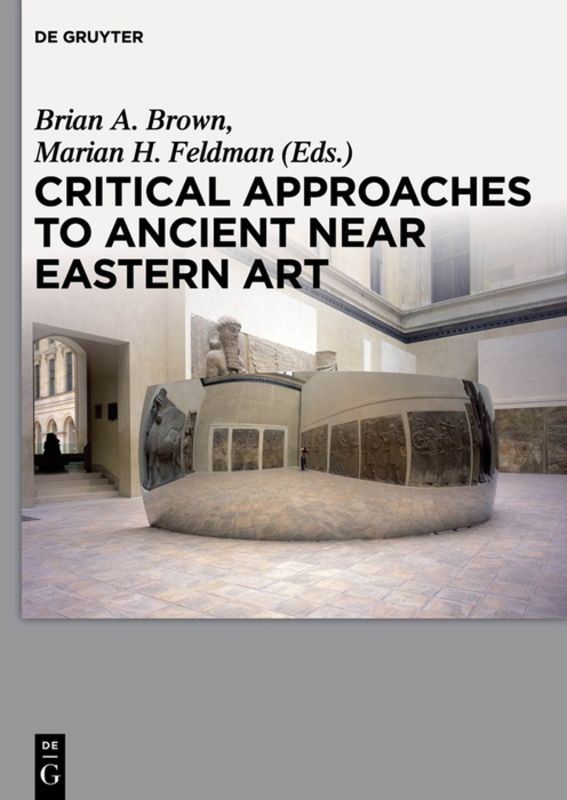
Critical Approaches to Ancient Near Eastern Art
This volume assembles more than 30 articles focusing on the visual, material, and environmental arts of the Ancient Near East. Specific case studies range temporally from the fourth millennium up to the Hellenistic period and geographically from Iran to the eastern Mediterranean. Contributions apply innovative theoretical and methodological approaches to archaeological evidence and critically examine the historiography of the discipline itself. Not intended to be comprehensive, the volume instead captures a cross-section of the field of Ancient Near Eastern art history as its stands in the second decade of the twenty-first century. The volume will be of value to scholars working in the Ancient Near East as well as others interested in newer art historical and anthropological approaches to visual culture.
eBook
Representations of Political Power
Representation of political power seems to have been necessary
at all times in all complex urban societies. To secure order-to
construct a certain social, ideological, religious, economic, and
cultural stability-seems to be one of the main intentions of
representation. When order breaks down or is threatened, political
power comes under threat and the cohesion of the community is also
in jeopardy. In times of impending change, crisis, or disorder,
special effort is required to reassure the community of the rulers
ability to maintain stability. What those in power did to convince
the affected communities of their qualities as rulers, that is,
their representational strategies - especially in times of change -
is the subject of this book, explored through examination of case
studies drawn from the ancient Near East. The volume is divided
into three thematic parts: \"Reestablishment of Order after Major
Disruption,\" \"Changing Order from Within,\" and \"Perceptions of a
New Order.\"
eBook


Luxurious Forms: Redefining a Mediterranean \International Style,\ 1400-1200 b.c.e
An \"international style\" of shared motifs characterizes the luxury arts of the fourteenth and thirteenth centuries b.c.e. in the eastern Mediterranean. Scholarly pursuit of motif origination and transfer has obscured nuances of form and meaning in the ill-defined stylistic category. Shifting away from questions of artists and production, this study of prestige goods from the Syrian kingdom of Ugarit focuses on internal formal differences and variations of signification, fragmenting the classificatory boundaries of the \"international style\" and situating these objects within a dynamic multidimensional system of local and international status formation, promotion, and negotiation.
Journal Article

EXCAVATIONS AT KURD QABURSTAN, A SECOND MILLENNIUM b.c. URBAN SITE ON THE ERBIL PLAIN1
Excavations at the 109 hectare site of Kurd Qaburstan on the Erbil plain in the Kurdistan Region of Iraq were conducted by the Johns Hopkins University in 2013 and 2014. The Middle Bronze Age (Old Babylonian period) is the main period of occupation evident on the site, and the project therefore aims to study the character of a north Mesopotamian urban centre of the early second millennium b.c. On the high mound, excavations revealed three phases of Mittani (Late Bronze) period occupation, including evidence of elite residential architecture. On the low mound and the south slope of the high mound, Middle Bronze evidence included domestic remains with numerous ceramic vessels left in situ. Also dating to the Middle Bronze period is evidence of a city wall on the site edges. Later occupations include a cemetery, perhaps of Achaemenid date, on the south slope of the high mound and a Middle Islamic settlement on the southern lower town. Faunal and archaeobotanical analysis provide information on the plant and animal economy of the second millennium b.c. occupations, and geophysical results have documented a thirty-one hectare expanse of dense Middle Bronze Age architecture in the northern lower town.
Journal Article
EXCAVATIONS AT KURD QABURSTAN, A SECOND MILLENNIUM b.c . URBAN SITE ON THE ERBIL PLAIN
Excavations at the 109 hectare site of Kurd Qaburstan on the Erbil plain in the Kurdistan Region of Iraq were conducted by the Johns Hopkins University in 2013 and 2014. The Middle Bronze Age (Old Babylonian period) is the main period of occupation evident on the site, and the project therefore aims to study the character of a north Mesopotamian urban centre of the early second millennium b.c . On the high mound, excavations revealed three phases of Mittani (Late Bronze) period occupation, including evidence of elite residential architecture. On the low mound and the south slope of the high mound, Middle Bronze evidence included domestic remains with numerous ceramic vessels left in situ. Also dating to the Middle Bronze period is evidence of a city wall on the site edges. Later occupations include a cemetery, perhaps of Achaemenid date, on the south slope of the high mound and a Middle Islamic settlement on the southern lower town. Faunal and archaeobotanical analysis provide information on the plant and animal economy of the second millennium b.c . occupations, and geophysical results have documented a thirty-one hectare expanse of dense Middle Bronze Age architecture in the northern lower town.
Journal Article