
Catalogue Search | MBRL


Are you sure you want to remove the book from the shelf?

{{itemTitle}}
1,003
result(s) for
"Fenby, Jonathan"
Sort by:

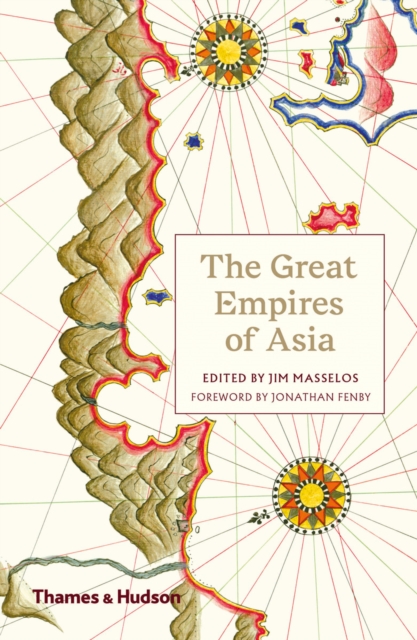
The great empires of Asia
Asian empires led the world economically, scientifically and culturally for hundreds of years, and posed a constant challenge to the countries of Europe. How and why did those empires gain such power, and lose it? What legacies did they leave? This book brings together a team of distinguished historians to survey seven great Asian empires that rose and fell between 800 ce and the mid-20th century: the Mongol Empire, Ming Dynasty of China, Khmer Empire, Ottoman Empire, Safavid Empire of Persia, Mughal Empire of India and the Meiji Restoration in Japan. Compellingly written, The Great Empires of Asia shows how those seven empires played a key role in forming today's global civilization - and how, with the renewed ascendancy of Asia, their legacies will help shape the continent's future.
eBook


China's Domestic Economy
Despite the spectacular progress of China's economy over the past three decades, even greater challenges lie ahead. There were, of course, bumps along the way after Deng Xiaoping launched market-led reform in 1978 - with the widespread protests and massacres in Beijing in 1989, out-of-control inflation and the effects of the Asian economic crisis of the late 1990s among them. But, to simplify, it was not such a difficult job to propel the economy forward once the decision had been taken at the Third Plenum at the end of 1978, given that China had an abundance of available cheap labour and capital. Once the decision was taken to send in the tanks in 1989, political repression could be implemented under the cover of the greatest numerical material improvement ever seen in human history.
Book Chapter


The Xilais: China's Lord and Lady Macbeth
Bo Xilai was a shooting star in China's political firmament. He used populist policies to try to make his way to the Politburo Standing Committee, China's supreme seat of power. His wife, Gu Kailai, was just as strong an individual, pursuing a successful career as a lawyer in which she won a high-profile case in the United States. The family trio is completed by their son, Bo Guagua, who attended Harrow and Oxford, where he won a reputation for high living. The family belonged to the aristocracy of the People's Republic known as the \"princelings\". Bo's father was Mao's finance minister before being purged in the Cultural Revolution and then rehabilitated as one of the Communist party's \"Eight Immortals\". However, their fortunes have now changed dramatically: Gu stands charged with the murder of British businessman Neil Heywood, who had worked with the family for a dozen years and whose body was found last November in a hotel in the Chongqing hills used by Gu.
Journal Article

Magnum China
Many of Magnum's most renowned photographers - beginning with Robert Capa and Henri Cartier-Bresson on assignment in the 1930s - have been captivated by China. They've returned time and again, their fascination growing in line with China's burgeoning accessibility and international influence. 'Magnum China' - both an outstanding photobook and a fascinating social history - illustrates the agency's evolving relationship with this increasingly influential nation to give a visually rich, informed photographic account of the country, its people and the changes witnessed over the last nine decades. 0Chronologically organized to present key periods in the development of the modern state and its associated territories, 'Magnum China' presents in-depth portfolios by individual photographers, accompanied by introductory commentaries on the featured projects and group selections illustrating the diversity of Magnum's interaction with the region. Supplemented with introductory essays by Jonathan Fenby, historical timelines, lists of photographers' travels and a fold-out map of China, 'Magnum China' offers detailed and perceptive socio-political, geographical and historical context to complement the outstanding photography of some of the world's finest photographers.
Book
Xi Jinping: the new face of China
Barring a major reversal of fortune, the future leadership of China is set until 2022. The man who will head the ruling group in the Zhongnanhai leadership compound, beside the Forbidden City, for 10 years from 2012 is a 57-year-old apparatchik named Xi Jinping. For many years, his wife, Peng Liyuan, a celebrated folk singer, was better known than Xi, but that era is coming to an end.
Journal Article