
Catalogue Search | MBRL


Are you sure you want to remove the book from the shelf?

{{itemTitle}}
98
result(s) for
"Fenton, Natalie"
Sort by:

New media, old news : journalism & democracy in the digital age
Have new communications technologies revitalized the public sphere, or become the commercial tool for an increasingly un-public, undemocratic news media? Are changing journalistic practices damaging the nature of news, or are new media allowing journalists to do more journalism and to engage the public more effectively?With massive changes in the media environment and its technologies, interrogating the nature of news journalism is one of the most urgent tasks we face in defining the public interest today. The implications are serious, not just for the future of the news, but also for the practice of democracy.In a thorough empirical investigation of journalistic practices in different news contexts, New Media, Old News explores how technological, economic, and social changes have reconfigured news journalism, and the consequences of these transformations for a vibrant democracy in our digital age. The result is a piercing examination of why understanding news journalism matters now more than ever. It is essential reading for students and scholars of journalism and new media.
eBook


Defending Whose Democracy?: Media Freedom and Media Power
Rarely has the relationship between media and democracy been so centre-stage. Whether regarding regulatory reform brought about by phone hacking in the UK, concentration of media ownership in Italy, Hungary, Australia to mention but a few; or in relation to social media and the internet as a supposed means to increased access to information and citizen production and circulation of non-mainstream content leading to greater so called media freedom. The debate on whether or not and in what form the media are related to the nature and practice of democracy is raging; and rightly so. Adapted from the source document.
Journal Article

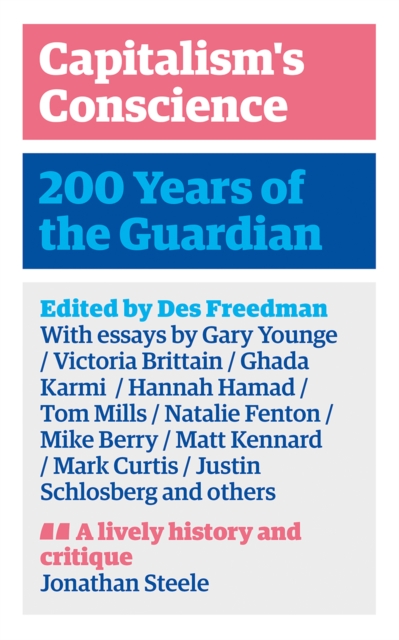
Capitalism's Conscience
'A lively and well-researched history and critique' - Jonathan Steele, former Chief Foreign Correspondent for the Guardian Since its inception in Manchester in 1821 as a response to the 1819 Peterloo Massacre, the Guardian has been a key institution in the definition and development of liberalism. The stereotype of the 'Guardianista', an environmentally-conscious, Labour-voting, progressively-minded public sector worker endures in the popular mythology of British press history. Yet the title has a complex lineage and occupies an equivocal position between capital and its opponents. It has both fiercely defended the need for fearless, independent journalism and handed over documents to the authorities; it has carved out a niche for itself in the UK media as a progressive voice but has also consistently diminished more radical projects on the left. Published to coincide with its 200th anniversary, Capitalism's Conscience brings together historians, journalists and activists in an appraisal of the Guardian 's contribution to British politics, society and culture - and its distinctive brand of centrism. Contextualising some of the main controversies in which the title has been implicated, the book offers timely insights into the publication's history, loyalties and political values.
eBook
