
Catalogue Search | MBRL


Are you sure you want to remove the book from the shelf?

{{itemTitle}}
87
result(s) for
"Ferguson, Margaret W"
Sort by:

Women, Property, and the Letters of the Law in Early Modern England
Women, Property, and the Letters of the Law in Early Modern Englandexamines the competing narratives of property told by and about women in the early modern period. Through letters, legal treatises, case law, wills, and works of literature, the contributors explore women's complex roles as subjects and agents in commercial and domestic economies, and as objects shaped by a network of social and legal relationships. By constructing conversations across the disciplinary boundaries of legal and social history, sociology and literary criticism, the collection explores a diverse range of women's property relationships.
Recent research has revealed fissures in our knowledge about women's property relationships within a regime characterized by competing jurisdictions, diverse systems of tenure, and multiple concepts of property.Women, Property, and the Letters of the Law in Early Modern Englandturns to these points of departure for the study of women's legal status and property relationships in the early modern period. This interdisciplinary analysis of women and property is written in an accessible manner and will become a valuable resource for scholars and students of Renaissance, Restoration and eighteenth-century literature, early modern social and legal history, and women's studies.
eBook

Remembering Patsy Yaeger: Her Work and Its Influence
Patricia Yaeger was an accomplished teacher and scholar and, for five years, the editor of PMLA. As editor of the journal, she opened its pages to a diversity of voices, reached beyond the borders of North America to seek new readers and contributors, and used the Editor's Column to mark new directions in scholarship and research. Here, some of Yaeger's former colleagues, associates, and students pay homage to her work, assess its influence, and remember moments shared in the classroom, the conference hall, and the pages of PMLA.
Journal Article


The Other Virgil: 'Pessimistic' Readings of the 'Aeneid' in Early Modern Culture (review)
Ferguson reviews The Other Virgil: \"Pessimistic\" Readings of the \"Aeneid\" in Early Modern Culture by Craig Kallendorf.
Journal Article
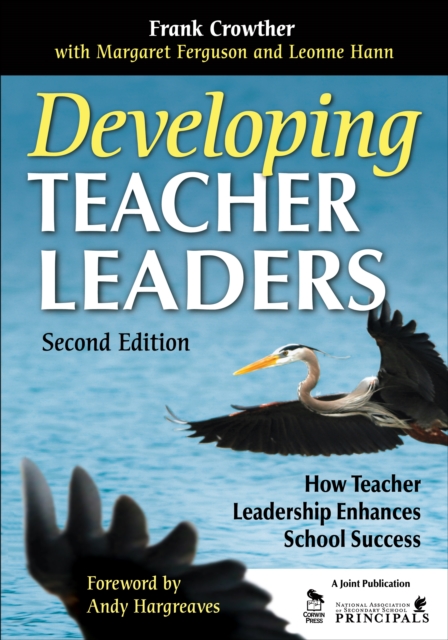
Developing teacher leaders : how teacher leadership enhances school success
Rediscover the importance of teacher leadership in revitalizing schools! Principals and staff developers will learn how collaborating with teacher leaders can result in significantly improved school outcomes. With the Teachers as Leaders Framework and a parallel leadership approach, administrators and teachers can collaborate in fostering, developing, and supporting teacher leadership. Featured in the second edition are: Five new school case studies with insights about the complexity of teacher leadership Expanded discussion of the capacity-building process for teacher leaders and principals An outline of a school development program based on teacher leadership and parallel leadership.
eBook

SAINT AUGUSTINE'S REGION OF UNLIKENESS: THE CROSSING OF EXILE AND LANGUAGE
There is a parallel between the exile--the person banished from his proper place--& figurative speech, harking back to some fundamental tenets of Western metaphysics that interpret truth as presence & language as mimesis. For Augustine, all language is metaphorical just as man is always in exile from God. Plato's image of a region of unlikeness in the Statesman is a translation of time into space. Augustine interprets it as the result of the spatialization of time that syntax requires, which is a mark of the inadequacy of all signs. Lang is both the region of unlikeness & the way to escape from it as a way to God--the scriptures are only a partial path toward God. They point to a time when they no longer will be necessary because we will \"perceive the face of God.\" A. Orianne
Journal Article

Commentary: Postponing Politics
This commentary is necessarily marked by its original occasion, a 1985 conference session on \"the feminist politics of interpretation\" in which an audience heard, for the first time, two difficult and fascinating papers and then listened to my oral response to texts that I had read several times. The situation placed me in a position of potentially abusive power vis-à-vis both the audience and the authors of the papers, who had read each others' work but not my commentary, and who had to sit quietly and listen to me after finishing their presentations. They did however then have a chance to interrogate and dispute my commentary and, eventually, to revise their essays in response to it, and in the light of the discussion in which members of the audience also participated. The written text that follows was itself revised in response to some revisions that Nancy Miller made in her text; but my commentary remains very much an occasional essay- which is to say that certain strands of its critique now seem \"fallen\" to me, faded, dated. They will nonetheless, I hope, hold some archeological (or, to borrow a word from Nancy Miller, arachnological) interest for feminist readers. In any event, the untimely strands of my critique cannot be easily disentangled from those which seem to me, and to the editor of this volume, still timely enough to transport to a new discursive field.
Book Chapter