
Catalogue Search | MBRL


Are you sure you want to remove the book from the shelf?

{{itemTitle}}
779
result(s) for
"Fernández-Armesto, Felipe"
Sort by:


How the Spanish Empire Was Built
Sixteenth-century Spain was small, poor, disunited and sparsely populated. Yet the Spaniards and their allies built the largest empire the world had ever seen. How did they achieve this? Felipe Fernández-Armesto and Manuel Lucena Giraldo argue that Spain's engineers were critical to this venture. The Spanish invested in infrastructure to the advantage of local power brokers, enhancing the abilities of incumbent elites to grow wealthy on trade and widening the arc of Spanish influence. Bringing to life stories of engineers, prospectors, soldiers and priests, the authors paint a vivid portrait of Spanish America in the age of conquest. This is a dazzling new history of the Spanish Empire, and a new understanding of empire itself, as a venture marked as much by collaboration as oppression.
eBook

A foot in the river : why our lives change--and the limits of evolution
We are a weird species. Like other species, we have a culture. But by comparison with other species, we are strangely unstable: human cultures self-transform, diverge, and multiply with bewildering speed. They vary, radically and rapidly, from time to time and place to place. And the way we live - our manners, morals, habits, experiences, relationships, technology, values - seems to be changing at an ever accelerating pace. The effects can be dislocating, baffling,sometimes terrifying. Why is this? In A Foot in the River, best-selling historian Felipe Fernández-Armesto sifts through the evidence.
Book

A Foot in the River
Compared to other animals, the way humans live -- our manners, morals, habits, experiences, relationships, technology, values -- changes at a bewildering speed. Why is this? Felipe Fernández-Armesto offers some revolutionary answers to this fundamental question about our species - and speculates on what they mean for our future.
eBook

Straits
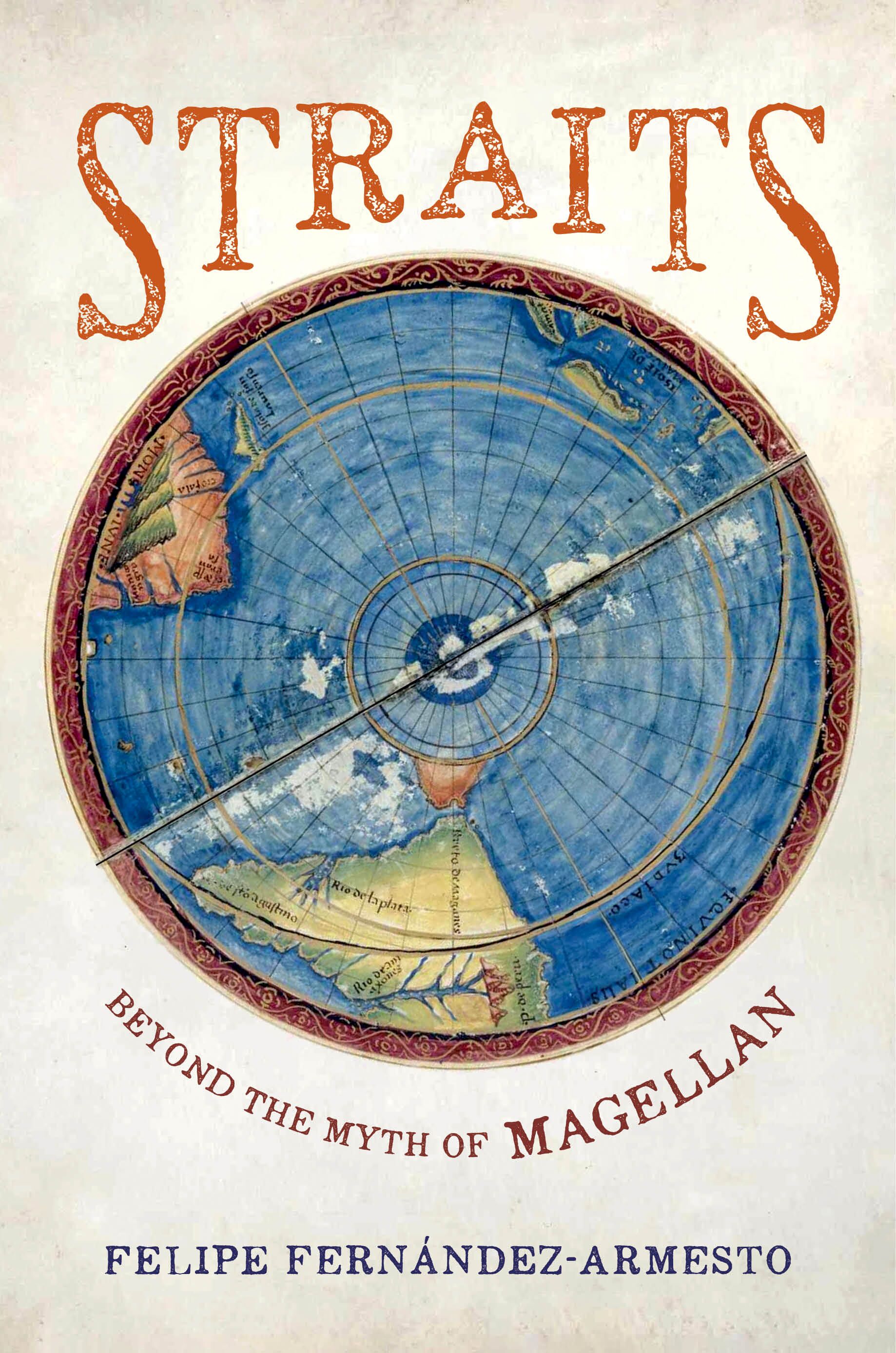
An uncompromising study of the fictions, the failures, and the real man behind the myth of Magellan. With Straits, celebrated historian Felipe Fernández-Armesto subjects the surviving sources to the most meticulous scrutiny ever, providing a timely and engrossing biography of the real Ferdinand Magellan. The truth that Fernández-Armesto uncovers about Magellan's life, his character, and the events of his ill-fated voyage offers up a stranger, darker, and even more compelling narrative than the fictional version that has been celebrated for half a millennium. Magellan did not attempt-much less accomplish-a journey around the globe. In his lifetime he was abhorred as a traitor, reviled as a tyrant, self-condemned to destruction, and dismissed as a failure. Straits untangles the myths that made Magellan a hero and discloses the reality of the man, probing the passions and tensions that drove him to adventure and drew him to disaster. We see the mutations of his character: pride that became arrogance, daring that became recklessness, determination that became ruthlessness, romanticism that became irresponsibility, and superficial piety that became, in adversity, irrational exaltation. As the real Magellan emerges, so do his real ambitions, focused less on circumnavigating the world or cornering the global spice market than on exploiting Filipino gold.Straits is a study in failure and the paradox of Magellan's career, showing that renown is not always a reflection of merit but often a gift and accident of circumstance.
eBook

The conquistadors : a very short introduction
With startling speed, Spanish conquistadors invaded hundreds of Native American kingdoms, took over the mighty empires of the Aztecs and Incas, and initiated an unprecedented redistribution of the world's resources and balance of power. They changed the course of history, but the myth they established was even stranger than their real achievements. This Very Short Introduction deploys the latest scholarship to shatter and replace the traditional narrative. Chapters explore New World civilizations prior to the invasions, the genesis of conquistador culture on both sides of the Atlantic, the roles black Africans and Native Americans played, and the consequences of the invasions.
Book
Deep history
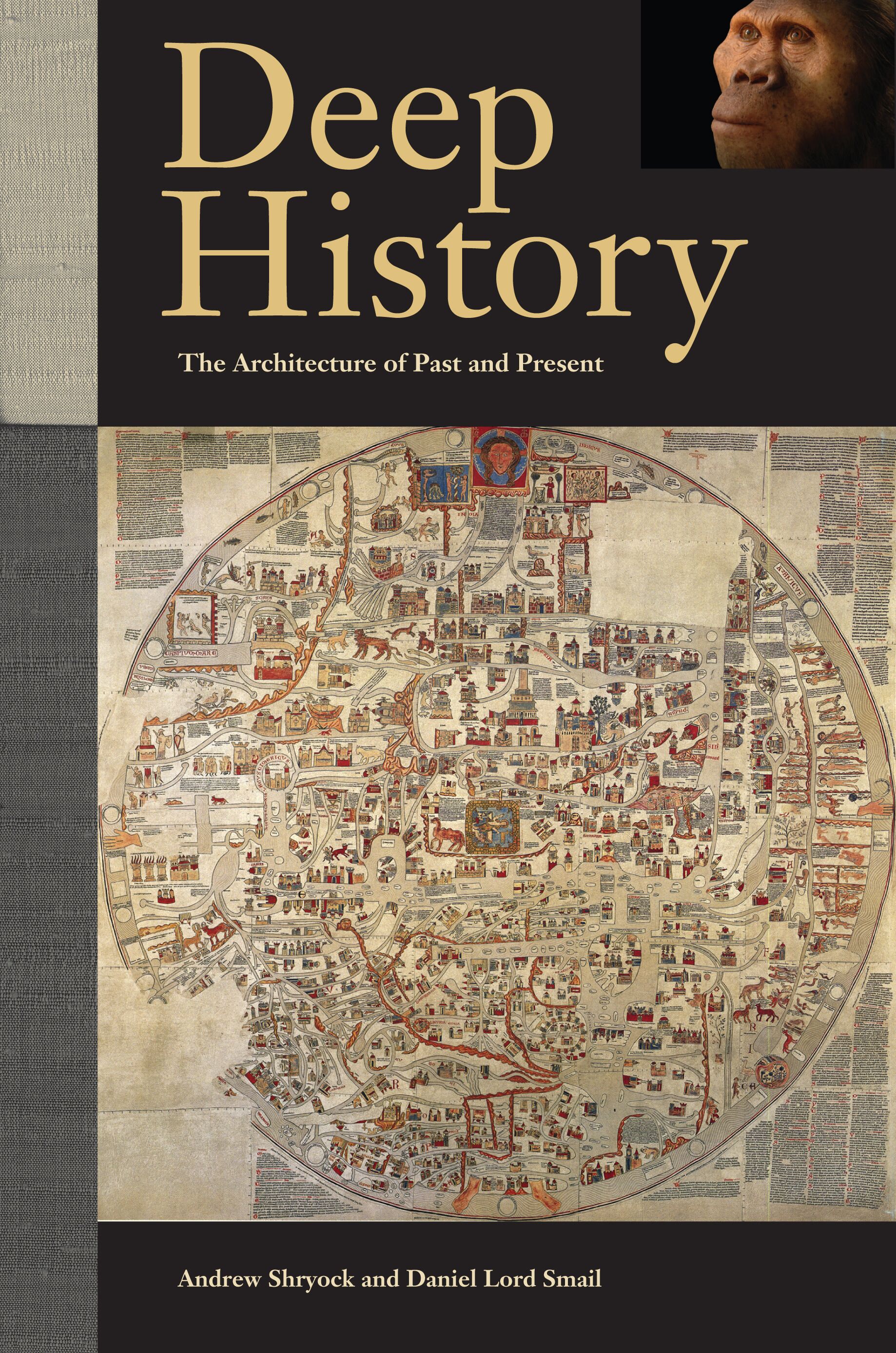
Humans have always been interested in their origins, but historians have been reluctant to write about the long stretches of time before the invention of writing. In fact, the deep past was left out of most historical writing almost as soon as it was discovered. This breakthrough book, as important for readers interested in the present as in the past,brings science into history to offer a dazzling new vision of humanity across time. Team-written by leading experts in a variety of fields, it maps events, cultures, and eras across millions of years to present a new scale for understanding the human body, energy and ecosystems, language, food, kinship, migration, and more. Combining cutting-edge social and evolutionary theory with the latest discoveries about human genes, brains, and material culture, Deep History invites scholars and general readers alike to explore the dynamic of connectedness that spans all of human history. With Timothy Earle, Gillian Feeley-Harnik, Felipe Fernández-Armesto, Clive Gamble, April McMahon, John C. Mitani, Hendrik Poinar, Mary C. Stiner, and Thomas R. Trautmann
eBook

المستكشفون : التاريخ العالمي للاستكشاف
يتناول كتاب (المستكشفون : التاريخ العالمي للاستكشاف) والذي قام بتأليفه (فيليب فيرنانديز-أرميستو) في حوالي (695) صفحة من القطع المتوسط موضوع (الكشوف الجغرافية) مستعرضا المحتويات التالية : الفصل الأول بعنوان الامتداد، الفصل الثاني بعنوان الوصول، الفصل الثالث بعنوان التحريك، الفصل الرابع بعنوان الانطلاق، الفصل الخامس بعنوان الوثب، الفصل السادس بعنوان التطويق، الفصل السابع بعنوان لم الشمل، الفصل الثامن بعنوان التوغل.
Book
Dr. Dolittle, I Presume
Richard Lynch Garner's is a curious case in the history of the fragility of fame. Born in 1848, the explorer, zoologist, specimen hunter, and pioneer in linguistics, animal ethics, and primatology inspired at least one fictional character: the mysterious, offstage Dr. Johausen, the ape fancier who disappears from his jungle hide in Jules Verne's missing-link fantasy Le Village aérien (Radick 2007: 124). If, as I presume for reasons that will become clear, Garner may also have contributed to the making of Hugh Lofting's imperishable hero, Dr. Dolittle, it is perhaps surprising that no literary researcher, as far as I know, has ever undertaken to study him. For a brief spell in the early 1890s, around the time of a then-renowned (and soon to be notorious) expedition that he undertook to Fernan Vaz in French Gabon, Garner was one of the most celebrated men in the world—such that satirists had only to allude to him in the certainty that readers would know whom they meant (Radick 2007: 84–85, 123, 136–137). Yet he died in poverty in 1920 (at about the time of the publication of the first Dolittle book).
Journal Article