
Catalogue Search | MBRL


Are you sure you want to remove the book from the shelf?

{{itemTitle}}
7
result(s) for
"Fernández-Armesto, Felipe, author"
Sort by:

A foot in the river : why our lives change--and the limits of evolution
We are a weird species. Like other species, we have a culture. But by comparison with other species, we are strangely unstable: human cultures self-transform, diverge, and multiply with bewildering speed. They vary, radically and rapidly, from time to time and place to place. And the way we live - our manners, morals, habits, experiences, relationships, technology, values - seems to be changing at an ever accelerating pace. The effects can be dislocating, baffling,sometimes terrifying. Why is this? In A Foot in the River, best-selling historian Felipe Fernández-Armesto sifts through the evidence.
Book

How the Spanish Empire Was Built
Sixteenth-century Spain was small, poor, disunited and sparsely populated. Yet the Spaniards and their allies built the largest empire the world had ever seen. How did they achieve this? Felipe Fernández-Armesto and Manuel Lucena Giraldo argue that Spain's engineers were critical to this venture. The Spanish invested in infrastructure to the advantage of local power brokers, enhancing the abilities of incumbent elites to grow wealthy on trade and widening the arc of Spanish influence. Bringing to life stories of engineers, prospectors, soldiers and priests, the authors paint a vivid portrait of Spanish America in the age of conquest. This is a dazzling new history of the Spanish Empire, and a new understanding of empire itself, as a venture marked as much by collaboration as oppression.
eBook


A Foot in the River
Compared to other animals, the way humans live -- our manners, morals, habits, experiences, relationships, technology, values -- changes at a bewildering speed. Why is this? Felipe Fernández-Armesto offers some revolutionary answers to this fundamental question about our species - and speculates on what they mean for our future.
eBook

How the Spanish empire was built : a 400 year history
\"The untold story of the engineering behind the empire, showing how imperial Spain built upon existing infrastructure and hierarchies of the Inca, Aztec, and more, to further its growth. Sixteenth-century Spain was small, poor, disunited, and sparsely populated. Yet the Spaniards and their allies built the largest empire the world had ever seen. How did they achieve this? Felipe Fernández-Armesto and Manuel Lucena Giraldo argue that Spain's engineers were critical to this venture. The Spanish invested in infrastructure to the advantage of local power brokers, enhancing the abilities of incumbent elites to grow wealthy on trade, and widening the arc of Spanish influence. Bringing to life stories of engineers, prospectors, soldiers, and priests, the authors paint a vivid portrait of Spanish America in the age of conquest. This is a dazzling new history of the Spanish Empire, and a new understanding of empire itself, as a venture marked as much by collaboration as oppression\"-- Provided by publisher.
Book
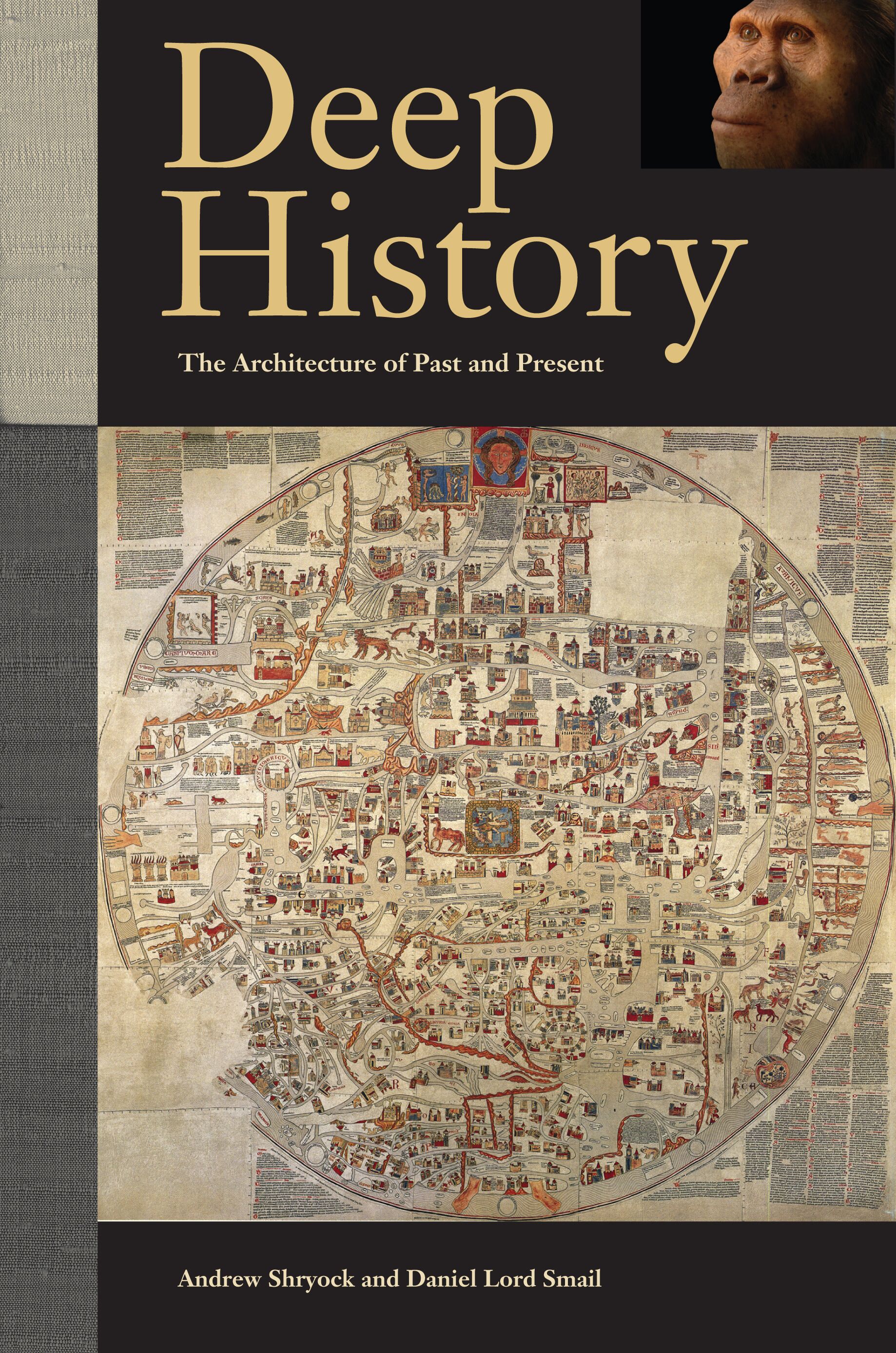
Deep history
Humans have always been interested in their origins, but historians have been reluctant to write about the long stretches of time before the invention of writing. In fact, the deep past was left out of most historical writing almost as soon as it was discovered. This breakthrough book, as important for readers interested in the present as in the past,brings science into history to offer a dazzling new vision of humanity across time. Team-written by leading experts in a variety of fields, it maps events, cultures, and eras across millions of years to present a new scale for understanding the human body, energy and ecosystems, language, food, kinship, migration, and more. Combining cutting-edge social and evolutionary theory with the latest discoveries about human genes, brains, and material culture, Deep History invites scholars and general readers alike to explore the dynamic of connectedness that spans all of human history. With Timothy Earle, Gillian Feeley-Harnik, Felipe Fernández-Armesto, Clive Gamble, April McMahon, John C. Mitani, Hendrik Poinar, Mary C. Stiner, and Thomas R. Trautmann
eBook

Furs and Frontiers in the Far North
This comprehensive history of the native and maritime fur trade in Alaska during the eighteenth and nineteenth centuries is without precedent. The Bering Strait formed the nexus of the circumpolar fur trade in which Russians, British, Americans, and members of fifty native nations competed and cooperated. The desire to dominate the fur trade fed the European expansion into the most remote regions of Asia and America and was an agent of massive change in these regions.
Award-winning author John R. Bockstoce fills a major gap in the historiography of the area in covering the scientific, commercial, and foreign-relations implications of the northern fur trade. In addition, the book provides rare insight into the relationship between the Western powers and the Native Americans who provided them with fur, ivory, and whalebone in exchange for manufactured goods, tobacco, tea, alcohol, and hundreds of other things. But this is also the story of the enterprising individuals who energized the Alaskan fur trade and, in doing so, forever altered the region's history.
eBook