
Catalogue Search | MBRL


Are you sure you want to remove the book from the shelf?

{{itemTitle}}
80
result(s) for
"Feser, Edward"
Sort by:


The Thomistic Dissolution of the Logical Problem of Evil
In his book ‘Is a Good God Logically Possible?’, James Sterba argues that the existence of much of the evil to be found in the world is logically incompatible with the existence of God. I defend the Thomistic view that when one properly understands the nature of God and of his relationship to the world, this so-called logical problem of evil does not arise. While Sterba has responded to the version of the Thomistic position presented by Brian Davies, I argue that his response fails.
Journal Article


National Industry Cluster Templates: A Framework for Applied Regional Cluster Analysis
FESER E. J. and BERGMAN E. M. (2000) National industry cluster templates: a framework for applied regional cluster analysis, Reg. Studies 34, 1-19. A growing number of cities, states and regions in Europe, North America and elsewhere are designing development strategies around strategic clusters of industries. In many cases, a lack of data on local and interregional industrial linkages, shared business institutions, channels of technology and knowledge transfer, and other dimensions of the cluster concept means that relatively simple measures (location quotients, industry size) are often used to initially detect clusters in subnational regions. In this paper, we suggest a means of using available information on national interindustry linkages to identify potential clusters in subnational areas. Specifically, we derive a set of 23 US manufacturing clusters and employ them as templates in an illustrative analysis of the manufacturing sector in a single US state. The template clusters help detect gaps and specializations in extended product chains and therefore constitute a useful first step in more comprehensive examinations of local cluster patterns.
FESER E. J. et BERGMAN E. M. (2000) Des gabarits de grappes d'industries d'envergure nationale: un cadre pour l'analyse appliquée des grappes à l'échelon régional, Reg. Studies 34, 1-19. De plus en plus nombreux sont les villes, les états et les régions en Europe, en Amérique du Nord et ailleurs qui mettent au point des stratégies de développement visant des grappes d'industries clé. Dans beaucoup des cas, le manque de données sur le maillage industriel local et interrégional, le partenariat commercial, les canaux de transfert de la technologie et de l'apprentissage, et autres dimensions de la notion de grappes, signifient que des mesures relativement simples (quotient de localisation, taille de l'industrie) se voient employer souvent afin de découvrir dans un premier temps des grappes sur le plan régional. Cet article avance un moyen d'employer les données disponibles sur le maillage intersectoriel national pour identifier des grappes éventuelles sur le plan régional. Plus particulièrement, on emploie un ensemble de vingt-trois grappes industrielles aux Etats-Unis comme gabarits pour analyser à titre d'exemple le secteur industriel dans un seul état aux Etats-Unis. Les gabarits aident à découvrir les créneaux et les spécialisations des chaînes de produits élargies et constituent ainsi une première démarche dans l'examen plus approfondi de la distribution locale des grappes.
FESER E. J. und BERGMAN E. M. (2000) Schablonen für Kluster der Landesindustrie: ein Grundgerüst für angewandte Regionalklusteranalyse, Reg. Studies 34, 1-19. Eine wachsende Anzahl von Städten, Regionen und Staaten in Europa, Nordamerika und anderen Orten entwerfen Entwicklungsstrategien, die strategische Kluster von Industrien zum Mittelpunkt haben. In vielen Fällen führt Mangel an Information über örtliche und unterregionale Industrieverbindungen, über gemeinsam benutzte geschäftliche Institutionen, Wege der Technologie-und Wissensvermittlung sowie anderer Dimensionen des Klusterkonzepts dazu, daß relativ einfache Maßnahmen (Standortquotienten, Industriegröße) benutzt werden, um anfangs Kluster auf teilstaatlicher Ebene überhaupt zu entdecken. In diesem Aufsatz wird ein Mittel zur Nutzung vorhandener Information betreff staatlicher. Interindustrieller Verknüpfungen vorgeschlagen, um potentielle Kluster in staatlichen Teilgebieten zu identifizieren. Um präzise zu sein: es wird ein Satz von 23 Klustern der herstellenden Industrie in den Vereinigten Staaten erstellt, und als Schablone in einer illustrativen Analyse des Sektors der herstellenden Industrie in nur einem Staat der Vereinigten Staaten angewandt. Die Schablonenkluster tragen dazu bei, Lücken und Spezialisierung in erweiterten Produktketten ausfindig zu machen, und stellen deshalb einen nützlichen ersten Schritt bei der umfassenderen Untersuchung örtlicher Klustermuster dar.
Journal Article


The Common Sense of John Searle
According to a criterion for intelligence proposed by the mathematician Alan Turing, if a machine could, in response to questions, produce answers that were indistinguishable from those a human being might give, then we would have every reason to judge that it was literally intelligent. Searle's first book, Speech Acts, which built on the work of his teacher J. L. Austin, was among several key texts that led Anglo-American philosophers to take a more nuanced approach to language and its multifarious uses. When he emphasized the continuity of human beings with the larger natural world, he sometimes sounded like he was offering just another riff on materialism.
Journal Article
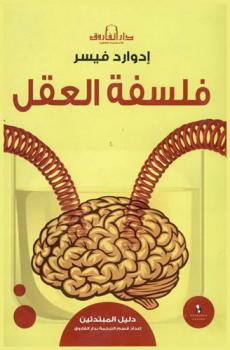
فلسفة العقل : دليل المبتدئين
هذا الكتاب يغطي العديد من الموضوعات والقضايا الأساسية. فإنه يعد الكتاب التمهيدي الأول في مجال فلسفة العقل الذي يناقش بجدية الحجج المعاصرة لمذهب الثنائية القائم على فكرة وجود اختلاف حقيقي بين العقل والجسد. وباستخدام لغة مباشرة وواضحة خالية من التعقيد الفلسفي، قدم لنا (إدوارد فيسر) بمهارة واتساق محكم كتابا متوازنا وزاخرا بأحدث المعلومات والأفكار التي قد توصل إليها الفلاسفة في مجال فلسفة العقل، وهو المجال الأشهر بين مجالات الفلسفة الحديثة.
Book

What Regions Do Rather than Make: A Proposed Set of Knowledge-based Occupation Clusters
With the expansion of knowledge-intensive industries in the US, along with intensifying focus on workforce development policy as an economic development strategy, occupations are increasingly being used as basic units of analysis in applied studies of urban and regional economies. An heretofore underappreciated component of occupation-based regional analysis is the need to understand relationships, similarities and dissimilarities among occupations themselves, so that they may be aggregated or grouped in theoretically and empirically meaningful ways. This paper lays out a conceptual framework and empirical approach to identifying knowledge-based occupation clusters, or groups of occupations that share the same broad knowledge characteristics. Following an application of the clusters to a comparison of labour pools in a selected 38 metropolitan economies, the paper discusses the clusters' general value for regional economic analysis, especially their utility as an intermediate step in applied industry cluster analyses where necessary regional occupation data are limited.
Journal Article

Life, Reproduction, and the Paradox of Evolution
A neglected but challenging argument developed by Peter Geach, John Haldane, and Stephen Rothman purports to show that reproduction cannot be explained by natural selection and is irreducibly teleological. Meanwhile, the most plausible definitions of life include reproduction as a constitutive feature. The implication of combining these ideas is that life cannot be explained by natural selection and is irreducibly teleological. This does not entail that life cannot be explained in evolutionary terms of some kind, but it does lend support to the controversial view of Jerry Fodor and Thomas Nagel that evolutionists need to look beyond the constraints of Neo-Darwinism.
Journal Article