
Catalogue Search | MBRL


Are you sure you want to remove the book from the shelf?

{{itemTitle}}
763
result(s) for
"Field, Andrew"
Sort by:

Not for patching : a strategic welfare review
\"In his famous report of 1942, the economist and social reformer William Beveridge wrote that World War II was a 'revolutionary moment in the world's history' and so a time 'for revolutions, not for patching'. The Beveridge Report outlined the welfare state that Clement Attlee's government would go on to implement after 1946, instituting, for the first time, a national system of benefits to protect all from 'cradle to the grave'. Since then the welfare system has been patched, beset by muddled thinking and short-termism\"-- Provided by publisher.
Book

Screening thousands of transcribed coding and non-coding regions reveals sequence determinants of RNA polymerase II elongation potential
Precise regulation of transcription by RNA polymerase II (RNAPII) is critical for organismal growth and development. However, what determines whether an engaged RNAPII will synthesize a full-length transcript or terminate prematurely is poorly understood. Notably, RNAPII is far more susceptible to termination when transcribing non-coding RNAs than when synthesizing protein-coding mRNAs, but the mechanisms underlying this are unclear. To investigate the impact of transcribed sequence on elongation potential, we developed a method to screen the effects of thousands of INtegrated Sequences on Expression of RNA and Translation using high-throughput sequencing (INSERT-seq). We found that higher AT content in non-coding RNAs, rather than specific sequence motifs, drives RNAPII termination. Further, we demonstrate that 5′ splice sites autonomously stimulate processive transcription, even in the absence of polyadenylation signals. Our results reveal a potent role for the transcribed sequence in dictating gene output and demonstrate the power of INSERT-seq toward illuminating these contributions.
Here the authors present the INSERT-seq methodology to investigate the effect of transcribed sequence on processive transcription. The authors find that GC content and splice site sequences are important determinants of elongation potential.
Journal Article


Building Shanghai’s Dreamworld: Architects and Elite Ballroom Designs of the 1920s and 1930s
Using historical records from the period including newspapers and architectural journals, this paper examines seven ballrooms built in Shanghai between the 1920s and 1930s. These ballrooms were all designed by leading architects and reflect their ambitions and visions in creating fantastical spaces for the city’s elites to celebrate their status while socializing with other members of high society. Their technological features include sprung dance floors, sophisticated lighting schemes, and other technical wizardry to enhance the experience of dancing and being entertained. One ballroom was in the style of a traditional Chinese palace, highlighting the connection to earlier forms of culture in China. Today most of these ballrooms still exist and many of their original features are still intact, although the dancing has been superseded by other activities such as wedding banquets, conferences, and even the stock exchange.
Journal Article

The World War I book
Combining authoritative, exciting text and bold images, The World War I Book explores the historical background of the war, its causes, all of the key events across the major theatres of conflict, and its aftermath. Using the original, graphic-led approach of the series, entries profile more than 90 of the key events during and surrounding the conflict -- from the growing tensions between Europe's major powers to the assassination of Archduke Franz Ferdinand, the German invasion of Belgium, the endless slaughter in the trenches, the American entry into the war, the Russian Revolution, the Armistice, and the creation of the League of Nations.
BOOK


Co-depletion of NIPBL and WAPL balance cohesin activity to correct gene misexpression
The relationship between cohesin-mediated chromatin looping and gene expression remains unclear. NIPBL and WAPL are two opposing regulators of cohesin activity; depletion of either is associated with changes in both chromatin folding and transcription across a wide range of cell types. However, a direct comparison of their individual and combined effects on gene expression in the same cell type is lacking. We find that NIPBL or WAPL depletion in human HCT116 cells each alter the expression of ~2,000 genes, with only ~30% of the genes shared between the conditions. We find that clusters of differentially expressed genes within the same topologically associated domain (TAD) show coordinated misexpression, suggesting some genomic domains are especially sensitive to both more or less cohesin. Finally, co-depletion of NIPBL and WAPL restores the majority of gene misexpression as compared to either knockdown alone. A similar set of NIPBL-sensitive genes are rescued following CTCF co-depletion. Together, this indicates that altered transcription due to reduced cohesin activity can be functionally offset by removal of either its negative regulator (WAPL) or the physical barriers (CTCF) that restrict loop-extrusion events.
Journal Article
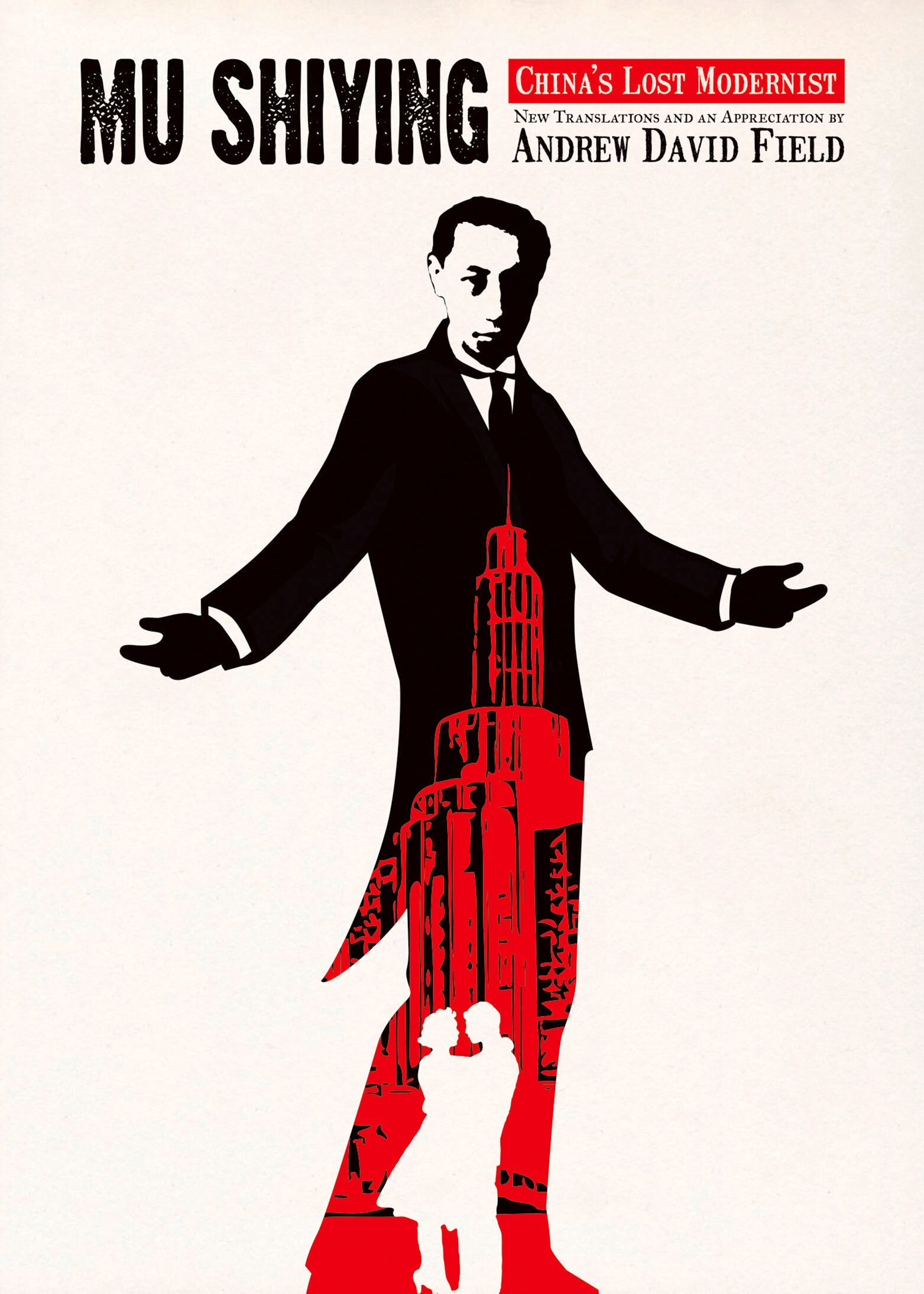
Mu Shiying
Shanghai’s “Literary Comet” When the avant-garde writer Mu Shiying was assassinated in 1940, China lost one of its greatest modernist writers while Shanghai lost its most detailed chronicler of the city’s Jazz-Age nightlife. Mu’s highly original stream-of-consciousness approach to short story writing deserves to be re-examined and re-read. As Andrew Field argues, Mu advanced modern Chinese writing beyond the vernacular expression of May Fourth giants Lu Xun and Lao She to reveal even more starkly the alienation of a city trapped between the forces of civilization and barbarism in the 1930s. Mu Shiying: China’s Lost Modernist includes translations of six short stories, four of which have not appeared before in English. Each story focuses on Mu’s key obsessions: the pleasurable yet anxiety-ridden social and sexual relationships in the modern city, and the decadent maelstrom of consumption and leisure epitomized by the dance hall and nightclub. In his introduction, Field situates Mu’s work within the transnational and hedonistic environment of inter-war Shanghai, the city’s entertainment economy, as well as his place within the wider arena of Jazz-Age literature from Berlin, Paris, Tokyo and New York.
eBook

Mu Shiying
Being assassinated in 1940, Mu Shiying (穆時英), the Shanghai’s ‘Literary Comet’, was one of China’s pioneer modernist writers. This book includes translations of six short stories written by Mu: “The Man Who Was Treated as a Plaything”, “Five in a Nightclub”, “Craven ‘A’”, “Night”, “Shanghai Fox-trot” and “Black Peony”. Each story focuses on Mu’s key obsessions: the pleasurable yet anxiety-ridden social and sexual relationships in the modern city, and the decadent maelstrom of consumption and leisure epitomized by the dance hall and nightclub. The stories are full of fun and excitement and will appeal to a wide lay audience.
eBook

High-resolution crystal structures of a myxobacterial phytochrome at cryo and room temperatures
Phytochromes (PHYs) are photoreceptor proteins first discovered in plants, where they control a variety of photomorphogenesis events. PHYs as photochromic proteins can reversibly switch between two distinct states: a red light (Pr) and a far-red light (Pfr) absorbing form. The discovery of Bacteriophytochromes (BphPs) in nonphotosynthetic bacteria has opened new frontiers in our understanding of the mechanisms by which these natural photoswitches can control single cell development, although the role of BphPs in vivo remains largely unknown. BphPs are dimeric proteins that consist of a photosensory core module (PCM) and an enzymatic domain, often a histidine kinase. The PCM is composed of three domains (PAS, GAF, and PHY). It holds a covalently bound open-chain tetrapyrrole (biliverdin, BV) chromophore. Upon absorption of light, the double bond between BV rings C and D isomerizes and reversibly switches the protein between Pr and Pfr states. We report crystal structures of the wild-type and mutant (His275Thr) forms of the canonical BphP from the nonphotosynthetic myxobacterium Stigmatella aurantiaca (SaBphP2) in the Pr state. Structures were determined at 1.65 Å and 2.2 Å (respectively), the highest resolution of any PCM construct to date. We also report the room temperature wild-type structure of the same protein determined at 2.1 Å at the SPring-8 Angstrom Compact free electron LAser (SACLA), Japan. Our results not only highlight and confirm important amino acids near the chromophore that play a role in Pr-Pfr photoconversion but also describe the signal transduction into the PHY domain which moves across tens of angstroms after the light stimulus.
Journal Article