
Catalogue Search | MBRL


Are you sure you want to remove the book from the shelf?

{{itemTitle}}
569
result(s) for
"Fine, Paul"
Sort by:

Co-parenting with a toxic ex : what to do when your ex-spouse tries to turn the kids against you
\"After a messy divorce, it's all too common for one parent to try and undermine the relationship between their children and their ex. In Co-parenting with a Toxic Ex, readers are offered a positive parenting approach to coping with a hostile ex-spouse. Inside, mothers and fathers who are dealing with a toxic ex will learn how to avoid parental alienation, as well as techniques for talking to their children in a way that fosters open and honest response. Divorce can be painful, but with the right tools parents can protect their kids and build stronger, more trusting relationships\"-- Provided by publisher.
Book

Global Gradients in Vertebrate Diversity Predicted by Historical Area-Productivity Dynamics and Contemporary Environment
Broad-scale geographic gradients in species richness have now been extensively documented, but their historical underpinning is still not well understood. While the importance of productivity, temperature, and a scale dependence of the determinants of diversity is broadly acknowledged, we argue here that limitation to a single analysis scale and data pseudo-replication have impeded an integrated evolutionary and ecological understanding of diversity gradients. We develop and apply a hierarchical analysis framework for global diversity gradients that incorporates an explicit accounting of past environmental variation and provides an appropriate measurement of richness. Due to environmental niche conservatism, organisms generally reside in climatically defined bioregions, or \"evolutionary arenas,\" characterized by in situ speciation and extinction. These bioregions differ in age and their total productivity and have varied over time in area and energy available for diversification. We show that, consistently across the four major terrestrial vertebrate groups, current-day species richness of the world's main 32 bioregions is best explained by a model that integrates area and productivity over geological time together with temperature. Adding finer scale variation in energy availability as an ecological predictor of within-bioregional patterns of richness explains much of the remaining global variation in richness at the 110 km grain. These results highlight the separate evolutionary and ecological effects of energy availability and provide a first conceptual and empirical integration of the key drivers of broad-scale richness gradients. Avoiding the pseudo-replication that hampers the evolutionary interpretation of non-hierarchical macroecological analyses, our findings integrate evolutionary and ecological mechanisms at their most relevant scales and offer a new synthesis regarding global diversity gradients.
Journal Article

Congo masks : masterpieces from Central Africa : a book and catalogue
This splendid illustrated exploration of masks and masking ceremonies from the Democratic Republic of the Congo presents more than 130 outstanding wooden masks dating from the 18th to the 20th century. Visually stunning and spiritually charged, these objects connected wearers with their ancestors and were part of elaborate costumes used in ritual performances. Including some of the finest works of African art in private hands, this volume features masks from eleven distinct stylistic zones: Ukongo, Ukwango, Ukete, Ukuba, Urunda, Uruwa, Utanganyika, Umaniema, Uituri, Ubangi, and Umongo. Displaying an enormous diversity of materials, design, and craftsmanship, these masks reflect the wide range of natural resources available throughout the Congo region and illuminate the unique belief systems of local populations. Accessible and informative essays provide insight into these extraordinary objects and are enlivened by both new photography and archival images showing the ceremonial use of masks in early 20th-century Congo. Exhibition: Virginia Museum of Fine Arts, Richmond, USA (10.11.2018-18.02.2019).
Book

Ecological and Evolutionary Drivers of Geographic Variation in Species Diversity
Recent studies have generated an explosion of phylogenetic and biogeographic data and have provided new tools to investigate the processes driving large-scale gradients in species diversity. Fossils and phylogenetic studies of plants and animals demonstrate that tropical regions are the source for almost all groups of organisms, and these groups are composed of a mixture of ancient and recently derived lineages. These findings are consistent with the hypothesis that the large extent of tropical environments during the past 10-50 million years, together with greater climatic stability, has promoted speciation and reduced extinction rates. Energy availability appears to only indirectly contribute to global patterns of species diversity, especially considering how some marine diversity gradients can be completely decoupled from temperature and productivity gradients. Instead, climate stability and time-integrated area together determine the baselines of both terrestrial and marine global diversity patterns. Biotic interactions likely augment diversification and coexistence in the tropics.
Journal Article
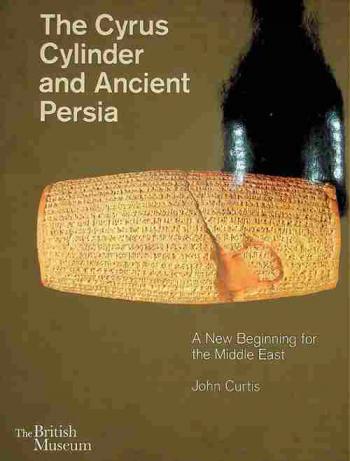
The Cyrus Cylinder and ancient Persia : a new beginning for the Middle East
The Cyrus Cylinder is one of the most famous objects to have survived from the ancient world. The Cylinder was inscribed in Babylonian cuneiform on the orders of the Persian King Cyrus the Great (559-530BC) after he captured Babylon in 539BC. It is often referred to as the first bill of human rights as it appears to permit freedom of worship throughout the Persian Empire and to allow deported people to return to their homelands. It is valued by people all around the world as a symbol of tolerance and respect for different peoples and different faiths, so much so that a copy of the cylinder is on display in the United Nations building in New York. This catalogue is being published in conjunction with the first ever tour of the object to the United States, along with sixteen other objects from the British Museum's collection. The book discusses how these objects demonstrate the innovations initiated by Persian rule in the Ancient Near East (550 BC-331 BC), a prime example being a gold plaque from the Oxus Treasure with the representation of a priest that shows the spread of the Zoroastrian religion. The book offers a new authoritative translation of the Cyrus Cylinder by Irving Finkel and the publication of two fragments of a cuneiform tablet that show how the Cyrus Cylinder was most probably a proclamation and not just a foundation deposit.
BOOK

Protection by BCG Vaccine Against Tuberculosis: A Systematic Review of Randomized Controlled Trials
Background. Randomized trials assessing BCG vaccine protection against tuberculosis have widely varying results, for reasons that are not well understood. Methods. We examined associations of trial setting and design with BCG efficacy against pulmonary and miliary or meningeal tuberculosis by conducting a systematic review, meta-analyses, and meta-regression. Results. We identified 18 trials reporting pulmonary tuberculosis and 6 reporting miliary or meningeal tuberculosis. Univariable meta-regression indicated efficacy against pulmonary tuberculosis varied according to 3 characteristics. Protection appeared greatest in children stringently tuberculin tested, to try to exclude prior infection with Mycobacterium tuberculosis or sensitization to environmental mycobacteria (rate ratio [RR], 0.26; 95% confidence interval [CI], .18–.37), or infants (RR, 0.41; 95% CI, .29–.58). Protection was weaker in children not stringently tested (RR, 0.59; 95% CI, .35–1.01) and older individuals stringently or not stringently tested (RR, 0.88; 95% CI, .59–1.31 and RR, 0.81; 95% CI, .55–1.22, respectively). Protection was higher in trials further from the equator where environmental mycobacteria are less and with lower risk of diagnostic detection bias. These associations were attenuated in a multivariable model, but each had an independent effect. There was no evidence that efficacy was associated with BCG strain. Protection against meningeal and miliary tuberculosis was also high in infants (RR, 0.1; 95% CI, .01–.77) and children stringently tuberculin tested (RR, 0.08; 95% CI, .03–.25). Conclusions. Absence of prior M. tuberculosis infection or sensitization with environmental mycobacteria is associated with higher efficacy of BCG against pulmonary tuberculosis and possibly against miliary and meningeal tuberculosis. Evaluations of new tuberculosis vaccines should account for the possibility that prior infection may mask or block their effects.
Journal Article


Herbivores promote habitat specialization by trees in Amazonian forests
In an edaphically heterogeneous area in the Peruvian Amazon, clay soils and nutrient-poor white sands each harbor distinctive plant communities. To determine whether a trade-off between growth and antiherbivore defense enforces habitat specialization on these two soil types, we conducted a reciprocal transplant study of seedlings of 20 species from sixgenera of phylogenetically independent pairs of edaphic specialist trees and manipulated the presence of herbivores. Clay specialist species grew significantly faster than white-sand specialists in both soil types when protected from herbivores. However, when unprotected, white-sand specialists dominated in white-sand forests and clay specialists dominated in clay forests. Therefore, habitat specialization in this system results from an interaction of herbivore pressure with soil type.
Journal Article


Strong coupling of plant and fungal community structure across western Amazonian rainforests
The Amazon basin harbors a diverse ecological community that has a critical role in the maintenance of the biosphere. Although plant and animal communities have received much attention, basic information is lacking for fungal or prokaryotic communities. This is despite the fact that recent ecological studies have suggested a prominent role for interactions with soil fungi in structuring the diversity and abundance of tropical rainforest trees. In this study, we characterize soil fungal communities across three major tropical forest types in the western Amazon basin (terra firme, seasonally flooded and white sand) using 454 pyrosequencing. Using these data, we examine the relationship between fungal diversity and tree species richness, and between fungal community composition and tree species composition, soil environment and spatial proximity. We find that the fungal community in these ecosystems is diverse, with high degrees of spatial variability related to forest type. We also find strong correlations between alpha- and beta-diversity of soil fungi and trees. Both fungal and plant community beta-diversity were also correlated with differences in environmental conditions. The correlation between plant and fungal richness was stronger in fungal lineages known for biotrophic strategies (for example, pathogens, mycorrhizas) compared with a lineage known primarily for saprotrophy (yeasts), suggesting that this coupling is, at least in part, due to direct plant-fungal interactions. These data provide a much-needed look at an understudied dimension of the biota in an important ecosystem and supports the hypothesis that fungal communities are involved in the regulation of tropical tree diversity.
Journal Article