
Catalogue Search | MBRL


Are you sure you want to remove the book from the shelf?

{{itemTitle}}
101
result(s) for
"Fingar, Thomas"
Sort by:

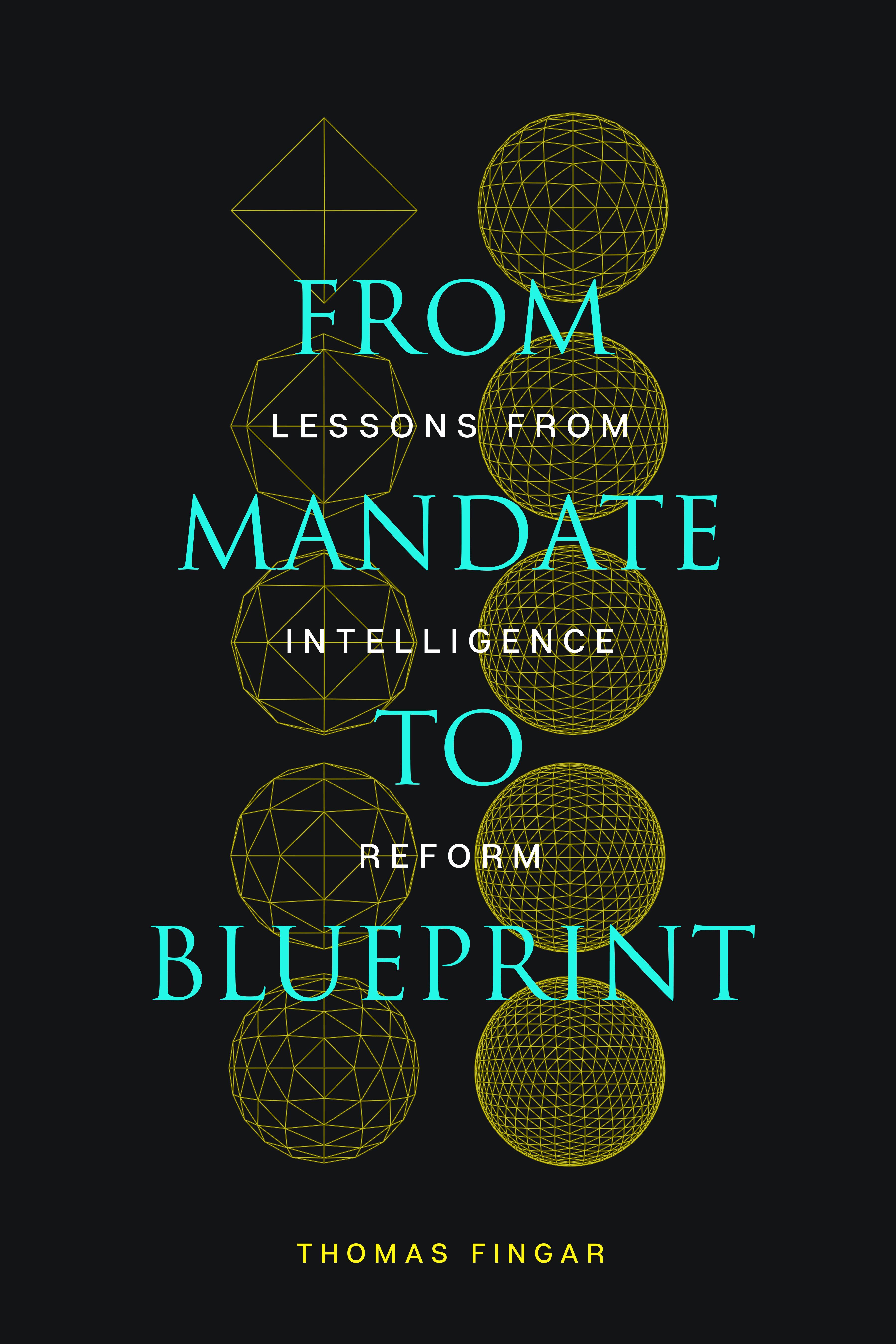
From Mandate to Blueprint
In From Mandate to Blueprint, Thomas Fingar offers a guide for new federal government appointees faced with the complex task of rebuilding institutions and transitioning to a new administration. Synthesizing his own experience implementing the most comprehensive reforms to the national security establishment since 1947, Fingar provides crucial guidance to newly appointed officials. When Fingar was appointed the first Deputy Director of National Intelligence for Analysis in 2005, he discovered the challenges of establishing a new federal agency and implementing sweeping reforms of intelligence procedure and performance. The mandate required prompt action but provided no guidance on how to achieve required and desirable changes. Fingar describes how he defined and prioritized the tasks involved in building and staffing a new organization, integrating and improving the work of sixteen agencies, and contending with pressure from powerful players. For appointees without the luxury of taking command of fully staffed and well-functioning federal agencies, From Mandate to Blueprint is an informed and practical guide for the challenges ahead.
eBook

Reducing uncertainty : intelligence analysis and national security
The US government spends billions of dollars every year to reduce uncertainty: to monitor and forecast everything from the weather to the spread of disease. In other words, we spend a lot of money to anticipate problems, identify opportunities, and avoid mistakes. A substantial portion of what we spend—over {dollar}50 billion a year—goes to the US Intelligence Community. Reducing Uncertainty describes what Intelligence Community analysts do, how they do it, and how they are affected by the political context that shapes, uses, and sometimes abuses their output. In particular, it looks at why IC analysts pay more attention to threats than to opportunities, and why they appear to focus more on warning about the possibility of \"bad things\" happening than on providing the input necessary for increasing the likelihood of positive outcomes. The book is intended to increase public understanding of what IC analysts do, to elicit more relevant and constructive suggestions for improvement from outside the Intelligence Community, to stimulate innovation and collaboration among analysts at all grade levels in all agencies, and to provide a core resource for students of intelligence. The most valuable aspect of this book is the in-depth discussion of National Intelligence Estimates—what they are, what it means to say that they represent the \"most authoritative judgments of the Intelligence Community,\" why and how they are important, and why they have such high political salience and symbolic importance. The final chapter lays out, from an insider's perspective, the story of the flawed Iraq WMD NIE and its impact on the subsequent Iran nuclear NIE—paying particular attention to the heightened political scrutiny the latter received in Congress following the Iraq NIE debacle.
eBook

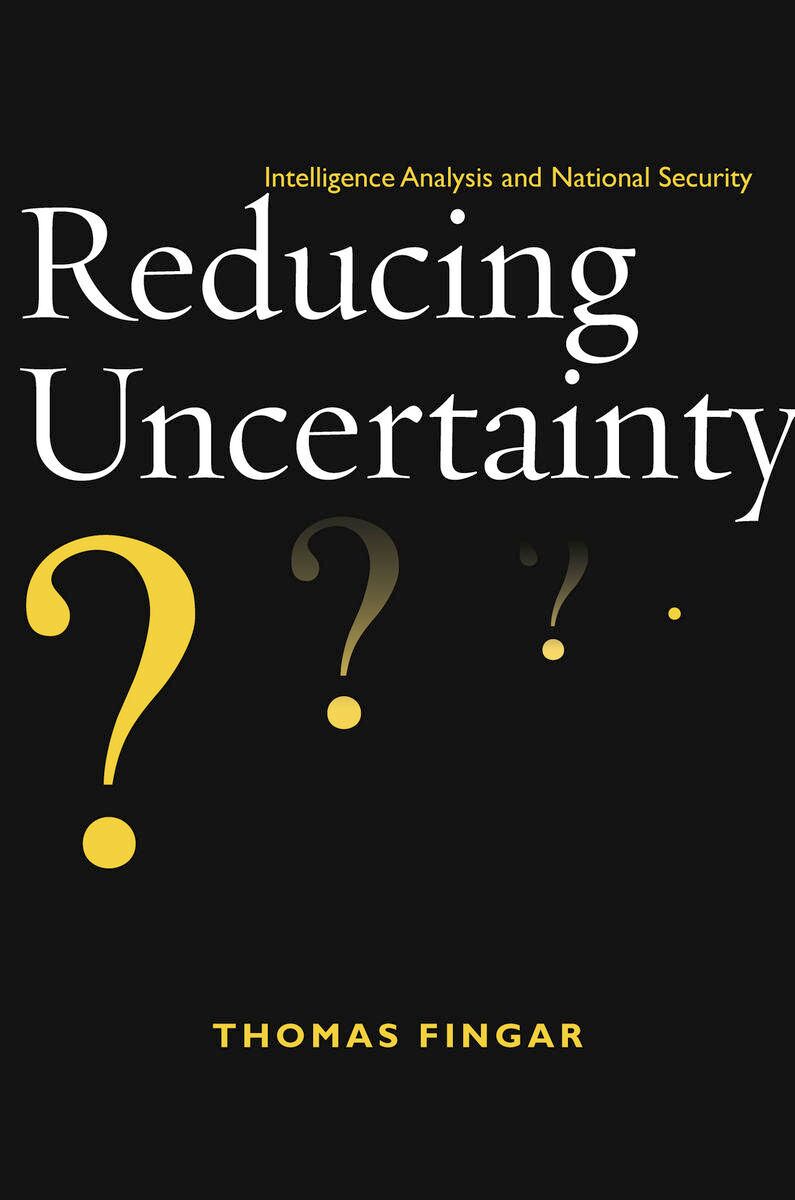
Reducing Uncertainty
The US government spends billions of dollars every year to reduce uncertainty: to monitor and forecast everything from the weather to the spread of disease. In other words, we spend a lot of money to anticipate problems, identify opportunities, and avoid mistakes. A substantial portion of what we spend—over $50 billion a year—goes to the US Intelligence Community. Reducing Uncertainty describes what Intelligence Community analysts do, how they do it, and how they are affected by the political context that shapes, uses, and sometimes abuses their output. In particular, it looks at why IC analysts pay more attention to threats than to opportunities, and why they appear to focus more on warning about the possibility of \"bad things\" happening than on providing the input necessary for increasing the likelihood of positive outcomes. The book is intended to increase public understanding of what IC analysts do, to elicit more relevant and constructive suggestions for improvement from outside the Intelligence Community, to stimulate innovation and collaboration among analysts at all grade levels in all agencies, and to provide a core resource for students of intelligence. The most valuable aspect of this book is the in-depth discussion of National Intelligence Estimates—what they are, what it means to say that they represent the \"most authoritative judgments of the Intelligence Community,\" why and how they are important, and why they have such high political salience and symbolic importance. The final chapter lays out, from an insider's perspective, the story of the flawed Iraq WMD NIE and its impact on the subsequent Iran nuclear NIE—paying particular attention to the heightened political scrutiny the latter received in Congress following the Iraq NIE debacle.
eBook
