
Catalogue Search | MBRL


Are you sure you want to remove the book from the shelf?

{{itemTitle}}
180
result(s) for
"Finkelstein, Sydney"
Sort by:

The superbosses playbook : a workbook companion to superbosses
\"The companion workbook to Dartmouth professor Sydney Finkelstein's acclaimed Superbosses: How Exceptional Leaders Master the Flow of Talent. Superbosses explained how industry legends like football coach Bill Walsh, television executive Lorne Michaels, restaurateur Alice Waters, and fashion pioneer Ralph Lauren find, nurture, and lead employees. Now, The Superbosses Playbook shows readers how to apply the tactics of these \"superbosses\" in their own organizations. The Superbosses Playbook features assessments, case studies, and exercises designed to help anyone recruit talent, lead performance, inspire teams, and even part with great people like a true superboss. For instance, Finkelstein includes assessments of your superboss score and templates for interviewing and evaluating new hires. This workbook will help you learn and apply the secrets of iconic business leaders\"-- Provided by publisher.
Book

Synchronous thyroid cancer and malignant struma ovarii: concordant mutations and microRNA profile, discordant loss of heterozygosity loci
Background
Struma ovarii is an unusual ovarian teratoma containing predominantly thyroid tissue. Less than 10% of cases undergo malignant transformation in the thyroid tissue and are considered malignant struma ovarii (MSO). MSO have been reported with concurrent thyroid lesions, but molecular data is lacking.
Case presentation
A 42-year-old female developed MSO and synchronous multifocal subcentimeter papillary thyroid carcinoma (PTC). The patient underwent a salpingo-oophrectomy, thyroidectomy, and low-dose radioactive iodine ablation. Both the thyroid subcentimeter PTC and MSO were positive for BRAF V600E mutation, and microRNA expression profiles were similar across all tumor deposits. However, only the malignant component demonstrated extensive loss of heterozygosity (LOH) involving multiple tumor suppressor gene (TSG) chromosomal loci.
Conclusions
We present the first reported case of MSO with synchronous multifocal subcentimeter PTC in the thyroid containing concordant BRAF V600E mutations and resulting with discordant LOH findings. This data suggests that loss of expression in tumor suppressor gene(s) may be an important contributor to phenotypic expression of malignancy.
Journal Article

Superbosses : how exceptional leaders master the flow of talent
\"After dining at the Chez Panisse, the restaurant run by ... Alice Waters, Sydney Finkelstein got to thinking. Dozens of chefs from Chez Panisse had gone on to open their own restaurants and win fame after working with Waters ... Could this pattern exist elsewhere? Did other industries have their own superstars who developed the majority of leaders in their particular field? ... Finkelstein found that similarly powerful mentors--whom he calls Superbosses--do indeed exist in every industry, from finance to entertainment to fashion and the arts. These Superbosses create a network of superstars, using techniques for hiring, developing, challenging, promoting, and even letting go of great people in ways that are often counterintuitive\"--Provided by publisher.
Book

When Firms Are Desperate to Grow via Acquisition: The Effect of Growth Patterns and Acquisition Experience on Acquisition Premiums
In this paper we draw on work in behavioral learning theory and risk taking to examine whether firms desperate for growth overpay for acquisitions, and we develop a theory of desperation in the context of growth. We suggest two key drivers of such desperation: (1) when a firm's organic growth is low, paying handsomely for acquisitions may be one of the few options for growth, and (2) when a firm becomes dependent on acquisitions for continuing growth, it is vulnerable to overpaying for acquisitions. Although pressures to grow via acquisition can be intense, we also test whether the benefits of acquisition experience— from both acquirers and their advisors— help to prevent overpayment caused by desperation. We test these ideas in a sample of firms in the banking industry between 1994 and 2005. Consistent with this theory of desperation, our results showed that firms desperate for growth are more likely to pay high acquisition premiums. Our findings on the moderating role of acquisition experience showed that advisors' acquisition experience is more helpful than acquirers' own acquisition experience in preventing desperate acquirers from overpaying for a target.*
Journal Article


Integrating Strategic, Organizational, and Human Resource Perspectives on Mergers and Acquisitions: A Case Survey of Synergy Realization
Mergers and acquisitions are complex events in organizational life for which we have incomplete understanding, in part because researchers have tended to consider only partial explanations of them. The authors addressed that problem by developing a conceptual framework that integrates theoretical perspectives from economics, finance, and especially strategy, organization theory, and human resource management to offer a broader process-oriented integrative model. The integrative model explicitly describes how synergy realization is a function of the similarity and complementarity of the two merging businesses (combination potential), the extent of interaction and coordination during the organizational integration process, and the lack of employee resistance to the combined entity. The approach differs from traditional methods of studying mergers and acquisitions in three ways: (1) the success of a merger or acquisition is gauged by the degree of synergy realization rather than more removed and potentially ambiguous criteria such as accounting or market returns; (2) the key attribute of combination potential is conceptualized not only in terms of the similarities present across businesses, as in most studies of mergers and acquisitions, but also in terms of the production and marketing complementarities between the two businesses; and (3) the data are derived from a case survey method that combines the richness of in-depth case studies with the breadth and generalizability of large-sample empirical investigations.
The framework was tested empirically across a sample of 61 mergers and acquisitions. The extent to which a merger or acquisition resulted in synergistic benefits was related to the strategic potential of the combination, the degree of organizational integration after the deal was completed, and the lack of employee resistance to the integration of the joining firms. Furthermore, the analysis revealed that (1) independent of any similarities across joining firms, the presence of complementary operations increased the probability of acquisition success by boosting synergy realization, (2) organizational integration was the single most important factor in explaining synergy realization, even to the extent that M&As with high combination potential were significantly more successful when coupled with high organizational integration than when integration efforts were less forceful, and (3) mergers and acquisitions that were dependent on gains from combining similar production and marketing operations tended to elicit more resistance from employees than M&As focused on realizing complementary benefits. Overall, the findings provide strong support for an integrative theory of mergers and acquisitions.
Journal Article
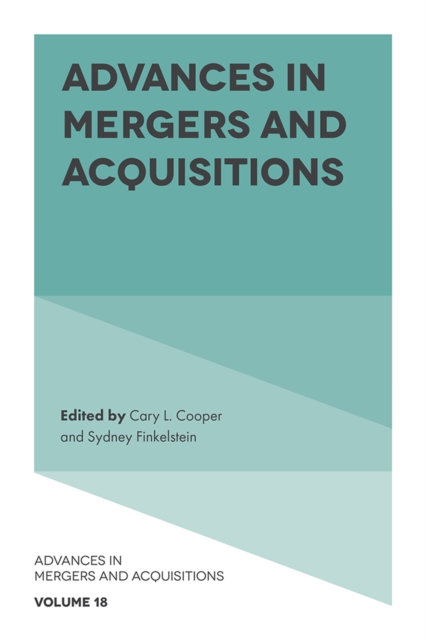
Advances in Mergers and Acquisitions
Advances in Mergers and Acquisitions stands out from the competition due to its focus on three key characteristics: studies from scholars in different countries, with different research questions, relying on different theoretical perspectives. Such a broad and inclusive approach to mergers and acquisitions is not easily replicated in academic journals, with much narrower mandates and metrics. The chapters published in this volume provide cutting edge ideas by leading scholars, and help to inform mergers and acquisitions research around the world. Volume 18 of this annual series explores a range of issues that include: why the success rate of MAs is still limited; how Boards influence MA activity; what the role of MA advisors is; the role of diversity in the context of M stakeholder relationships in the context of M why research has not focussed on family businesses in the MA field as much as it should; making MAs less risky as a strategic investment; merging cities; pre-merger and acquisition strategies and finally, how 'value' has been used or not used in MAs.
eBook
The Influence of Organizational Acquisition Experience on Acquisition Performance: A Behavioral Learning Perspective
Drawing on work from behavioral learning theory in psychology, this study examines the influence of prior organizational acquisition experience on the performance of acquisitions. This theory, which examines both the conditions preceding organization events and organizational responses, predicts that experience effects may range from positive to negative. Consistent with this theory, data from 449 acquisitions show an overall U-shaped relationship between organization acquisition experience and acquisition performance. In addition, the more similar a firm's acquisition targets are to its prior targets, the better they perform. These findings suggest that relatively inexperienced acquirers, after making their first acquisition, inappropriately generalize acquisition experience to subsequent dissimilar acquisitions, while more experienced acquirers appropriately discriminate between their acquisitions. Behavioral learning theory, then, may enhance understanding of organization experience effects.
Journal Article

23 Serially Molecular Testing of Pancreatic Cyst Fluid Over Time: Progression and Regression
INTRODUCTION:Currently, guideline recommended surveillance of pancreatic cysts is based on low quality evidence, as the natural history of such lesions is not well understood. Our study aimed to review pancreatic cystic lesions serially tested by an integrated molecular pathology (IMP) to better understand their natural history and their resulting risk classifications over time.METHODS:We conducted retrospective data review of patients that underwent ≥2 endoscopic ultrasound-guided fine needle aspirations (EUS-FNAs) of their pancreatic cyst, each of which had IMP testing as part of standard of care (PancraGenTM, Interpace Diagnostics) between April 2012–March 2019. The four category IMP result classifies pancreatic cysts as either low risk (Benign and Statistically Indolent [SI]), moderate risk (Statistically High Risk [SHR]) or high risk (Aggressive).RESULTS:2,167 pancreatic cysts underwent serial IMP testing. The median number of serial tests performed was 2. The majority of cysts serially tested had time intervals between <1 year and 1–2 years (66%, 1,442/2,167), with 10% (208/2,167) having testing with a >4 year time interval (Table 1). Among cases serially tested, 86% initially had a low risk IMP result of which 92% remained low risk at follow-up EUS-FNA while 8% progressed to a moderate/high risk IMP classification. 99% of diagnostic progression was only to moderate risk IMP. Conversely, among cases serially tested, 14% initially had moderate/high risk IMP results of which 21% remained moderate/high risk at follow-up while 79% regressed to low risk IMP classification. >99% of diagnostic regression was from moderate risk IMP.CONCLUSION:Examining molecular progression and regression of pancreatic cysts over time can lead to a better understanding of their natural history, which can help guide surveillance intervals. The majority of cases (92%) that initially had low risk IMP results remained low risk overtime, supporting less frequent surveillance intervals. Of those that progressed, 99% were only to moderate risk levels where diagnostic regression most often occurs.
Journal Article

Development of microRNA-Based Glioblastoma Biomarkers Using Blood Plasma Specimens
Background: Noninvasive biomarkers for the detection and monitoring of glioblastoma (GBM) are needed to improve clinical outcomes for patients. The objective of this pilot study was to evaluate the expression of a panel of 48 pre-selected microRNAs (miRNAs) in plasma specimens from GBM patients versus healthy controls to identify candidate miRNA biomarkers for noninvasive diagnosis of GBM. Methods: Selection of candidate miRNA biomarkers was based on a comprehensive literature review and data mining. RNA was extracted from plasma samples obtained prior to resection from patients with GBM (n = 30) and age- and sex-matched healthy controls (n = 30), as well as from matched FFPE GBM tissue samples when available (n = 3). Expression levels of 48 miRNAs were assessed in all samples, and expression data was processed using proprietary software to generate potential biomarkers and train linear classifiers. Results: Overall miRNA expression patterns were similar between matched plasma and FFPE tumor tissues in patients with GBM. miRNA levels were examined in pairs to determine the ratio between two miRNAs, which served to normalize the data. The top five miRNA pairs for distinguishing between GBM and healthy control plasma included miR-17-5p/miR-19b-3p (AUC 0.93, 95% CI = 0.870, 0.970), miR-20a-5p/miR-19b-3p (AUC 0.93, 95% CI = 0.870, 0.970), miR-93-5p/miR-92a-3p (AUC 0.92, 95% CI = 0.875, 0.965), miR-17-5p/miR-92a-3p (AUC 0.91, 95% CI = 0.865, 0.955), and miR-93-5p/miR-19b-3p (AUC 0.90, 95% CI = 0.850, 0.950). For the development of a multi-biomarker combination classifier consisting of up to three miRNA pair biomarkers, miRNA pairs with an AUC ≥ 0.8 were selected to build equal-weight linear classifiers. All possible combinations of three high-performing miRNA pairs were tested across the 60 samples. The top classifier (miR-20a-5p/miR-451a, miR-582-5p/miR-222-3p, and miR-17-5p/miR-222-3p) achieved an AUC value of 0.992, sensitivity of 0.93, specificity of 1, and accuracy of 0.97. Conclusions: These findings support the continued development of a plasma-based miRNA molecular diagnostic approach for the detection of GBM. The strong discriminatory performance observed in this study, including high AUC values, highlights the potential of circulating miRNA signatures as a minimally invasive diagnostic tool. As a pilot analysis, this work establishes a foundation for future prospective studies in larger, independent cohorts—including relevant disease control populations—to further define clinical performance, specificity, and utility in diagnostic and monitoring settings. Collectively, these results represent an important step toward the translation of plasma-based miRNA profiling into clinical application for GBM.
Journal Article