
Catalogue Search | MBRL


Are you sure you want to remove the book from the shelf?

{{itemTitle}}
17
result(s) for
"Finlayson, A. author"
Sort by:

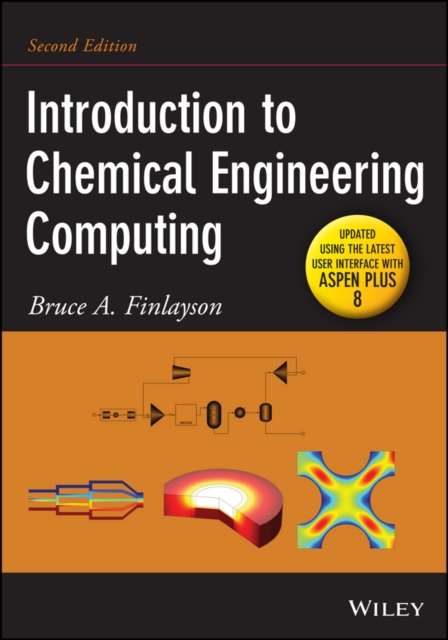
Introduction to chemical engineering computing
Step-by-step instructions enable chemical engineers to master key software programs and solve complex problems Today, both students and professionals in chemical engineering must solve increasingly complex problems dealing with refineries, fuel cells, microreactors, and pharmaceutical plants, to name a few. With this book as their guide, readers learn to solve these problems using their computers and Excel, MATLAB, Aspen Plus, and COMSOL Multiphysics. Moreover, they learn how to check their solutions and validate their results to make sure they have solved the problems correctly. Now in its Second Edition, Introduction to Chemical Engineering Computing is based on the author's firsthand teaching experience. As a result, the emphasis is on problem solving. Simple introductions help readers become conversant with each program and then tackle a broad range of problems in chemical engineering, including: Equations of state Chemical reaction equilibria Mass balances with recycle streams Thermodynamics and simulation of mass transfer equipment Process simulation Fluid flow in two and three dimensions All the chapters contain clear instructions, figures, and examples to guide readers through all the programs and types of chemical engineering problems. Problems at the end of each chapter, ranging from simple to difficult, allow readers to gradually build their skills, whether they solve the problems themselves or in teams. In addition, the book's accompanying website lists the core principles learned from each problem, both from a chemical engineering and a computational perspective. Covering a broad range of disciplines and problems within chemical engineering, Introduction to Chemical Engineering Computing is recommended for both undergraduate and graduate students as well as practicing engineers who want to know how to choose the right computer
software program and tackle almost any chemical engineering problem.
eBook

The political is political
Nobody should really have to point out that political philosophy is political. Yet in this highly original and provocative book Lorna Finlayson argues that in fact it is necessary to do so. Offering a critique of mainstream liberal political philosophy through close, critical engagement with a series of specific debates and arguments, Finlayson analyzes the way in which apparently neutral methodological devices such as “charitable interpretation” and “constructive criticism” function so as to protect against challenges to the status quo. At each stage, Finlayson demonstrates that political philosophy is suffering from a complex process of “de-politicization.” Even in cases where it appears that the dominant framework of liberal political philosophy is being strongly challenged—as, for example, in the case of the ‘realist’ critique of “ideal theory”—this book argues that the debate is set up in such a way as to impose strict limits on the kind of dissent that is possible. Only by dragging these hidden presuppositions into the foreground can we arrive at a clear-eyed appreciation of such debates, and perhaps look beyond the artificially constricted landscape in which they seek to confine us.
eBook

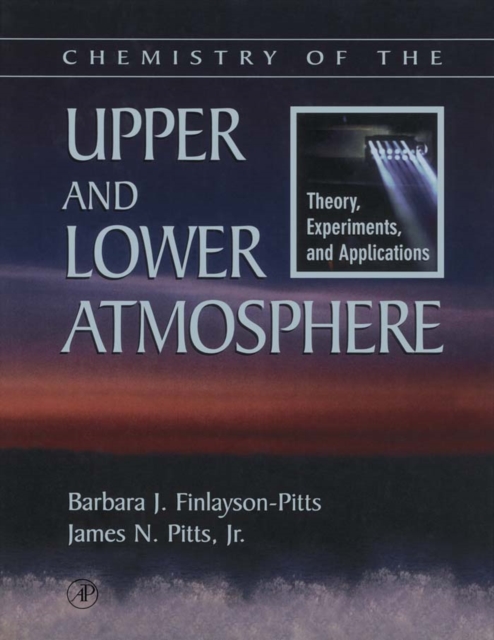
Chemistry of the upper and lower atmosphere
Here is the most comprehensive and up-to-date treatment of one of the hottest areas of chemical research. The treatment of fundamental kinetics and photochemistry will be highly useful to chemistry students and their instructors at the graduate level, as well as postdoctoral fellows entering this new, exciting, and well-funded field with a Ph.D. in a related discipline (e.g., analytical, organic, or physical chemistry, chemical physics, etc.). Chemistry of the Upper and Lower Atmosphere provides postgraduate researchers and teachers with a uniquely detailed, comprehensive, and authoritative resource. The text bridges the \"gap\" between the fundamental chemistry of the earth's atmosphere and \"real world\" examples of its application to the development of sound scientific risk assessments and associated risk management control strategies for both tropospheric and stratospheric pollutants. Key Features *Serves as a graduate textbook and \"must have\" reference for all atmospheric scientists * Provides more than 5000 references to the literature through the end of 1998 * Presents tables of new actinic flux data for the troposphere and stratospher (0-40km) * Summarizes kinetic and photochemical date for the troposphere and stratosphere *Features problems at the end of most chapters to enhance the book's use in teaching * Includes applications of the OZIPR box model with comprehensive chemistry for student use.
eBook


Questions That Work
A fresh, impassioned guide on the art of question-asking--with powerful examples to use in every workplace situation.
eBook


Habermas : a very short introduction
This book provides a clear and readable overview of the works of today's most influential German philosopher. It analyses the theoretical underpinnings of Habermas's social theory, and its applications in ethics, politics, and law. Finally, it examines how his social and political theory informs his writing on contemporary, political, and social problems. - ;This book gives a clear and readable overview of the philosophical work of J--uuml--;rgen Habermas, the most influential German philosopher alive today, who has commented widely on subjects such as Marxism, the importance and effectiveness of communication, the reunification of Germany, and the European Union. Gordon Finlayson provides readers with a clear and readable overview of Habermas's forbiddingly complex philosophy using concrete examples and accessible language. He then goes on to analyse both the theoretical underpinnings of Habermas's social theory, and its more concrete applications in the fields of ethics, politics, and law; and concludes with an examination how Habermas's social and political theory informs his writing on contemporary, political, and social problems. -.
eBook