
Catalogue Search | MBRL


Are you sure you want to remove the book from the shelf?

{{itemTitle}}
6
result(s) for
"Finney, John, editor"
Sort by:


My Dear Boy
My Dear Boybrings a largely unexplored dimension of Langston Hughes to light. Carmaletta Williams and John Edgar Tidwell explain that scholars have neglected the vital role that correspondence between Carrie Hughes and her son Langston-Harlem Renaissance icon, renowned poet, playwright, fiction writer, autobiographer, and essayist-played in his work.The more than 120 heretofore unexamined letters presented here are a veritable treasure trove of insights into the relationship between mother Carrie and her renowned son Langston. Until now, a scholarly consensus had begun to emerge, accepting the idea of their lives and his art as simple and transparent. But as Williams and Tidwell argue, this correspondence is precisely where scholars should start in order to understand the underlying complexity in Carrie and Langston's relationship. By employing Family Systems Theory for the first time in Hughes scholarship, they demonstrate that it is an essential heuristic for analyzing the Hughes family and its influence on his work. The study takes the critical truism about Langston's reticence to reveal his inner self and shows how his responses to Carrie were usually not in return letters but, instead, in his created art. ThusMy Dear Boyreveals the difficult negotiations between family and art that Langston engaged in as he attempted to sustain an elusive but enduring artistic reputation.
eBook

Found Anew
Found Anew is an anthology of new poetry and prose from writers with strong ties to the Palmetto State that creatively engages with historical photographs found in the digital collections of the University of South Carolina's South Caroliniana Library. In their eclectic approach to ekphrasis—textual response to the visual—editors R. Mac Jones and Ray McManus have recruited an impressive group of poets and fiction writers, including National Book Award-winning poets Terrance Hayes and Nikky Finney (who provides the foreword); their fellow South Carolina Academy of Authors honorees Gilbert Allen, John Lane, Bret Lott, George Singleton, and Marjory Wentworth; Lillian Smith Award-winner Pam Durban, and others.
eBook

THE ADMIRAL VS. THE NAVY
THERE can be no question but that few men in the 20th century have accomplished as much as Adm. Hyman G. Rickover. Almost single-handedly - as he will quickly attest - he developed the atomic submarine, thus providing the nation with an invulnerable nuclear deterrent. He brought nuclear power to the surface fleet, a step at least as significant as the conversion of ships from sail to steam. He built the nation's first civilian nuclear power plant, at Shippingport, Pa., which never produced cheap electricity but at least demonstrated that it was possible to build a reactor that would work without too much trouble. A quarter of a century later, private industry is still trying to equal that engineering feat. He brought a new standard of excellence to the Navy and its shipyards as they struggled to meet the elaborate demands of a new technological age. And in the post-Sputnik period he stirred up a debate over the nation's educational system that at least for a brief moment led to some critical reexamination. Did he have to be such a difficult, cantankerous character to accomplish so much? The Navy, steeped in the gentlemanly traditions of another era, answered no. It accepted his accomplishments, but never the way he achieved them. An argument can be made that in the early stages of his nuclear program he had to be a maverick, even a bully, and had to work outside the Navy and build up his political alliances on Capitol Hill if he was to overcome the resistance and inertia of a tradition-bound military institution. It is hard now to recall how opposed the Navy was to Admiral Rickover and to the technological gift he was to give it. The Navy tried to block his promotion to admiral and force him into retirement, and it tried to denigrate his achievement in getting the Nautilus, the first atomic submarine, built. ''One officer who knew Rickover long and well once said, 'he thinks like a communist - like Lenin.' Perhaps Rickover recalled Lenin's admonition: 'A reasonable strategy is to stick to the operation so long that the moral dissolution of the enemy makes a deadly strike possible.' ''
Newspaper Article

State of the Heart
In State of the Heart, Aïda Rogers has crafted an artful love letter to our state, with contributions from a host of nationally and regionally recognized writers who’ve written short essays on the South Carolina places that they cherish. This anthology provides a multifaceted historical and personal view of the Palmetto State. Thematically organized, this collection offers a geographic and emotional scope that is as diverse as its contributors. Sportswriters describe beloved arenas; historians reflect on church ruins and forts. A playwright recalls the magic of her first theater experience; a food writer revels in a coastal joint that serves fresh oysters. Backyards, front porches, a small library at a children’s home, the drama and camaraderie of building the Savannah River Site, and places that are gone except in the memories of the writers who loved them—these are just a few of the locales covered, all showing how South Carolina has changed and inspired people in a variety of ways. State of the Heart evokes a sense of history and timelessness by bringing together heartfelt responses to South Carolina locales rooted in memory, drawing on reflection, inspiration, and love. The anthology reveals a state that is more than a playground for tourists; it’s a state of human hiding places that echo in the hearts of its literary citizens. Though presented as a book about place, the collection is ultimately about our shared connections to one another, to a complex common past, and to ongoing efforts to frame and build a future of promise and possibility.
eBook
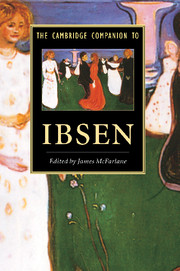
The Cambridge Companion to Ibsen
In the history of modern theatre, Ibsen is one of the dominating figures. The sixteen chapters of this 1994 Companion explore his life and work, providing an invaluable reference work for students. In chronological terms they range from an account of Ibsen's earliest pieces, through the years of rich experimentation, to the mature 'Ibsenist' plays that made him famous towards the end of the nineteenth century. Among the thematic topics are discussions of Ibsen's comedy, realism, lyric poetry and feminism. Substantial chapters account for Ibsen's influence on the international stage and his challenge to theatre and film directors and playwrights today. Essential reference materials include a full chronology, list of works and essays on twentieth-century criticism and further reading.
eBook