
Catalogue Search | MBRL


Are you sure you want to remove the book from the shelf?

{{itemTitle}}
115
result(s) for
"Fish, Jeffrey"
Sort by:

Epicurus and the Epicurean tradition
\"Epicureanism after the generation of its founders has been characterised as dogmatic, uncreative and static. But this volume brings together work from leading classicists and philosophers that demonstrates the persistent interplay in the school between historical and contemporary influences from outside the school and a commitment to the founders' authority. The interplay begins with Epicurus himself, who made arresting claims of intellectual independence, yet also admitted to taking over important ideas from predecessors, and displayed more receptivity than is usually thought to those of his contemporaries. The same principles of autonomy and openness figure importantly in the three major areas of focus in these essays: theology, politics and the emotions\"-- Provided by publisher.
Book

A drug-induced hypotensive challenge to verify catheter-based radiofrequency renal denervation in an obese hypertensive swine model
ObjectiveSham-controlled trials provided proof-of-principle for the blood pressure-lowering effect of catheter-based renal denervation (RDN). However, indicators for the immediate assessment of treatment success are lacking. This study sought to investigate the impact of RDN on renal renin arteriovenous difference (renal renin AV-Δ) following a hypotensive challenge (HC).MethodsTwelve hypertensive Ossabaw swine underwent either combined surgical and chemical (n = 3) or catheter-based RDN (n = 9). A telemetry monitor was implanted to acquire hemodynamic data continuously. Before and after RDN, a sodium nitroprusside-induced HC was performed. Renal renin AV-Δ was calculated as the difference of plasma renin concentrations drawn from the renal artery and vein.ResultsIn total, complete renal renin AV data were obtained in eight animals at baseline and six animals at baseline and 3 months of follow-up. Baseline renal renin AV-Δ correlated inversely with change in 24-h minimum systolic (− 0.764, p = 0.02), diastolic (r = − 0.679, p = 0.04), and mean (r = − 0.663, p = 0.05) blood pressure. In the animals with complete renin secretion data at baseline and follow-up, the HC increased renal renin AV-Δ at baseline, while this effect was attenuated following RDN (0.55 ± 0.34 pg/ml versus − 0.10 ± 0.16 pg/ml, p = 0.003). Renin urinary excretion remained unchanged throughout the study (baseline 0.286 ± 0.187 pg/ml versus termination 0.305 ± 0.072 pg/ml, p = 0.789).ConclusionRenin secretion induced by HC was attenuated following RDN and may serve as an indicator for patient selection and guide successful RDN procedures.
Journal Article

Soil liming mitigates the negative effect of simulated acid rain on the isopod, Porcellio scaber
Terrestrial isopods are sensitive to variability in the pH-buffering capacity of soils, partly because of their high requirement for calcium. Acid deposition resulting from air pollution can reduce the quality of the environment for isopods and other forest-floor animals through the reduction of available calcium and increased acidity. We examined the potential for calcium carbonate (lime) application in soil to mitigate negative effects of simulated acid deposition on the isopod, Porcellio scaber Latreille (1804), in laboratory microcosms. Growth rate of animals was lower when subjected to strongly acidic simulated precipitation compared to weakly acidic simulated precipitation. Animals in limed microcosms had higher growth rates and lower risk of mortality than those in conditions without lime. Whole-body calcium concentration was higher for isopods in limed than unlimed microcosms receiving strongly acidic simulated precipitation. These results underscore the importance of buffering substrates for isopods and suggest that application of lime may be a productive mitigative technique in areas affected by acid rain.
Journal Article
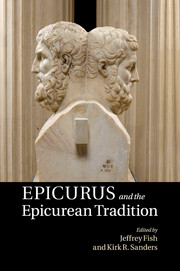
Epicurus and the Epicurean Tradition
Epicureanism after the generation of its founders has been characterised as dogmatic, uncreative and static. But this volume brings together work from leading classicists and philosophers that demonstrates the persistent interplay in the school between historical and contemporary influences from outside the school and a commitment to the founders' authority. The interplay begins with Epicurus himself, who made arresting claims of intellectual independence, yet also admitted to taking over important ideas from predecessors, and displayed more receptivity than is usually thought to those of his contemporaries. The same principles of autonomy and openness figure importantly in the three major areas of focus in these essays: theology, politics and the emotions.
eBook

Cellular and ionic basis for the sex-related difference in the manifestation of the Brugada syndrome and progressive conduction disease phenotypes
The Brugada syndrome (BS) has been linked to mutations in SCN5A. Despite equal hereditary transmission of the mutation between the sexes, the syndrome is 8 to 10 times more likely to occur in males. As recently reported, SCN5A mutations such as G1406R lead to development of BS phenotype principally in males and conduction disease phenotype in females. We hypothesized that these differences may be related to a larger transient outward current (Ito)-mediated right ventricular (RV) epicardial (Epi) action potential (AP) notch in males versus females, resulting in a higher incidence of all-or-none repolarization at the end of phase 1 and phase 2 re-entry (P2R) when challenged with sodium and calcium channel block. Using canine RV wedge preparations, we developed an experimental model of the BS using terfenadine to depress the AP dome in RV Epi. Results: RV Epi AP phase 1 amplitude corrected to phase 2 amplitude was 12% smaller in males (n = 18) compared to females (n = 8, P< .05) at a cycle length of 2,000 ms. When exposed to 5 μM terfenadine for up to 2 hours, 6 of 7 male but only 2 of 7 female preparations exhibited spontaneous P2R, generating a closely coupled extrasystole. Two of 6 male and 1 of 2 female preparations displaying P2R developed polymorphic VT/VF. Female and male preparations that failed to develop P2R displayed progressive conduction impairment with continued exposure to terfenadine and developed polymorphic and monomorphic VT/VF when paced at rapid rates. Male preparations pretreated with 4-aminopyridine to inhibit Ito displayed progressive conduction impairment but not Brugada syndrome. Conclusion: Our data suggest that the presence of a more prominent I
to-mediated notch in the Epi of males predisposes males to the development of the Brugada phenotype and that a smaller Epi notch in females relegates them to development of progressive conduction problems under conditions in which inward currents are compromised.
Journal Article

Brugada syndrome and ischemia-induced ST-segment elevation. Similarities and differences
ST-Segment elevation is a common electrocardiogram (ECG) manifestation of acute transmural myocardial ischemia in leads facing the injury. Acute myocardial ischemia involving the right-ventricular (RV) outflow tract is known to induce a Brugada-like ECG. In this paper, we examined the electrophysiological bases for the similarities between the ECG characteristics of the Brugada syndrome model induced by terfenadine (5 μmol/L) and the ECG manifestations of the acute transmural no-flow ischemia model.
For both experimental simulations, we used isolated arterially perfused canine RV wedge preparations to record transmembrane action potentials (AP) from endocardium and epicardium together with a transmural pseudo-ECG (ECG); basic cycle length = 400 to 2000 ms.
In the presence of a prominent
I
to-mediated AP notch, no-flow ischemia causes true ST-segment elevation because of selective depression and loss of the AP dome at some epicardial sites. In the absence of a prominent AP notch, ischemia ultimately produces an apparent ST-segment elevation, which is secondary to a prolongation of the R wave caused by marked transmural conduction delays. Similarly, in the Brugada syndrome model generated in preparations displaying a large epicardial
I
to, ST-segment elevation was due to loss of the epicardial AP dome at some sites but not at others. Transmural conduction delay giving the appearance of ST-segment elevation is also observed in the Brugada model in preparations exhibiting smaller AP notch. In both models, propagation of the dome from the site at which it is maintained to a site at which it is lost may result in closely coupled phase 2 reentrant extrasystoles.
Our results suggest that
I
to can modulate the electrocardiographic manifestation of acute ischemia as well as that of the Brugada syndrome, and that both clinical entities are the result of a similar electrophysiological substrate.
Journal Article

Vergil, Philodemus, and the Augustans
The Epicurean teacher and poet Philodemus of Gadara (c. 110-c. 40/35 BC) exercised significant literary and philosophical influence on Roman writers of the Augustan Age, most notably the poets Vergil and Horace. Yet a modern appreciation for Philodemus' place in Roman intellectual history has had to wait on the decipherment of the charred remains of Philodemus' library, which was buried in Herculaneum by the eruption of Vesuvius in 79 AD. As improved texts and translations of Philodemus' writings have become available since the 1970s, scholars have taken a keen interest in his relations with leading Latin poets. The essays in this book, derived from papers presented at the First International Symposium on Philodemus, Vergil, and the Augustans held in 2000, offer a new baseline for understanding the effect of Philodemus and Epicureanism on both the thought and poetic practices of Vergil, Horace, and other Augustan writers. Sixteen leading scholars trace his influence on Vergil's early writings, the Eclogues and the Georgics, and on the Aeneid, as well as on the writings of Horace and others. The volume editors also provide a substantial introduction to Philodemus' philosophical ideas for all classicists seeking a fuller understanding of this pivotal figure.
eBook
