
Catalogue Search | MBRL


Are you sure you want to remove the book from the shelf?

{{itemTitle}}
3
result(s) for
"Fleck, Christian, 1954-"
Sort by:


Intellectuals and their Publics
How do intellectuals engage with and affect their publics? What is the role of the public intellectual in the new age of political uncertainties? What challenges face female intellectuals and those speaking from an ethnic, national or class position? This exciting collection responds to these questions by offering a broad-ranging account of the changing role of intellectuals in public life. The volume opens with provocative essays on the idea and role of the public intellectual from Alexander, Evans and Zulaika. Chapters from Rabinbach on intellectuals' responses to totalitarianism, Outhwaite on what it means to be a European intellectual, and Auer's discussion of the dissident intellectual in the collapse of communism lead onto vigorous debate of earlier points discussed through specific intellectual case studies from Tocqueville to Hayek. Intellectuals and their Publics will attract a broad readership interested in the role of the intellectual, with particular appeal for sociologists, political theorists and historians of ideas.
eBook
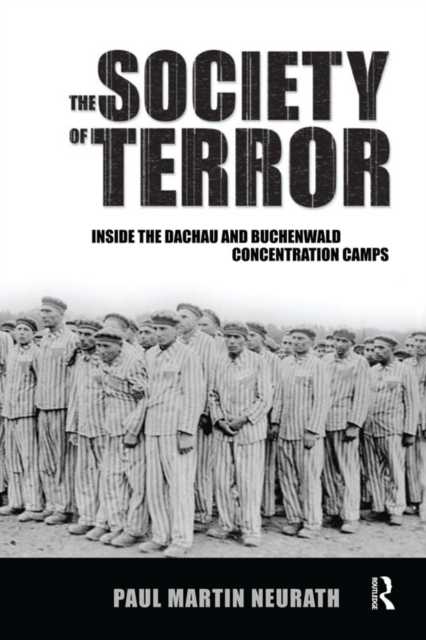
The Society of Terror
During 1938 and 1939, Paul Neurath was a Jewish political prisoner in the concentration camps at Dachau and Buchenwald. He owed his survival to a temporary Nazi policy allowing release of prisoners who were willing to go into exile and the help of friends on the outside who helped him obtain a visa. He fled to Sweden before coming to the United States in 1941. In 1943, he completed The Society of Terror, based on his experiences in Dachau and Buchenwald. He embarked on a long career teaching sociology and statistics at universities in the United States and later in Vienna until his death in September 2001. After liberation, the horrific images of the extermination camps abounded from Dachau, Buchenwald, and other places. Neurath's chillingly factual discussion of his experience as an inmate and his astute observations of the conditions and the social structures in Dachau and Buchenwald captivate the reader, not only because of their authenticity, but also because of the work's proximity to the events and the absence of influence of later interpretations. His account is unique also because of the exceptional links Neurath establishes between personal experience and theoretical reflection, the persistent oscillation between the distanced and sober view of the scientist and that of the prisoner.
eBook