
Catalogue Search | MBRL


Are you sure you want to remove the book from the shelf?

{{itemTitle}}
6,043
result(s) for
"Fletcher, Michael"
Sort by:


Indigenous knowledge and the shackles of wilderness
The environmental crises currently gripping the Earth have been codified in a new proposed geological epoch: the Anthropocene. This epoch, according to the Anthropocene Working Group, began in the mid-20th century and reflects the “great acceleration” that began with industrialization in Europe [J. Zalasiewicz et al., Anthropocene 19, 55–60 (2017)]. Ironically, European ideals of protecting a pristine “wilderness,” free from the damaging role of humans, is still often heralded as the antidote to this human-induced crisis [J. E. M. Watson et al., Nature, 563, 27–30 (2018)]. Despite decades of critical engagement by Indigenous and non-Indigenous observers, large international nongovernmental organizations, philanthropists, global institutions, and nation-states continue to uphold the notion of pristine landscapes as wilderness in conservation ideals and practices. In doing so, dominant global conservation policy and public perceptions still fail to recognize that Indigenous and local peoples have long valued, used, and shaped “high-value” biodiverse landscapes. Moreover, the exclusion of people from many of these places under the guise of wilderness protection has degraded their ecological condition and is hastening the demise of a number of highly valued systems. Rather than denying Indigenous and local peoples’ agency, access rights, and knowledge in conserving their territories, we draw upon a series of case studies to argue that wilderness is an inappropriate and dehumanizing construct, and that Indigenous and community conservation areas must be legally recognized and supported to enable socially just, empowering, and sustainable conservation across scale.
Journal Article

Tarab : music, ecstasy, emotion, and performance
\"Often described as \"ecstasy\" or \"rapture\" brought on by listening to and producing music, tarab is a central concept within Arab music traditions. With A.J. Racy's Making Music in the Arab World: The Culture and Artistry of Tarab (Cambridge, 2004) came the first book-length examination of the phenomenon in English-language scholarship. Tarab: Music, Ecstasy, Emotion, and Performance in the Middle East is a follow-up to Racy's pivotal work, combining an assortment of geographic and disciplinary focuses to expand beyond the Arab world and into the present day. The volume asserts that the transnational character of tarab and its spread is critical to understanding the concept's historical, geographic, and sociological impact\"-- Provided by publisher.
BOOK

The loss of an indigenous constructed landscape following British invasion of Australia
Indigenous people play an integral role in shaping natural environments, and the disruption to Indigenous land management practices has profound effects on the biosphere. Here, we use pollen, charcoal and dendrochronological analyses to demonstrate that the Australian landscape at the time of British invasion in the 18th century was a heavily constructed one—the product of millennia of active maintenance by Aboriginal Australians. Focusing on the Surrey Hills, Tasmania, our results reveal how the removal of Indigenous burning regimes following British invasion instigated a process of ecological succession and the encroachment of cool temperate rainforest (i.e. later-stage vegetation communities) into grasslands of conservation significance. This research provides empirical evidence to challenge the long-standing portrayal of Indigenous Australians as low-impact ‘hunter-gatherers’ and highlights the relevance and critical value of Indigenous fire management in this era of heightened bushfire risk and biodiversity loss.
Journal Article


Disruption of cultural burning promotes shrub encroachment and unprecedented wildfires
Recent catastrophic fires in Australia and North America have raised broad-scale questions about how the cessation of Indigenous burning practices has impacted fuel accumulation and structure. For sustainable coexistence with fire, a better understanding of the ancient nexus between humans and flammable landscapes is needed. We used novel palaeoecological modeling and charcoal compilations to reassess evidence for changes in land cover and fire activity, focusing on southeast Australia before and after British colonization. Here, we provide what we believe is the first quantitative evidence that the region’s forests and woodlands contained fewer shrubs and more grass before colonization. Changes in vegetation, fuel structures, and connectivity followed different trajectories in different vegetation types. The pattern is best explained by the disruption of Indigenous vegetation management caused by European settlement. Combined with climate-change impacts on fire weather and drought, the widespread absence of Indigenous fire management practices likely preconditioned fire-prone regions for wildfires of unprecedented extent.
Journal Article
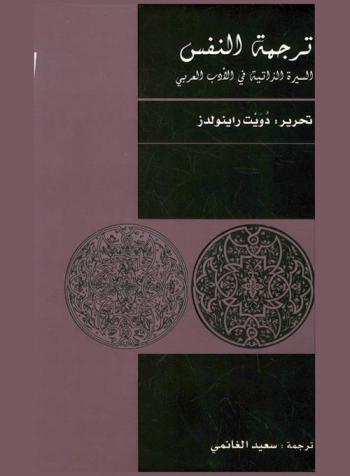
ترجمة النفس : السيرة الذاتية في الأدب العربي
تحدث هذا الكتاب عن ترجمة النفس حيث تشكل ترجمة النفس أو كتابة السيرة الذاتية جنسا أدبيا خاصا في التراث العربي لم يحصل على ما يستحقه من عناية الدارسين فبقي مهملا منسيا حتى جاء مؤلفو هذا الكتاب ومحرره دويت راينولدز ليرفعوا النقاب عن الخصائص الفنية الداخلية لهذا الجنس الأدبي المهمل وقد عني المؤلفون بدحض المغاالطة التي شاعت في الأدب الغربي حول كون السيرة الذاتية نوعا غربيا خالصا لم تعرفه التقاليد الأخرى غير الغربية وبددوا الوهم الذي أشاعته القراءة الاستشارقية عن ندرة السيرة الذاتية في الأدب العربي.
Book


Catastrophic Bushfires, Indigenous Fire Knowledge and Reframing Science in Southeast Australia
The catastrophic 2019/2020 Black Summer bushfires were the worst fire season in the recorded history of Southeast Australia. These bushfires were one of several recent global conflagrations across landscapes that are homelands of Indigenous peoples, homelands that were invaded and colonised by European nations over recent centuries. The subsequent suppression and cessation of Indigenous landscape management has had profound social and environmental impacts. The Black Summer bushfires have brought Indigenous cultural burning practices to the forefront as a potential management tool for mitigating climate-driven catastrophic bushfires in Australia. Here, we highlight new research that clearly demonstrates that Indigenous fire management in Southeast Australia produced radically different landscapes and fire regimes than what is presently considered “natural”. We highlight some barriers to the return of Indigenous fire management to Southeast Australian landscapes. We argue that to adequately address the potential for Indigenous fire management to inform policy and practice in managing Southeast Australian forest landscapes, scientific approaches must be decolonized and shift from post-hoc engagement with Indigenous people and perspectives to one of collaboration between Indigenous communities and scientists.
Journal Article