
Catalogue Search | MBRL


Are you sure you want to remove the book from the shelf?

{{itemTitle}}
206
result(s) for
"Forrest, Jennifer"
Sort by:


Induction chemotherapy followed by standard chemoradiotherapy versus standard chemoradiotherapy alone in patients with locally advanced cervical cancer (GCIG INTERLACE): an international, multicentre, randomised phase 3 trial
Locally advanced cervical cancer is treated with chemoradiotherapy (standard of care), but many patients still relapse and die from metastatic disease. We investigated chemoradiotherapy with or without induction chemotherapy to determine whether induction chemotherapy improves both progression-free survival and overall survival.
The INTERLACE trial was a multicentre, randomised phase 3 trial done at 32 medical centres in Brazil, India, Italy, Mexico, and the UK. Adults (aged ≥18 years) with locally advanced cervical cancer (FIGO 2008 stage IB1 disease with nodal involvement, or stage IB2, IIA, IIB, IIIB, or IVA disease) were randomly assigned (1:1), by minimisation, using a central electronic system, to standard cisplatin-based chemoradiotherapy (once-a-week intravenous cisplatin 40 mg/m2 for 5 weeks with 45·0–50·4 Gy external beam radiotherapy delivered in 20–28 fractions plus brachytherapy to achieve a minimum total 2 Gy equivalent dose of 78–86 Gy) alone or induction chemotherapy (once-a-week intravenous carboplatin area under the receiver operator curve 2 and paclitaxel 80 mg/m2 for 6 weeks) followed by standard cisplatin-based chemoradiotherapy. Stratification factors were recruiting site, stage, nodal status, three-dimensional conformal radiotherapy or intensity modulated radiotherapy, age, tumour size, and histology (squamous vs non-squamous). Primary endpoints were progression-free survival and overall survival within the intention-to-treat population. This trial is registered with ClinicalTrials.gov, NCT01566240, and EUDRACT, 2011-001300-35.
Between Nov 8, 2012, and Nov 17, 2022, 500 eligible patients were enrolled and randomly assigned to the chemoradiotherapy alone group (n=250) or the induction chemotherapy with chemoradiotherapy group. Of 500 patients, 354 (70%) had stage IIB disease and 56 (11%) stage IIIB disease. Pelvic lymph nodes were positive in 215 (43%) patients. 230 (92%) patients who received induction chemotherapy had at least five cycles. Median interval between induction chemotherapy and chemoradiotherapy was 7 days. Four or more cycles of cisplatin were given to 212 (85%) participants in the induction chemotherapy with chemoradiotherapy group and to 224 (90%) of participants in the chemoradiotherapy alone group. 462 (92%) participants received external beam radiotherapy and brachytherapy with a median overall treatment time of 45 days. After a median follow-up of 67 months, 5-year progression-free survival rates were 72% in the induction chemotherapy with chemoradiotherapy group and 64% in the chemoradiotherapy alone group with a hazard ratio (HR) of 0·65 (95% CI 0·46–0·91, p=0·013). 5-year overall survival rates were 80% in the induction chemotherapy with chemoradiotherapy group and 72% in the chemoradiotherapy alone group, with an HR of 0·60 (95% CI 0·40–0·91, p=0·015). Grade 3 or greater adverse events were reported in 147 (59%) of 250 individuals in the induction chemotherapy with chemoradiotherapy group versus 120 (48%) of 250 individuals in the chemoradiotherapy alone group.
Short-course induction chemotherapy followed by chemoradiotherapy significantly improves survival of patients with locally advanced cervical cancer.
Cancer Research UK and University College London–University College London Hospitals Biomedical Research Centre.
Journal Article

Cinematic Timekeeper
Forrest asserts that Film scholars have interpreted Bertrand Tavernier's first feature film L'Horloger de Saint-Paul (1974) as having \"clearly signalled his rejection of the nouvelle vague\" in favor of a return to a more classical aesthetic reminiscent of the post-World War II Tradition of Quality (Forbes 153). One of the primary elements determining this judgement was Tavernier's co-authoring of the film script with Jean Aurenche and Pierre Bost, the writing team singled out by Cahiers du cinema critic Francois Truffaut in \"Une certaine tendance du cinema francais\" (1954) as representing the worst of 1950s film. The film's story turns precisely on the intergenerational strain between a father and his son after the latter's criminal act, a tension that mirrors the state of French cinema in the early 1970s. Descombes will spend the duration of the film closing that gap, a rapprochement figured ironically in the concluding scenes as a prison barrier through which father and son converse with surprising ease.
Journal Article

Patient Outcome Study of Concurrent Chemoradiation, External Beam Radiotherapy, and High-Dose Rate Brachytherapy in Locally Advanced Carcinoma of the Cervix
Introduction:A regimen of concurrent chemoradiation for definitive treatment of cervical cancer is widely used. This retrospective review has been conducted to determine the outcomes and late toxic effect associated with the specific regimen of whole-pelvic external beam radiotherapy of 45 Gy in 25 fractions with parametrial boosts of 5.4 or 9 Gy and HDR brachytherapy (BT) of 30 Gy in 5 fractions to point A delivered by tandem and ring. This protocol is accepted by the Gynecological Oncology Group and endorsed by the American Brachytherapy Society, but no late toxic effect data have been reported.Materials and Methods:The electronic records of sequential patients treated definitively at the Sunnybrook Odette Cancer Centre between January 2006 and December 2008 were reviewed. Patient-, tumor-, and treatment-related details (including external beam radiotherapy, BT, and chemotherapy) were obtained. Outcome measures included disease-free status, dates and sites of first recurrence, survival, and grade 3/4 late toxic effect results (Common Terminology Criteria Adverse Events 3.0 criteria). Exclusion criteria were no follow-up or a planned alternative regimen.Results:One hundred twenty-two patients (+11 excluded) were treated with a median follow-up of 18 months from diagnosis. The actuarial 2-year disease-free survival rate was 70%. The median time to recurrence was 8 months (range, 2-22 months). The median time to toxic effect was 10 months (range 4-27 months). Grade 3/4 toxic effect was observed in 13 patients (11%). The actuarial grade 3/4 toxic effect rate at 2 years was 14%.Conclusions:Despite a relatively short follow-up, the toxicity of this regimen seems high compared with other retrospective series, although pelvic control is good. Consideration should be given to a reduction in BT dose alternatively when feasible image-guided BT may allow maintenance of tumor dose with reduced dose to organs at risk.
Journal Article
940 A retrospective service evaluation of margins used to create planning target volume (PTV) in definitive external beam image guided radiotherapy (IGRT) for cervical cancer at the royal devon university healthcare
Introduction/BackgroundOur aim was to analyse the PTV used for cervical external beam radiotherapy and to determine whether smaller margins could be used without affecting clinical target volume (CTV) coverage to reduce toxicity.The significant organ motion during pelvic radiotherapy is well recognised and locally the INTERLACE protocol for IGRT using intensity modulated radiotherapy (IMRT) has been adopted with 2cm or 3cm PTV set-up margin with a ‘plan of the day’ model.MethodologyAll patients receiving radical definitive radiotherapy for cervical cancer at the Royal Devon and Exeter Hospital between 1/3/2021 and 31/12/2021 were included (n=13). They received 45 gray (6/13) or 55 gray (7/13) in 25 fractions. The radiographer-led choice between 2cm or 3cm margins with daily on-set cone beam computed tomography (CBCT) was reviewed. Based on CBCT, a margin calculation was performed to determine what margin was required to cover the disease.ResultsResults showed 23.1% (3/13) of patients were adequately treated with 2cm margin throughout, described as non-movers. These 3 patients could have been adequately treated with a 1.5cm margin; a 1cm margin would cover 77.3% of fractions. The remaining 10 patients required the 3cm margin for 15.9% of fractions (mean 3.9/25, range 2–8). For these patients a 1cm margin would cover 31.8% of fractions and 1.5cm 66.6%.ConclusionIn conclusion a smaller set-up margin can be utilised, particularly in ‘non-movers’, without compromising disease coverage. Reducing the PTV allows decreased dose to organs at risk, reducing likelihood of toxicity but further analysis of dosimetry and radiographer plan selection is requiredDisclosuresNil
Journal Article
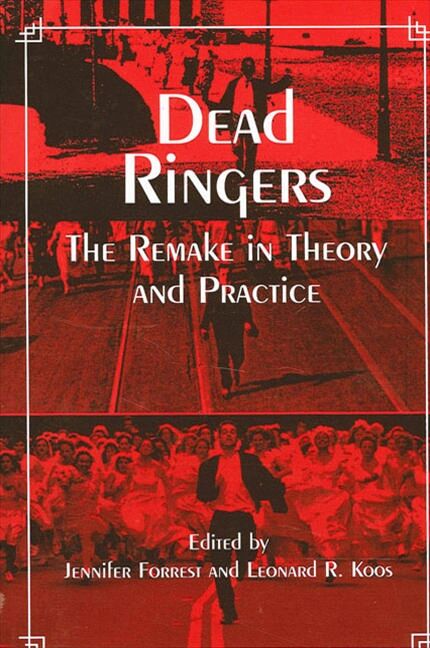
Dead Ringers
While the popular press has criticized movie remakes as signs of Hollywood's collective lack of imagination, the essays in Dead Ringers reveal the centrality and staying power of remakes as a formative genre in filmmaking. The contributors show that the practice of remaking films dates back to the origins of cinema and the evolution of film markets. In fact, remakes were never so prevalent as during the Classic Hollywood period, when filmmaking had achieved its greatest degree of industrialization, and they continue to play a crucial role in the development of film genres generally. Offering a variety of historical, commercial, theoretical, and cultural perspectives on the remake, Dead Ringers is a valuable resource for students of film history and theory, as well as those interested in the cultural politics of the late twentieth century.
eBook
154 A randomized phase III trial of induction chemotherapy followed by chemoradiation compared with chemoradiation alone in locally advanced cervical cancer. The GCIG INTERLACE trial
Introduction/BackgroundLocally advanced cervical cancer (LACC) is treated with chemoradiation (CRT). However, many patients relapse and die from metastatic disease. A feasibility study demonstrated a good response rate to 6 weeks of induction chemotherapy (IC) delivered before standard CRT. INTERLACE trial investigated whether this approach improves both progression free survival (PFS) and overall survival (OS).MethodologyPatients with locally advanced squamous, adeno or adenosquamous carcinoma were randomised (1:1) to either CRT alone (5 weeks cisplatin) or IC (6 weeks carboplatin AUC2 and paclitaxel 80mg/m2) followed by the same CRT in week 7. Mandated minimum total EQD2 dose 78Gy to Point A. All centers underwent radiation quality assurance. Primary endpoints PFS (target hazard ratio [HR] 0.65) and OS (target HR 0.65–0.70).Results500 Patients recruited from 32 centres 5 countries. Median age 46 Majority of the patients were stage IIB (70%) and IIIB (11%) 57% node negative .82% squamous subtype. Arms were balanced.92% of IC patients had 5/6 cycles of carboplatin/paclitaxel. Median interval IC to CRT 7 days. 85% IC/CRT vs. 90% (CRT alone) had 4/5 cycles cisplatin. Over 92% received external beam and brachytherapy in both arms. Median overall treatment time 45days.Grade¬ ¬≥3 adverse events in 59% (IC/CRT) vs. 48% (CRT alone).Median follow up 64 months. 5-year PFS rate 73% IC/CRT and 64% CRT alone (HR 0.65; 95%CI:0.46–0.91, p=0.013). The corresponding 5-year OS rates are 80% and 72% (HR 0.61:95%CI:0.40–0.91, p=0.04). Local and pelvic relapses occurred in 16% in both arms whilst distant relapses occurred in 12% and 20% of IC/CRT and CRT arms respectively.ConclusionInduction chemotherapy followed by CRT significantly improves PFS and OS in LACC and should be considered a new standard of care. INTERLACE recruited patients from diverse health care settings demonstrating that IC followed by CRT is feasible in all countries.DisclosuresSee attached document for COI- presenting author.
Journal Article

Dead ringers : the remake in theory and practice
Addresses the important role of remakes in film culture, from early cinema to contemporary Hollywood. While the popular press has criticized movie remakes as signs of Hollywood’s collective lack of imagination, the essays in Dead Ringers reveal the centrality and staying power of remakes as a formative genre in filmmaking. The contributors show that the practice of remaking films dates back to the origins of cinema and the evolution of film markets. In fact, remakes were never so prevalent as during the Classic Hollywood period, when filmmaking had achieved its greatest degree of industrialization, and they continue to play a crucial role in the development of film genres generally. Offering a variety of historical, commercial, theoretical, and cultural perspectives on the remake, Dead Ringers is a valuable resource for students of film history and theory, as well as those interested in the cultural politics of the late twentieth century.
eBook
Of “True” Sequels
According to the common wisdom, sequels, series, genre films, remakes, and spin-offs operate in the same territory: they revisit familiar material or formulas, and they appeal primarily to popular audiences. They also generally enjoy a degraded status compared to their more esteemed colleagues, originals. In a 2002 New York Times article, Michiko Kakutani bemoaned the “recycling mania” that has seemingly greatly “accelerated” in recent years (1). As prevalent as this practice seems today, however, not only has it been a staple of studio production from the industry’s inception, its frequency also significantly pales in comparison to that of the Classic
Book Chapter
