
Catalogue Search | MBRL


Are you sure you want to remove the book from the shelf?

{{itemTitle}}
235
result(s) for
"Forshaw, Roger"
Sort by:

Egypt of the Saite pharaohs, 664-525 BC
The Egypt of the 660s BC was a politically fragmented and conquered country. However, its situation was about to change. This is an account of how a family of local rulers from the town of Sais declared independence from the Assyrian Empire and brought about reunification. They established central government, reformed the economy and promoted trade. Egypt soon became prosperous, achieving a pre-eminent role in the Mediterranean world. The book reveals the dynamic nature of the period, the astuteness of the Saite rulers and their considerable achievements in the political, economic, administrative and cultural spheres. It will appeal not only to students of Egyptology but also, because of the interactions of the Saite Dynasty with the Aegean and Mesopotamia worlds, to anyone interested in ancient history.
Book

Egypt of the Saite pharaohs, 664–525 BC
In the 660s BC Egypt was a politically fragmented and occupied country. However, this was to change when a family of local rulers from the city of Sais declared independence from the Assyrian Empire, and in a few short years succeeded in bringing about the reunification of Egypt. The Saites established central government, reformed the economy and promoted trade. The country became prosperous, achieving a pre-eminent role in the Mediterranean world. This is the first monograph devoted entirely to a detailed exploration of the Saite Dynasty. It reveals the dynamic nature of the period, the astuteness of the Saite rulers and their considerable achievements in the political, economic, administrative and cultural spheres. It will appeal not only to students of Egyptology but also, because of the interactions of the Saite Dynasty with the Aegean and Mesopotamia worlds, to anyone interested in ancient history.
eBook

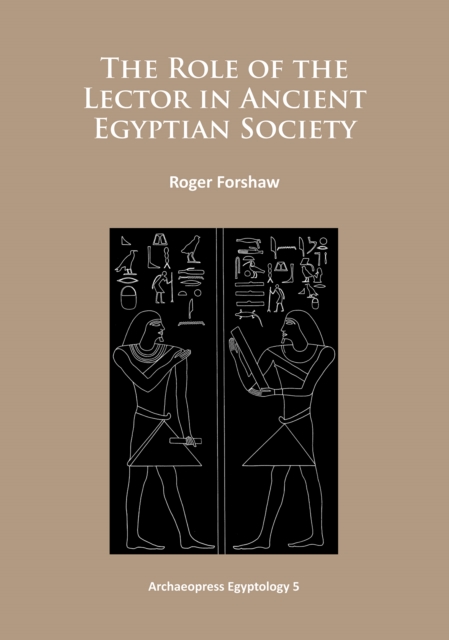
The Role of the Lector in Ancient Egyptian Society
The lector is first attested during the 2nd Dynasty and is subsequently recognised throughout ancient Egypt history. In previous studies the lector is considered to be one of the categories of the ancient Egyptian priesthood. He is perceived to be responsible for the correct performance of rites, to recite invocations during temple and state ritual, and to carry out recitations and perform ritual actions during private apotropaic magic and funerary rites. Previous treatments of the lector have rarely considered the full extent of his activities, either focusing on specific aspects of his work or making general comments about his role. This present study challenges this selective approach and explores his diverse functions in a wide ranging review of the relevant evidence. Why did he accompany state organised military, trading and mining expeditions and what was his role in healing? In the temple sphere he not only executed a variety of ritual actions but he also directed ritual practices. What responsibilities did he fulfil when sitting on legal assemblies, both temple-based and in the community? Activities such as these that encompassed many aspects of ancient Egyptian life are discussed in this volume.
eBook

Dental calculus - oral health, forensic studies and archaeology: a review
Dental calculus is recognised as a secondary aetiological factor in periodontal disease, and being a prominent plaque retentive factor, it is routinely removed by the dental team to maintain oral health. Conversely, dental calculus can potentially be useful in forensic studies by supplying data that may be helpful in the identification of human remains and assist in determining the cause of death. During the last few decades, dental calculus has been increasingly recognised as an informative tool to understand ancient diet and health. As an archaeological deposit, it may contain non-dietary debris which permits the exploration of human behaviour and activities. While optical and scanning electron microscopy were the original analytical methods utilised to study microparticles entrapped within the calcified matrix, more recently, molecular approaches, including ancient DNA (aDNA) and protein analyses, have been applied. Oral bacteria, a major component of calculus, is the primary target of these aDNA studies. Such analyses can detect changes in the oral microbiota, including those that have reflected the shift from agriculture to industrialisation, as well as identifying markers for various systemic diseases.
Key points
Provides an overview of dental calculus from the viewpoint of the dental surgeon, the forensic specialist and the archaeologist.
Dental calculus, being among the richest bimolecular source in the archaeological record, is able to provide significant new insights and answers to questions, relevant to both archaeology and anthropology.
Considers how dental calculus analyses can be useful in shedding light on ancient diet, disease and lifestyle patterns.
Journal Article
Windows into the past: recent scientific techniques in dental analysis
Teeth are the hardest and most chemically stable tissues in the body, are well-preserved in archaeological remains and, being resistant to decomposition in the soil, survive long after their supporting structures have deteriorated. It has long been recognised that visual and radiographic examination of teeth can provide considerable information relating to the lifestyle of an individual. This paper examines the latest scientific approaches that have become available to investigate recent and ancient teeth. These techniques include DNA analysis, which can be used to determine the sex of an individual, indicate familial relationships, study population movements, provide phylogenetic information and identify the presence of disease pathogens. A stable isotopic approach can shed light on aspects of diet and mobility and even research climate change. Proteomic analysis of ancient dental calculus can reveal specific information about individual diets. Synchrotron microcomputed tomography is a non-invasive technique which can be used to visualise physiological impactful events, such as parturition, menopause and diseases in cementum microstructure - these being displayed as aberrant growth lines.
Key points
Emphasises the importance of the investigation of ancient teeth to the study of anthropology, archaeology and forensics.
Discusses the wide range of analytical techniques that are now available to investigate recent and ancient teeth.
Highlights the extent of the information that can be unlocked from teeth and dental calculus.
Journal Article
Fall of the house of Sais: The last Saite ruler, Psamtek III
Soon after the death of Ahmose II, the Persian Empire, which had been increasing in size and power for a number of years, invaded Egypt. Ahmose’s son, Psamtek III, the new ruler of Egypt, fought the Persians, under Cambyses II at Pellusium. The Egyptians retreated and following a siege at Memphis were defeated and Psamtek was taken prisoner. Cambyses conquered Egypt, sent expeditions to the oases, campaigned in Nubia and consolidated his control over the whole country. The celebrated statue of Udjahorresnet, an Egyptian naval officer and dignitary, who served under both Ahmose II and Cambyses II, provides information for this period. Psamtek III reputedly committed suicide following a failed attempt to foment a rebellion against the Persian occupiers. In 525 BC Cambyses was declared King of Egypt and incorporated Egypt into the Persian empire. The Saite Period was over and Egypt was an occupied country.
Book Chapter
The Saite era within the history of Pharaonic civilisation
The final chapter considers the significance of the 26th Dynasty in relation to the history of ancient Egypt. The dynamic nature of the period, and the achievements of the Saites in the political, economic, administrative and cultural spheres are highlighted. Far-reaching administrative changes throughout the country, changes in ownership and tenancy of land, temple reform, the introduction of Demotic, religious ideology developments are major factors during this period. On the international front, for a brief period, Egypt occupied territory in Syria–Palestine, although much of the Saite Period was a struggle against her more powerful neighbours to the east. Trade was promoted with the Greeks and Phoenicians and Egypt became part of the wide-range trading networks that linked the Mediterranean cultures. Egypt realigned itself in the Mediterranean world, heralding the Hellenistic age; a time of transformation from the Bronze Age to the Classical era.
Book Chapter
Political turmoil and ‘Libyan’ settlers: Setting the scene
The opening chapter sets the scene for Egypt of the Saite Pharaohs, 664–525 BC by considering the political turmoil, disunity and events in Egypt prior to the 26th Dynasty, the Saite Period. The invasions and settlements of western tribes (‘Libyans’) into Egypt were a factor in the origin and later rise to power of the Saite rulers. The process of how the ‘Libyan’ leaders rose from being merely local chiefs in a foreign country to eventually being independent rulers of mini-states in northern Egypt is considered. In time one of these states, the Kingdom of the West, centred on Sais, developed and became the largest of these independent polities. Further expansion into the Delta and central Egypt was halted by the invasion of the Kushites from Nubia, the country to the south of Egypt, who already had some presence in the southern part of Egypt. The Kingdom of the West, although defeated, was able to retain its original territory, and its rulers later declared themselves kings and became known as the 24th Dynasty.
Book Chapter
Kushite and Assyrian invaders
The kingdom of Kush rose to power and dominated Nubia in the eighth century BC, and then went on to conquer and rule Egypt as the 25th Dynasty. Egyptian-Kushite commercial activity in the Levant brought them into conflict with the Assyrian Empire, the dominant force in the Near East at that time. Subsequent clashes between the Assyrians and the Egyptian-Kushite forces resulted in the Assyrians, led by Esarhaddon, invading and conquering Egypt. However, once the main Assyrian forces left Egypt, the Kushites rebelled and took over Egypt once more. The Assyrians returned under Ashurbanipal, the next Assyrian ruler, on two further occasions putting down revolts, and finally drove the Kushites from Egypt in 663 BC. The Assyrians appointed local regional rulers to administer the country and Egypt became a province of the Assyrian Empire. In the Delta, the Kingdom of the West was controlled by Psamtek, following the death of his father Nekau I who had ruled the state during the Assyrian and Kushite confrontations.
Book Chapter