
Catalogue Search | MBRL


Are you sure you want to remove the book from the shelf?

{{itemTitle}}
51
result(s) for
"Fosl, Peter S"
Sort by:


التفكير النقدي : مدخل إلى الجدالات الكبرى
يتخذ هذا الكتاب نهجا واسعا متعدد التخصصات وشاملا نسبياً للتفكير النقدي، فبينما يركز العديد من نصوص التفكير النقدي على عناوين منطقية، قمنا بتجميع الكثير من وجهات النظر والممارسات التي صقلتها العلوم الطبيعية والإجتماعية ولا سيما السيكولوجية منها وصقلها النقد والنقد الأدبي والفنون الجميلة، والنظريات السياسية والإجتماعية ولقد لعب التفكير النقدي دورا أساسيا في تطور علومنا ومؤسساتنا السياسية ومفاهيمنا الذاتية تحديدا وإن التفكير النقدي المتين ليس مفيدا فقط للتجارة والقانون والتكنولوجيا إنه أساسي جدا للثقافة الديناميكية والمزدهرة، وهو يحدد العنصر الجوهري لأي تثقيف حقيقي.
Book
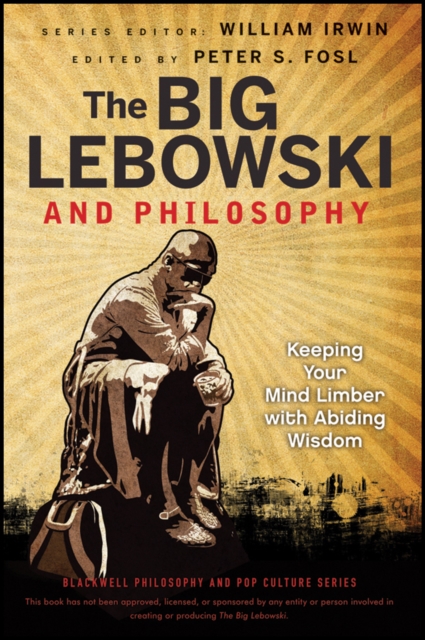
The big lebowski and philosophy
Celebrate the Dude with an abiding look at the philosophy behind The Big Lebowski
Is the Dude a bowling-loving stoner or a philosophical genius living the good life? Naturally, it's the latter, and The Big Lebowski and Philosophy explains why. Enlisting the help of great thinkers like Plato and Nietzsche, the book explores the movie's hidden philosophical layers, cultural reflection, and political commentary. It also answers key questions, including: The Dude abides, but is abiding a virtue? Is the Dude an Americanized version of the Taoist way of life? How does The Big Lebowski illustrate the Just War Theory? How does bowling help Donny, Walter, and the Dude oppose nihilism? Yes, the Dude is deep, and so is this book. Don't watch the movie—or go to Lebowski Fest—without it.
* Explores many of The Big Lebowski 's key themes, such as nihilism, war and politics, money and materialism, idealism and morality, history, and more
* Gives you new perspective on the movie's characters—the Dude, the Big Lebowski, Walter Sobchak, Donny, Maude Lebowski, Bunny Lebowski, and others
* Helps you appreciate the Coen Brothers classic even more with the insights of Aristotle, Epicurus, Kant, Derrida, and other philosophical heavyweights
eBook

التفكير النقدي : مدخل إلى الجدالات الكبرى
يتخذ هذا الكتاب نهجا واسعا متعدد التخصصات وشاملا نسبياً للتفكير النقدي، فبينما يركز العديد من نصوص التفكير النقدي على عناوين منطقية، قمنا بتجميع الكثير من وجهات النظر والممارسات التي صقلتها العلوم الطبيعية والإجتماعية ولا سيما السيكولوجية منها وصقلها النقد والنقد الأدبي والفنون الجميلة، والنظريات السياسية والإجتماعية ولقد لعب التفكير النقدي دورا أساسيا في تطور علومنا ومؤسساتنا السياسية ومفاهيمنا الذاتية تحديدا وإن التفكير النقدي المتين ليس مفيدا فقط للتجارة والقانون والتكنولوجيا إنه أساسي جدا للثقافة الديناميكية والمزدهرة، وهو يحدد العنصر الجوهري لأي تثقيف حقيقي.
BOOK
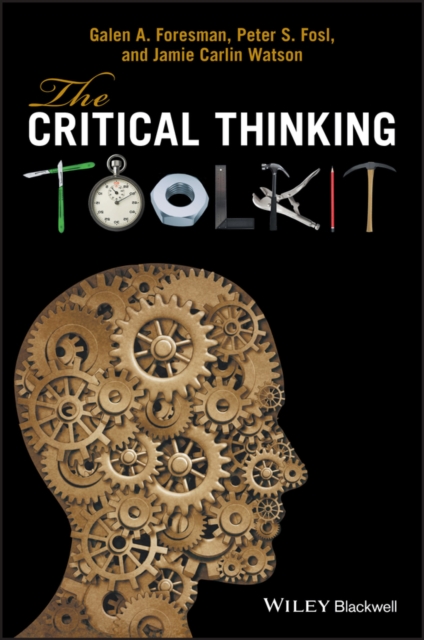
The critical thinking toolkit
The Critical Thinking Toolkit is a comprehensive compendium that equips readers with the essential knowledge and methods for clear, analytical, logical thinking and critique in a range of scholarly contexts and everyday situations.
* Takes an expansive approach to critical thinking by exploring concepts from other disciplines, including evidence and justification from philosophy, cognitive biases and errors from psychology, race and gender from sociology and political science, and tropes and symbols from rhetoric
* Follows the proven format of The Philosopher's Toolkit and The Ethics Toolkit with concise, easily digestible entries, \"see also\" recommendations that connect topics, and recommended reading lists
* Allows readers to apply new critical thinking and reasoning skills with exercises and real life examples at the end of each chapter
* Written in an accessible way, it leads readers through terrain too often cluttered with jargon
* Ideal for beginning to advanced students, as well as general readers, looking for a sophisticated yet accessible introduction to critical thinking
eBook
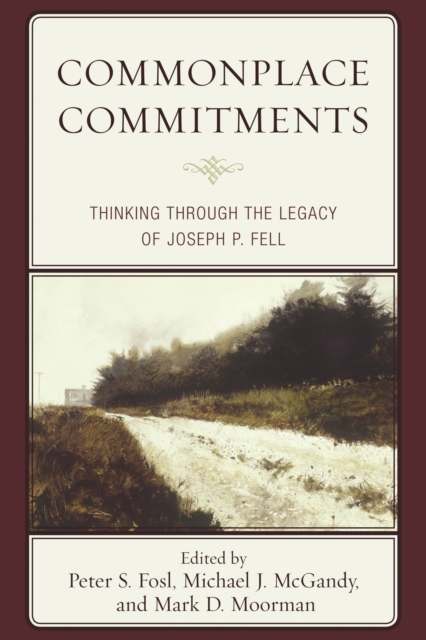
Commonplace commitments
Joseph P. Fell proposes that the solution to the problem of nihilism is found in the common experience of persons and the everyday commitments that one makes to people, practices, and institutions. In his landmark 1979 book Heidegger and Sartre, and in his subsequent essays, Fell describes a quiet but radical reform in the philosophical tradition that speaks to perennial dilemmas of thought and pressing issues for action. Since Descartes, at least, we have been puzzled as to what we can know, how we should act, and what we should value. The skeptical influence of modern dualism—distilled in the mind-body problem at arose with the assertion “I think, therefore I am”—has shot through not just philosophy and psychology, but also society, politics, and culture. With dualism arose radical subjectivism and the concomitant problems of nihilism and alienation. The broad aim of phenomenology is to repair the rupture of self and world. Announced by Edmund Husserl and developed by Jean-Paul Sartre, Martin Heidegger, and John William Miller, who drew from the North American tradition, this is the project to which Fell has devoted more than a half century of reflection and technical elaboration. In this volume, an array of scholars consider, criticize, and cultivate Fell’s key contributions to the phenomenological project. Ranging from analyses of key texts in Fell’s phenomenology to probing examinations of his crucial philosophical presuppositions to the prospects for Fell’s call to find the solution to nihilism in everyday experience—these essays gather the work of the authors thinking with and through Fell’s key works on Sartre, Heidegger, and Miller. Also included are seminal statements from Fell on his pedagogical practice and his conception of philosophy.
eBook

American Despair in an Age of Hope
Fosl refects on philosophical dimension on US Army Col Theodore S. Westhusing's story. Suicide is nearly always in the US today, in psychologically fascinated and pharmaceutically drenched society, interpreted as a consequence of mental illness, most commonly depression. The relative paucity of attention to this slaughter, as opposed to, say, the celebrity weddings of European royalty or Kim Kardashian, suggests that people are reluctant to reflect on the meanings of their lives and deaths at their extremities, that they have become what Plato in Republic called \"lovers of sights and sounds\" rather than friends of the true and the good. They flee the real and pressing difficulties of their existence in favor of vapid spectacle and fantasy.
Journal Article
