
Catalogue Search | MBRL


Are you sure you want to remove the book from the shelf?

{{itemTitle}}
109
result(s) for
"Foxhall, Lin"
Sort by:


The Village beyond the Village: Communities in Rural Landscapes in Ancient Greek Countrysides
Villages in the Classical Greek world consisted of more than a nucleated settlement: the human relationships of rural village communities linked together a variety of spaces and locations in the wider countryside. This means that no one site or location in the landscape makes sense without reference to others with which it was entwined. Moreover, these relationships, and hence the uses of particular sites and places, changed rapidly over time. These aspects of the Classical village are most evident in the occupation histories of excavated small, rural sites. Five such sites from across the Greek world are Pyrgouthi (Berbati Valley, near Mycenae), Sant'Angelo Vecchio and Fattoria Fabrizio (chora of Metaponto, Basilicata), the Vari House (Mt. Hymettus, Attica), and the Umbro Greek site (Bova Marina, southern Calabria).
Journal Article


Introduction: rethinking protohistories: texts, material culture and new methodologies
This introduction problematizes the use of the term protohistory across a wide range of cultures and periods. The methodological issues surrounding periodization and the integrated use of different, multiple evidence streams is discussed, especially the difficulties of combining material and textual data, and how we as archaeologists can best construct narratives.
Journal Article
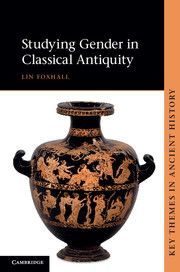
Studying Gender in Classical Antiquity
This book investigates how varying practices of gender shaped people's lives and experiences across the societies of ancient Greece and Rome. Exploring how gender was linked with other socio-political characteristics such as wealth, status, age and life-stage, as well as with individual choices, in the very different world of classical antiquity is fascinating in its own right. But later perceptions of ancient literature and art have profoundly influenced the development of gendered ideologies and hierarchies in the West, and influenced the study of gender itself. Questioning how best to untangle and interpret difficult sources is a key aim. This book exploits a wide range of archaeological, material cultural, visual, spatial, demographic, epigraphical and literary evidence to consider households, families, life-cycles and the engendering of time, legal and political institutions, beliefs about bodies, sex and sexuality, gender and space, the economic implications of engendered practices, and gender in religion and magic.
eBook

The Twentieth Century Invention of Ancient Mountains
The high mountains of the Mediterranean are often considered as refuges of ancient traditions, particularly of pastoralism and brigandage. Is this image true? This paper reports the first systematic archaeological research on Aspromonte, Southern Calabria. Archaeological, cartographic and air photo evidence suggests that people used the high mountains in all periods from the Neolithic onwards. However, early usage was low-intensity and probably for special purposes such as iron-smelting, charcoal-burning and logging; only in the Classical Greek period was there sustained effort at inhabiting higher areas. The real development of the mountains came in the late-nineteenth and twentieth centuries. From the 1920s onwards, there were large-scale, state-fostered projects for economic exploitation of forests, political control of territory, and creation of a recreational landscape. These endeavors tied into modernist ideas of the state, as well as period concepts such as Alpinism and healthy outdoor recreation for city dwellers. Ironically, as soon as these modern efforts made the high mountains accessible, they were assigned a chronotope, and were reimagined as the exemplification of an ancient way of life.
Journal Article
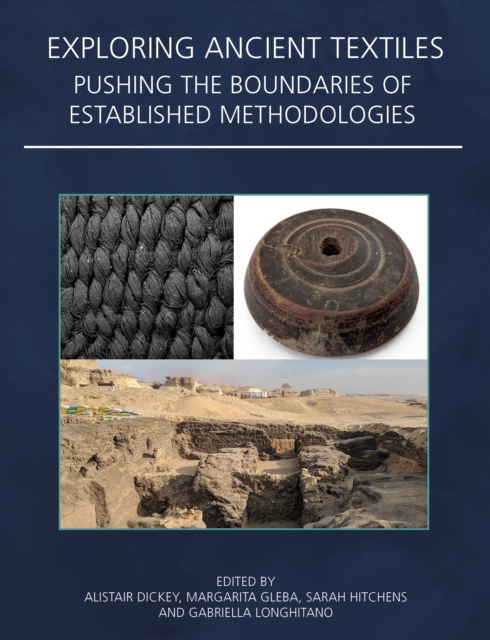
Exploring Ancient Textiles
Over the past 30 years, research on archaeological textiles has developed into an important field of scientific study. It has greatly benefited from interdisciplinary approaches, which combine the application of advanced technological knowledge to ethnographic, textual and experimental investigations. In exploring textiles and textile processing (such as production and exchange) in ancient societies, archaeologists with different types and quality of data have shared their knowledge, thus contributing to well-established methodology. In this book, the papers highlight how researchers have been challenged to adapt or modify these traditional and more recently developed analytical methods to enable extraction of comparable data from often recalcitrant assemblages. Furthermore, they have applied new perspectives and approaches to extend the focus on less investigated aspects and artefacts.The chapters embrace a broad geographical and chronological area, ranging from South America and Europe to Africa, and from the 11th millennium BC to the 1st millennium AD. Methodological considerations are explored through the medium of three different themes focusing on tools, textiles and fibres, and culture and identity. This volume constitutes a reflection on the status of current methodology and its applicability within the wider textile field. Moreover, it drives forward the methodological debates around textile research to generate new and stimulating conversations about the future of textile archaeology.
eBook
Introduction: households and landscapes
This issue explores how households, both individually and collectively as communities, choose to embed themselves in landscapes. In different ways and at different scales, the articles explore how their actions shaped, defined and delineated their landscapes through everyday practices.
Journal Article

The bones of a king
The dramatic story of Richard III, England's last medieval king, captured the world's attention when an archaeological team led by the University of Leicester identified his remains in February 2013. The Bones of a King presents the official behind-the-scenes story of the Grey Friars dig from the team of specialists who discovered and identified his remains The most extensive and authoritative book written for non-specialists by the expert team who discovered and analysed the remains of Richard III Features more than 40 illustrations, maps and photographs Builds an expansive view of Richard's life, death and burial, as well as accounts of the treatment of his body prior to burial, and his legacy in the public imagination from the time of his death to the present Explains the scientific evidence behind his identification, including DNA retrieval and sequencing, soil samples, his wounds and his scoliosis, and what they reveal about his life, his health and even the food he ate A behind-the-scenes look at one of the most exciting historical discoveries of our time
eBook