
Catalogue Search | MBRL


Are you sure you want to remove the book from the shelf?

{{itemTitle}}
439
result(s) for
"Franklin, Adrian"
Sort by:


A lonely society? Loneliness and liquid modernity in Australia
This paper reviews recent studies of loneliness in order to assess whether it is becoming endemic in Australian society. It develops the idea that loneliness is an embedded social structural feature of contemporary Australian life likely to affect people through the life course, creating psychological stress, ill health and social dysfunction. Zygmunt Bauman's writing on liquid modernity is used to trace a sequence of less binding social bonds from the community the workplace, intimate relationships, friendship and kinship that may account for a more generalised distribution of loneliness. Empirical evidence from recent national surveys in Australia demonstrates how Bauman's gloomy prognosis is particularly applicable in Australia. The paper argues that it has been invisible as a social issue until recently, but that its scope and scale have grown such that robust policy initiatives are now warranted. It argues that Australia's gendered pattern of loneliness indicates that Bauman's broad theory of liquid modernity must be mediated by several factors relating to national cultures, historic patterns of family formation, and the gender role distribution in the creation and maintenance of social bonds.
Journal Article


Pain and symptom relief using inhaled methoxyflurane for gynecologic brachytherapy applicator removal
Intra-cavitary brachytherapy forms an essential part of the curative treatment of cervical and vaginal cancer, and can be used for cure or palliation in endometrial and vulval cancers. Removal of brachytherapy applicators is often performed after anaesthesia has worn off and can be an uncomfortable and anxiety-provoking procedure. In this paper, we present our experience in a series of patients before and after the introduction of inhaled methoxyflurane (IMF, Penthrox™).
Questionnaires were sent to patients prior to the introduction of IMF to retrospectively score pain and anxiety during the brachytherapy procedure. Following successful review by the local drugs and therapeutic committee as well as staff training, IMF was introduced and offered to patients during applicator removal. Prospective pain scores and retrospective questionnaires were collected. Pain was rated on a scale of 0 to 10, with zero being no pain and 10 being extreme pain.
Thirteen patients returned retrospective questionnaires prior to IMF introduction and seven patients following IMF introduction. After the first brachytherapy insertion, the mean recollected pain score during applicator removal decreased from 6/10 to 1/10 (
= 0.002). The mean recollected pain score one hour after applicator removal reduced from 3/10 to 0 (
= 0.04). Prospective measurements for 77 insertions in 44 patients receiving IMF reported a median pain score of 1/10 immediately before applicator removal (range, 0-10), and 0/10 immediately after applicator removal (range, 0-5).
Inhaled methoxyflurane is easily administered and effective method of decreasing pain during applicator removal following gynecologic brachytherapy.
Journal Article

On loneliness
Contemporary Western societies are characterized by 'until further notice' relationships (and precarious or very loose social bonds), historically high levels of mobility of both capital and labour and growing numbers of single person households. As artefacts of freedom and choice these social arrangements do not inevitably give cause for concern but they may come at a price and that might involve more frequent and more sustained experiences of loneliness. This article argues that we know very little about loneliness even though some observers have described it as a new plague. The article sets out to describe the dimensions of a sociology of contemporary loneliness in terms of its social distribution, its extent and impact as well as its nature as an emotional and ontological experience. While we may be heading towards a civilization which, as Michel Houellebecq darkly hints in the recent novel The Possibility of an Island (2006), may have little further need for 'the social', for the time being it seems as though this problem (that would 'rather not' speak its name) is the cause of considerable suffering and pain.
Journal Article
Improving the efficiency of image guided brachytherapy in cervical cancer
Brachytherapy is an essential component of the treatment of locally advanced cervical cancers. It enables the dose to the tumor to be boosted whilst allowing relative sparing of the normal tissues. Traditionally, cervical brachytherapy was prescribed to point A but since the GEC-ESTRO guidelines were published in 2005, there has been a move towards prescribing the dose to a 3D volume. Image guided brachytherapy has been shown to reduce local recurrence, and improve survival and is optimally predicated on magnetic resonance imaging. Radiological studies, patient workflow, operative parameters, and intensive therapy planning can represent a challenge to clinical resources. This article explores the ways, in which 3D conformal brachytherapy can be implemented and draws findings from recent literature and a well-developed hospital practice in order to suggest ways to improve the efficiency and efficacy of a brachytherapy service. Finally, we discuss relatively underexploited translational research opportunities.
Journal Article

Collecting the 20th Century
In this lavishly illustrated book, Adrian Franklin, TV presenter, writer and serious collector, takes a decade-by-decade approach to exploring the twentieth century the architecture, fashion, design and everyday material culture.
eBook

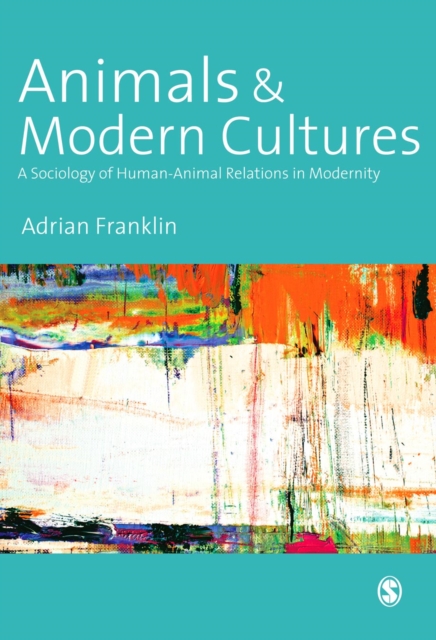
Animals and modern cultures: a sociology of human-animal relations in modernity
The dramatic transformation of relationships between humans and animals in the 20th century are investigated in this fascinating and accessible book. At the beginning of this century these relationships were dominated by human needs and interests, modernization was a project which was attached to the goal of progress and animals were merely resources to be used on the path towards human fulfilment. These relationships are increasingly being subjected to criticism and a new field of interest in human-animal relationships has opened up. We are now urged to be more sensitive and compassionate to animal needs and interests, to understand their mindedness and how their lives and ours are entangled. This book focuses on social change and animals, it is concerned with how humans relate to animals and how this has changed and why. Moreover, it highlights, through chapters on companion animals, hunting and fishing, animal leisures such as birdwatching and wildlife parks, and the meat and livestock industries, how attitudes and practices towards animals vary widely according to social class, ethnicity, gender, region and nation.
eBook

Animals and modern cultures
Animals and Modern Culture investigates the dramatic transformation of relationships between humans and animals in the 20th century. The book, focusing on social change and animals, is concerned with how humans relate to animals and how this has changed and why.
eBook