
Catalogue Search | MBRL


Are you sure you want to remove the book from the shelf?

{{itemTitle}}
17
result(s) for
"Frederick, Mark, editor"
Sort by:


Quantum Computing
Quantum mechanics, the subfield of physics that describes the behavior of very small (quantum) particles, provides the basis for a new paradigm of computing. First proposed in the 1980s as a way to improve computational modeling of quantum systems, the field of quantum computing has recently garnered significant attention due to progress in building small-scale devices. However, significant technical advances will be required before a large-scale, practical quantum computer can be achieved.
Quantum Computing: Progress and Prospects provides an introduction to the field, including the unique characteristics and constraints of the technology, and assesses the feasibility and implications of creating a functional quantum computer capable of addressing real-world problems. This report considers hardware and software requirements, quantum algorithms, drivers of advances in quantum computing and quantum devices, benchmarks associated with relevant use cases, the time and resources required, and how to assess the probability of success.
eBook
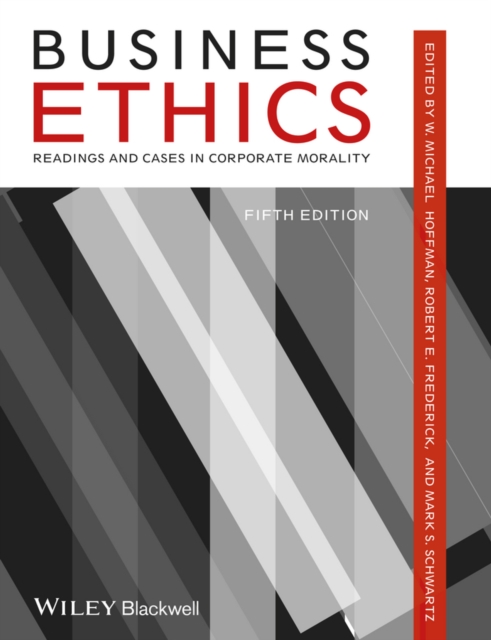
Business ethics
The fifth edition of Business Ethics addresses current, intriguing, often complex issues in corporate morality through 53 readings and 30 pertinent case studies. Now significantly updated, it includes new leading articles, related current cases, and mini-cases based on MBA student dilemmas. Addresses a broad range of the most current, intriguing, often complex issues and cases in corporate morality Provides impartial, point-counterpoint presentations of different perspectives on the most important and highly contended issues of business ethics Updated and significant case studies are included to reinforce student learning Now contains mini-cases based on actual MBA student dilemmas Each author has substantial experience in teaching, writing, and conducting research in the field.
eBook

Ecosystem Services for Sustainability
Ecosystem Services for Sustainability, a Berkshire Essential, covers the many benefits provided by things we too often take for granted: the aquifers and glaciers that provide our drinking water, the forests and oceans that store excess carbon dioxide, the microscopic organisms that enrich the soil in which we grow our food, and the insects that play a crucial role in maintaining the global food supply. A team of well-known authors, writing for the nonexpert reader, looks at how nature provides for humankind, and how humankind can, in return, protect valuable and limited natural resources. The authors also explore practical ways of managing ecosystem services and integrating them into our global economy.
eBook
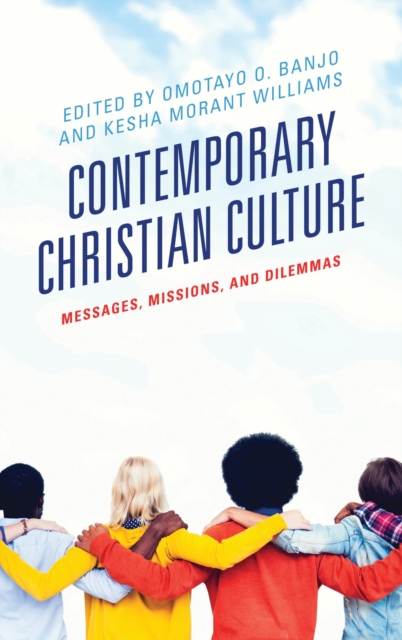
Contemporary Christian culture
Contemporary Christian Culture: Messages, Missions, and Dilemmas studies Christian media, its meanings, and its impact on social perceptions and lived experiences in a multicultural context and from within a communication framework. This interdisciplinary collection expands the dialogue surrounding race, culture, and Christian messages and provides a valuable resource for researchers, educators, and church practitioners who are interested in understanding how racial and cultural identity are impacted by religious media products.
eBook

The cultural wealth of nations
This book advances a cultural perspective on economic development to show that economic success can result from the symbolic resources that nations, regions and communities have at their disposal.
eBook

A companion to business ethics
In a series of articles specifically commissioned for this volume, some of today's most distinguished business ethicists survey the main areas of interest and concern in the field of business ethics.
Sections of the book cover topics such as the often easy relation between business ethics and capitalism, the link between business ethics and ethical theory, how ethics applies to specific problems in the business world, the connection between business ethics and related academic disciplines, and the practice of business ethics in modern corporations. Includes extensive, accessible discussion of all of the main areas of interest and debate in business ethics Features all original contributions by distinguished authors in business ethics Includes an annotated table of contents, bibliographies of the relevant literature and a list of internet sources of material on business ethics Perfect, comprehensive book for use in business ethics courses
eBook

Neotropical birds of prey
Until recently, surprisingly little has been known about the biology and behavior of tropical forest raptors, including such basic aspects as diets, breeding biology, habitat requirements, and population ecology, information critical to the development of conservation efforts. The Peregrine Fund conducted a significant eight-year-long research program on the raptor species, including owls, in Tikal National Park in Guatemala to learn more about Neotropical birds of prey. Impressive and unprecedented in scale, this pioneering research also involved the development of new methods for detecting, enumerating, and studying these magnificent but often elusive birds in their forest home. Beautifully illustrated with photographs of previously little-known species, the resulting book is the most important single source for information on the lowland tropical forest raptor species found in Central America.
Neotropical Birds of Prey covers twenty specific species in depth, including the Ornate Hawk-Eagle, the Barred Forest-Falcon, the Bat Falcon, and the Mexican Wood Owl, offering thorough synopses of all current knowledge regarding breeding biology and behavior, diet, habitat use, and spatial needs. Contributors to this landmark work also show how the populations fit together as a community with overlapping habitat and prey needs that can put them in competition with reptiles and mammalian carnivores as well, yet differ from one another in their nesting or feeding behaviors and population dynamics. The work's substantive original data offer interesting comparisons between tropical and temperate zone species, and provide a basis for establishing conservation measures based on firsthand research. Making available for the first time new data on the biology, ecology, behavior, and conservation of the majestic owls and raptors of the New World tropics, this book will appeal to a wide ornithological readership, especially the many raptor enthusiasts around the world.
eBook

The Time of Our Lives
A low-budget independent film made by a now defunct video company in the late 1980s, Dirty Dancing became a sleeper hit with a huge, primarily young audience. Even twenty-five years on, the film has found millions of devoted fans around the world through TV, video, and DVD releases. In The Time of Our Lives: Dirty Dancing and Popular Culture editors Yannis Tzioumakis and Siân Lincoln bring together leading scholars of film, media, music, culture, theater, dance, and sociology to examine for the first time the global cultural phenomenon of Dirty Dancing. Tzioumakis and Lincoln begin by assessing Dirty Dancing's cultural impact in the decades since its release and introduce contributors in four sections. Essays in \"Dirty Dancing in Context\" look at the film from several perspectives, including its production and distribution history, its blending of genres, its treatment of race, and its place in the political and visual culture of the 1980s. In \"Questions of Reception, \" contributors examine the many ways that the film has been received since its release, while those in \"The Production of Nostalgia\" focus on the film's often critiqued production of an idealized past. Finally, contributors in \"Beyond the Film\" examine the celebrated synergies that the film achieved in the \"high concept\" film environment of the 1980s, and the final two essays deal with the successful adaptation of the film for the stage. With the enormous cultural impact it has made over the years, Dirty Dancing offers many opportunities for thought-provoking analysis. Fans of the movie and students and scholars of cultural, performance, and film history will appreciate the insight in The Time of Our Lives.
eBook

Rebuilding Urban Places After Disaster
Disasters-natural ones, such as hurricanes, floods, or earthquakes, and unnatural ones such as terrorist attacks-are part of the American experience in the twenty-first century. The challenges of preparing for these events, withstanding their impact, and rebuilding communities afterward require strategic responses from different levels of government in partnership with the private sector and in accordance with the public will.
Disasters have a disproportionate effect on urban places. Dense by definition, cities and their environs suffer great damage to their complex, interdependent social, environmental, and economic systems. Social and medical services collapse. Long-standing problems in educational access and quality become especially acute. Local economies cease to function. Cultural resources disappear. The plight of New Orleans and several smaller Gulf Coast cities exemplifies this phenomenon.
This volume examines the rebuilding of cities and their environs after a disaster and focuses on four major issues: making cities less vulnerable to disaster, reestablishing economic viability, responding to the permanent needs of the displaced, and recreating a sense of place. Success in these areas requires that priorities be set cooperatively, and this goal poses significant challenges for rebuilding efforts in a democratic, market-based society. Who sets priorities and how? Can participatory decision-making be organized under conditions requiring focused, strategic choices? How do issues of race and class intersect with these priorities? Should the purpose of rebuilding be restoration or reformation? Contributors address these and other questions related to environmental conditions, economic imperatives, social welfare concerns, and issues of planning and design in light of the lessons to be drawn from Hurricane Katrina.
eBook