
Catalogue Search | MBRL


Are you sure you want to remove the book from the shelf?

{{itemTitle}}
11
result(s) for
"Freedman, Lawrence, author"
Sort by:

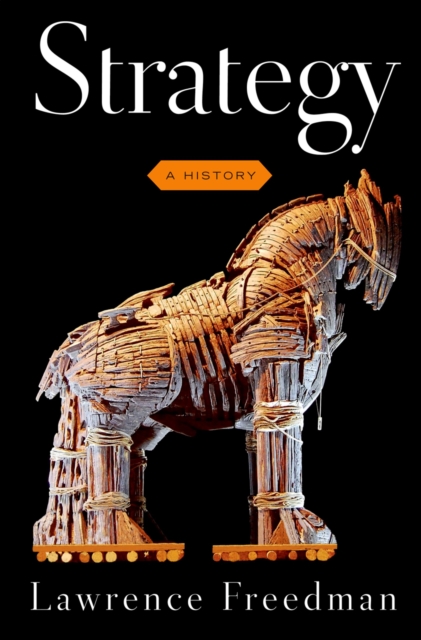
Strategy
One of the world's leading authorities on war and international politics synthesizes the vast history of strategy's evolution in this consistently engaging and surprising account of how it came to pervade every aspect of life.
eBook

Ukraine and the art of strategy
\"In Ukraine and the Art of Strategy, Sir Lawrence Freedman provides an account of the origins and course of the Russia-Ukraine conflict through the lens of the theory and practice of strategy. That is, he explores Putin's near, medium, and long-term strategies when he decided to initiate the conflict. How successful has he been? In contrast to many who see Putin as a master operator who has resuscitated a supine Russia against all odds, Freedman is less impressed with his strategic acumen in terms of the long-term fallout. By exploring concepts such as coercive diplomacy, limited war, escalation and information operations, Freedman brings the story up to the present, where a low-level conflict between Ukrainian and breakaway rebel forces in the east grinds on, and illuminates the external challenges faced by the governments' involved\"-- Provided by publisher.
BOOK
The official history of the Falklands Campaign
Drawing on a vast range of previously classified government archives as well as interviews with key participants, this first volume of the official history of the Falklands Campaign is the most authoritative account of the origins of the 1982 war. In the first chapters the author analyzes the long history of the dispute between Argentina and Britain over the sovereignty of the Islands, the difficulties faced by successive governments in finding a way to reconcile the opposed interests of the Argentines and the islanders, and the constant struggle to keep the Islands viable. He subsequently gives a complete account of how what started as an apparently trivial incident over an illegal landing by scrap-metal merchants on the island of South Georgia turned into a major crisis. Thanks to his access to classified material, Lawrence Freedman has been able to produce a detailed and authoritative analysis which extends the coverage given by the Franks Committee Report of 1983. This volume is ultimately an extremely readable account of these events, charting the growing realization within the British government of the seriousness of the situation, culminating in the Argentine invasion of the Falkland Islands at the start of April 1982.
eBook
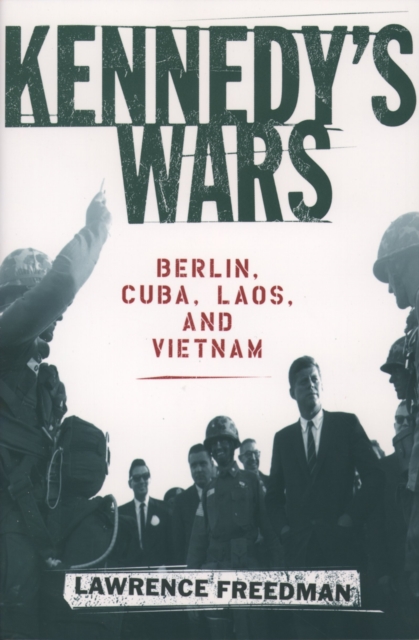
Kennedy's wars : Berlin, Cuba, Laos, and Vietnam
In his thousand-day presidency, John F. Kennedy led America through one of its most difficult and potentially explosive eras. With the Cold War at its height and the threat of communist advances in Europe and the Third World, Kennedy had the unenviable task of maintaining U.S. solidaritywithout leading the western world into a nuclear catastrophe.In Kennedy's Wars, noted historian Lawrence Freedman draws on the best of Cold War scholarship and newly released government documents to illuminate Kennedy's approach to war and his efforts for peace. He recreates insightfully the political and intellectual milieu of the foreign policyestablishment during Kennedy's era with vivid profiles of his top advisors--Robert McNamara, Dean Rusk, Robert Kennedy--and influential figures such as Dean Acheson and Walt Rostow. Tracing the evolution of traditional liberalism into the Cold War liberalism of Kennedy's cabinet, Freedman evaluatestheir responses to the tensions in Berlin, Cuba, Laos, and Vietnam. He gives each conflict individual attention, showing how foreign policy decisions came to be defined for each new crisis in the light of those that had gone before. Readers will follow Kennedy as he wrestles with the succession ofmajor conflicts--taking advice, weighing the risks of inadvertently escalating the Cold War into outright military confrontation, exploring diplomatic options, and forming strategic judgments that would eventually prevent a major war during his presidency.Kennedy's Wars offers a dynamic and human portrait of Kennedy under pressure: a political leader shaped by the ideas of his time, conscious of his vulnerability to electoral defeat but also of his nation's vulnerability to nuclear war. Military and Kennedy enthusiasts will find its balancedconsideration of the president's foreign policy and provocative what if scenarios invaluable keys
to understanding his accomplishments, failures, and enduring legacy.
eBook


Optical Coherence Tomography in Glaucoma
A comprehensive and user-friendly guide on leveraging OCT for the management of glaucoma Optical coherence tomography (OCT) is a noninvasive diagnostic imaging modality that enables ophthalmologists to visualize different layers of the optic nerve and retinal nerve fiber layer (RNFL) with astounding detail. Today, OCT is an instrumental tool for screening, diagnosing, and tracking the progression of glaucoma in patients. Optical Coherence Tomography in Glaucoma by renowned glaucoma specialist Jullia A. Rosdahl and esteemed contributors is a one-stop, unique resource that summarizes the clinical utility of this imaging technology, from basics to advanced analyses. The book features 14 chapters, starting with introductory chapters that discuss development of OCT and its applications for visualizing the optic nerve and macula. In chapter 5, case studies illustrate OCT imaging of the optic nerve, RNFL, and macula in all stages of glaucoma, from patients at risk to those with mild, moderate, and severe diseases. The next chapters cover the intrinsic relationship between optic nerve structure and function, the use of structure-function maps, and examples of their relationship, followed by a comparison of commonly used devices and a chapter on artifacts. Anterior segment OCT is covered next, followed by chapters covering special considerations in pediatric glaucomas and in patients with high refractive errors. The final chapters cover innovations in OCT on the horizon including OCT angiography, swept-source OCT, and artificial intelligence. Key Highlights Illustrative case examples provide firsthand clinical insights on how OCT can be leveraged to inform glaucoma treatment. In-depth guidance on recognizing and managing artifacts including case examples and key technical steps to help prevent their occurrence. Pearls on the use of OCT for less
common patient scenarios such as pediatric glaucomas and high refractive errors. Future OCT directions including angiography, swept-source, and the use of artificial intelligence. This practical resource is essential reading for ophthalmology trainees and ophthalmologists new to using OCT for glaucoma. The pearls, examples, and novel topics in this book will also help experienced clinicians deepen their knowledge and increase confidence using OCT in daily practice.
eBook

The United Kingdom and the future of nuclear weapons
Since 1969, the United Kingdom always has always had one submarine armed with nuclear-tipped ballistic missiles underwater, undetected, in constant communication, ready at a set notice to fire at targets anywhere in the world. This is part of its Trident Programme, which includes the development, procurement, and operation of the current generation of British nuclear weapons, as well as the means to deliver them. Operated by the Royal Navy and based at Clyde Naval Base on Scotland's west coast, it is the most expensive and most powerful capability of the British military forces.
In 2016, the United Kingdom had to decide on whether to go ahead and build the next generation of nuclear submarines that will allow the UK to remain in the nuclear business well into the second half of this century. The book presents the political, cultural, technical, and strategic aspects of Trident to provide a thoughtful overview of the UK's complex relationship with nuclear weapons. The authors, both scholars and practitioners, bring together diverse perspectives on the issue, discussing the importance of UK nuclear history as well as the political, legal, and diplomatic aspects of UK nuclear weapons—internationally and domestically. Also addressed are the new technical, military, and strategic challenges to the UK nuclear thinking and strategy.
eBook

FEARFUL SUMMITRY
There is a wealth of material about the three summits that will be of great value to historians of these events. Mr. [Kenneth L. Adelman] illustrates the extent to which these occasions are completely overstaffed. He gives a delightful description of the ''talking points'' the State Department suggested to Nancy Reagan for her meetings with Mikhail S. Gorbachev (''The great expanse of California - the symbol of the golden American dream - is my home. Russians had the great free spaces of Siberia. Our people think and dream on a grand scale''). He does not mention the circumstances in which he took his job. In early 1983 his predecessor, Eugene Rostow, was fired after leaking details of the 1982 ''walk in the woods,'' when [Paul Nitze] almost cobbled together an agreement with his Soviet opposite number on intermediate nuclear forces. Mr. Adelman, a young neoconservative who was Ambassador Jeane J. Kirkpatrick's deputy at the United Nations, was nominated by President Reagan as Mr. Rostow's surprise replacement. He was confirmed by the Senate on a 57-42 vote after the Foreign Relations Committee recommended against his appointment. That vote was largely an effort to punish the Administration for its lack of enthusiasm for arms control. Certainly Mr. Adelman was anything but an enthusiast. His description of himself in ''The Great Universal Embrace'' as a ''skeptic'' is mild.
Book Review

The Vienna Summit and Its Importance in International History
At the beginning of June 1961, the tensions of the Cold War were supposed to abate as both sides sought a resolution. The two most important men in the world, John F. Kennedy and Nikita Khrushchev, met for a summit in Vienna. Yet the high hopes were disappointed. Within months the Cold War had become very hot: Khrushchev built the Berlin Wall and a year later he sent missiles to Cuba to threaten the United States directly. Despite the fact that the Vienna Summit yielded barely any tangible results, it did lead to some very important developments. The superpowers came to see for the first time that there was only one way to escape from the atomic hell of their respective arsenals: dialogue. The \"peace through fear\" and the \"hotline\" between Washington and Moscow prevented an atomic confrontation. Austria successfully demonstrated its new role as neutral state and host when Vienna became a meeting place in the Cold War. In The Vienna Summit and Its Importance in International History international experts use new Russian and Western sources to analyze what really happened during this critical time and why the parties had a close shave with catastrophe.
eBook