
Catalogue Search | MBRL


Are you sure you want to remove the book from the shelf?

{{itemTitle}}
910
result(s) for
"Freire, Paulo"
Sort by:

Pedagogy of hope : reliving Pedagogy of the oppressed
\"With the publication of Pedagogy of the Oppressed, Paulo Freire established himself as one of the most important and radical educational thinkers of his time. In Pedagogy of Hope, Freire revisits the themes of his masterpiece, the real world contexts that inspired them and their impact in that very world. Freire's abiding concern for social justice and education in the developing world remains as timely and as inspiring as ever, and is shaped by both his rigorous intellect and his boundless compassion. Pedagogy of Hope is a testimonial to the inner vitality of generations denied prosperity and to the often-silent, generous strength of millions throughout the world who refuse to let hope be extinguished\"-- Provided by publisher.
Book
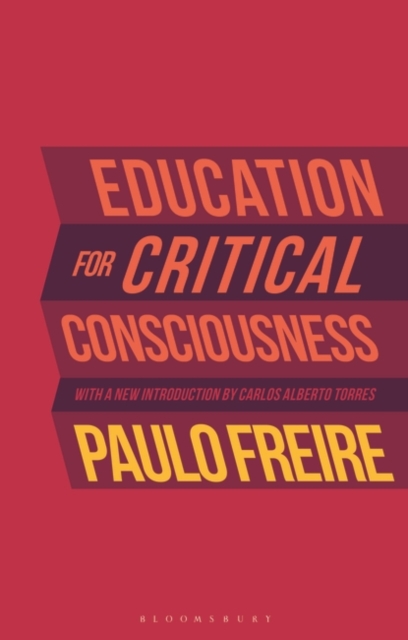
Education for Critical Consciousness
Famous for his advocacy of 'critical pedagogy', Paulo Freire was Latin America's foremost educationalist, a thinker and writer whose work and ideas continue to exert enormous influence in education throughout the world today. Education for Critical Consciousness is the main statement of Freire's revolutionary method of education. It takes the life situation of the learner as its starting point and the raising of consciousness and the overcoming of obstacles as its goals. For Freire, man's striving for his own humanity requires the changing of structures which dehumanize both the oppressor and the oppressed. This edition includes a substantial new introduction by Carlos Alberto Torres, Distinguished Professor and Founding Director of the Paulo Freire Institute, UCLA, USA.
eBook


Gravity experiments with radio pulsars
The discovery of the first pulsar in a binary star system, the Hulse–Taylor pulsar, 50 years ago opened up an entirely new field of experimental gravity. For the first time it was possible to investigate strong-field and radiative aspects of the gravitational interaction. Continued observations of the Hulse–Taylor pulsar eventually led, among other confirmations of the predictions of general relativity (GR), to the first evidence for the reality of gravitational waves. In the meantime, many more radio pulsars have been discovered that are suitable for testing GR and its alternatives. One particularly remarkable binary system is the Double Pulsar, which has far surpassed the Hulse–Taylor pulsar in several respects. In addition, binary pulsar-white dwarf systems have been shown to be particularly suitable for testing alternative gravitational theories, as they often predict strong dipolar gravitational radiation for such asymmetric systems. A rather unique pulsar laboratory is the pulsar in a hierarchical stellar triple, that led to by far the most precise confirmation of the strong-field version of the universality of free fall. Using radio pulsars, it could be shown that additional aspects of the Strong Equivalence Principle apply to the dynamics of strongly self-gravitating bodies, like the local position and local Lorentz invariance of the gravitational interaction. So far, GR has passed all pulsar tests with flying colours, while at the same time many alternative gravity theories have either been strongly constrained or even falsified. New telescopes, instrumentation, timing and search algorithms promise a significant improvement of the existing tests and the discovery of (qualitatively) new, more relativistic binary systems.
Journal Article

Pedagogy of hope : reliving pedagogy of the oppressed
With Pedagogy of Hope, Freire explores his best-known analytical themes - with even deeper understanding and a greater wisdom. Certainly, all of these themes have to be analyzed as elements of a body of critical, liberationist pedagogy. In the present book, we come to understand the author's pedagogical thinking even better, through the critical seriousness, humanistic objectivity, and engaged subjectivity which, in all of Freire's books, are always wedded to a unique creative innovativeness.
Book

A Massive Pulsar in a Compact Relativistic Binary
Because of their extremely high densities, massive neutron stars can be used to test gravity. Based on spectroscopy of its white dwarf companion, Antoniadis et al. (p. 448 ) identified a millisecond pulsar as a neutron star twice as heavy as the Sun. The observed binary's orbital decay is consistent with that predicted by general relativity, ruling out previously untested strong-field phenomena predicted by alternative theories. The binary system has a peculiar combination of properties and poses a challenge to our understanding of stellar evolution. Observations of a pulsar confirm general relativity in the strong-field regime and reveal a perplexing stellar binary. Many physically motivated extensions to general relativity (GR) predict substantial deviations in the properties of spacetime surrounding massive neutron stars. We report the measurement of a 2.01 ± 0.04 solar mass ( M ☉ ) pulsar in a 2.46-hour orbit with a 0.172 ± 0.003 M ☉ white dwarf. The high pulsar mass and the compact orbit make this system a sensitive laboratory of a previously untested strong-field gravity regime. Thus far, the observed orbital decay agrees with GR, supporting its validity even for the extreme conditions present in the system. The resulting constraints on deviations support the use of GR-based templates for ground-based gravitational wave detectors. Additionally, the system strengthens recent constraints on the properties of dense matter and provides insight to binary stellar astrophysics and pulsar recycling.
Journal Article

A Radio Pulsar Spinning at 716 Hz
We have discovered a 716-hertz eclipsing binary radio pulsar in the globular cluster Terzan 5 using the Green Bank Telescope. It is the fastest spinning neutron star found to date, breaking the 24-year record held by the 642-hertz pulsar B1937+21. The difficulty in detecting this pulsar, because of its very low flux density and high eclipse fraction (~40% of the orbit), suggests that even faster spinning neutron stars exist. If the pulsar has a mass less than twice the mass of the Sun, then its radius must be constrained by the spin rate to be <16 kilometers. The short period of this pulsar also constrains models that suggest that gravitational radiation, through an r-mode (Rossby wave) instability, limits the maximum spin frequency of neutron stars.
Journal Article

Pedagogy of the heart
This book represents some of the last writings by Paulo Freire, who has been acclaimed one of the most important educators of the 20th century. Pedagogy of the Heart is filled with Freire's reminiscences of his early life and meditations \"under my mango tree.\" Many of these will be familiar themes to those who have walked with Freire before. For those coming to his work for the first time, Pedagogy of the Heart will open new doors to the interrelations of education and political struggle. Further enhancing the text are substantive notes by Ana Maria Araujo Freire.
Book
Twenty-One Millisecond Pulsars in Terzan 5 Using the Green Bank Telescope
We have identified 21 millisecond pulsars (MSPs) in globular cluster Terzan 5 by using the Green Bank Telescope, bringing the total of known MSPs in Terzan 5 to 24. These discoveries confirm fundamental predictions of globular cluster and binary system evolution. Thirteen of the new MSPs are in binaries, of which two show eclipses and two have highly eccentric orbits. The relativistic periastron advance for the two eccentric systems indicates that at least one of these pulsars has a mass 1.68 times greater than the mass of the Sun at 95% confidence. Such large neutron star masses constrain the equation of state of matter at or beyond the nuclear equilibrium density.
Journal Article