
Catalogue Search | MBRL


Are you sure you want to remove the book from the shelf?

{{itemTitle}}
10
result(s) for
"Freire, Paulo, 1921-1997, author"
Sort by:

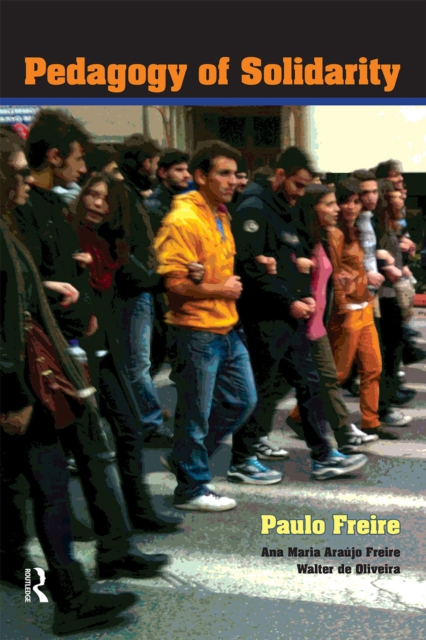
Pedagogy of Solidarity
Famous Brazilian educational and social theorist Paulo Freire presents his ideas on the importance of community solidarity in moving toward social justice in schools and society. In a set of talks and interviews shortly before his death, Freire addresses issues not often highlighted in his work, such as globalization, post-modern fatalism, and the qualities of educators for the 21st century. His illuminating comments are supplemented with commentaries by other well-known scholars, such as Ana Maria Araujo Freire, Walter de Oliveira, Norman Denzin, Henry Giroux, and Donaldo Macedo.
eBook

Pedagogy of hope : reliving pedagogy of the oppressed
With Pedagogy of Hope, Freire explores his best-known analytical themes - with even deeper understanding and a greater wisdom. Certainly, all of these themes have to be analyzed as elements of a body of critical, liberationist pedagogy. In the present book, we come to understand the author's pedagogical thinking even better, through the critical seriousness, humanistic objectivity, and engaged subjectivity which, in all of Freire's books, are always wedded to a unique creative innovativeness.
Book
Education for Critical Consciousness
Famous for his advocacy of 'critical pedagogy', Paulo Freire was Latin America's foremost educationalist, a thinker and writer whose work and ideas continue to exert enormous influence in education throughout the world today. Education for Critical Consciousness is the main statement of Freire's revolutionary method of education. It takes the life situation of the learner as its starting point and the raising of consciousness and the overcoming of obstacles as its goals. For Freire, man's striving for his own humanity requires the changing of structures which dehumanize both the oppressor and the oppressed. This edition includes a substantial new introduction by Carlos Alberto Torres, Distinguished Professor and Founding Director of the Paulo Freire Institute, UCLA, USA.
eBook

The student guide to Freire's Pedagogy of the Oppressed
Antonia Darder closely examines Freire's ideas as they are articulated in Pedagogy of the Oppressed, beginning with a historical discussion of his life and a systematic discussion of the central philosophical traditions that informed his revolutionary ideas. Darder explores Freire's fundamental themes and ideas, including issues of humanization, teacher/student relationship, reflection, dialogue, praxis, and his larger emancipatory vision. The book also includes a chapter-by-chapter close reading of the text with sample questions to prompt discussion and engagement with Freire's ideas, as well as a new interview with Freire's widow, Ana Maria Araújo Freire, and a preface by Donaldo Macedo. -- from back cover.
BOOK
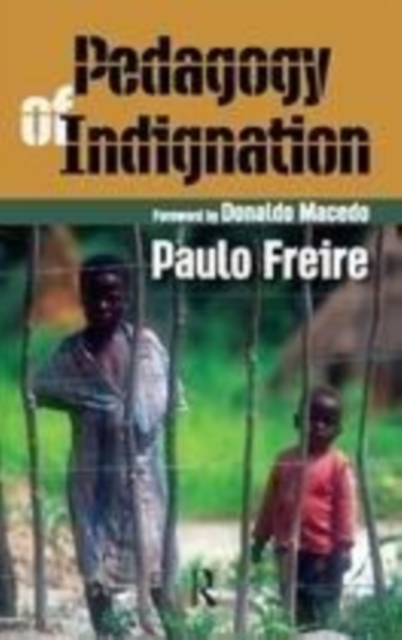
Pedagogy of indignation
This is the first English translation of the last book written by Paulo Freire. Pedagogy of Indignation delves ever deeper into the themes that concerned him throughout his life. The book begins with a series of three deeply moving reflective \"pedagogical letters\" to the reader about the role of education for one's development of self. He also speaks directly to the reader about the relationship to risk in one's life and he delves deeper than before into the daily life tensions between freedom and authority. Building on these interconnected themes, Freire sharpens our sense of the critical faculties of children and how a teacher may work with children to help them realize their potential intellectually and as human beings. Subsequent chapters explore these topics in relation to the wider social world: the social constitution of the self in the work of educators; critical citizenship; and the necessity of teaching \"from a position\" about the world that goes beyond literacy programs to include the legacy of colonialism in peoples' resistance movements today. The book's poignant interludes, written by Ana Maria Araujo Freire, reveal Paulo's thoughts about the content of this book as he was completing it during the last weeks and days of his life.
eBook

Pedagogy of the oppressed
\"First published in Portuguese in 1968, [this book] was translated and published in English in 1970. Paulo Freire's work has helped to empower countless people throughout the world and continues to possess a special urgency as the creation of a permanent underclass among the underprivileged and minorities in urban centers around the world continues. The 50th anniversary edition includes a new introduction by Donaldo Macedo, an afterword by Ira Shor, and interviews with Marina Aparicio Barberán, Noam Chomsky, Gustavo E. Fischman, Ramón Flecha, Ronald David Glass, Valerie Kinloch, peter Mayo, Peter McLaren, and Margo Okazawa-Rey to inspire a new generation of educators, students, and general readers for years to come.\"--Page [4] of cover.
Book
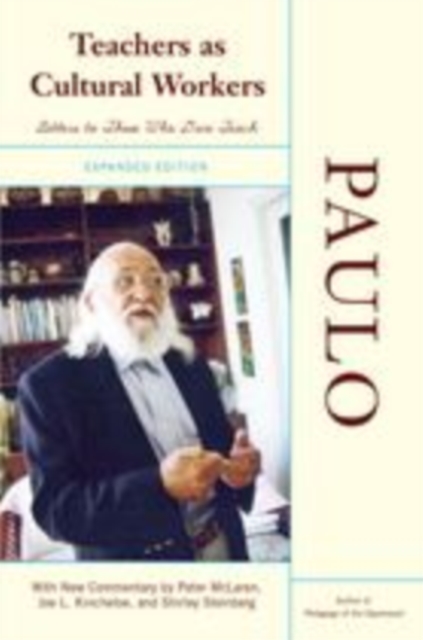
Teachers As Cultural Workers
This book contains letters that show why a teacher's success depends on a permanent commitment to learning and training, as part of an ongoing appraisal of classroom practice. It challenges all teachers to reflect critically on the meaning of the act of teaching as well as the meaning of learning.
Freire, Paulo
Foreword -- Preface: A Pedagogy for Life -- Introduction -- First Words: A Pedagogical Trap -- First Letter: Reading the World/Reading the Word -- Second Letter: Don’t Let the Fear of What Is Difficult Paralyze You -- Third Letter: I Came into the Teacher Training Program Because I Had No Other Options -- Fourth Letter: On the Indispensable Qualities of Progressive Teachers for Their Better Performance -- Fifth Letter: The First Day of School -- Sixth Letter: On the Relationship Between the Educator and the Learners -- Seventh Letter: From Talking to Learners to Talking to Them and with Them; From Listening to Learners to Being Heard by Them -- Eighth Letter: Cultural Identity and Education -- Ninth Letter: Concrete Context/Theoretical Context -- Tenth Letter: Once More the Question of Discipline -- Last Words: To Know and to Grow—Everything Yet to See -- Afterword
eBook
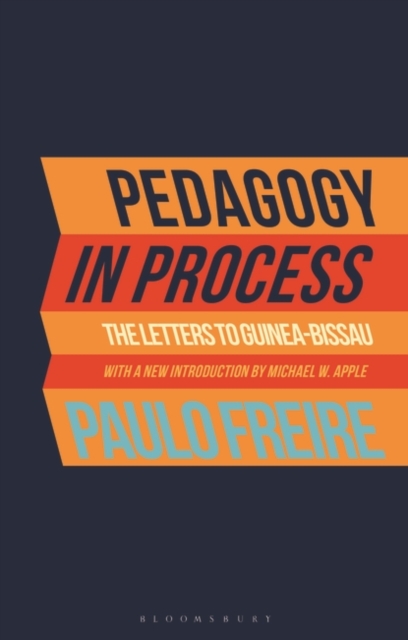
Pedagogy in Process
Pedagogy in Process presents a first-hand account of the most comprehensive attempt yet to put into practice Paulo Freire's theory of education within a real societal setting. When Guinea Bissau on the West African coast declared independence in 1973 the rate of illiteracy in its adult population was ninety percent. The new government faced the enormous task of educating its citizens. With Freire as collaborator and advisor the government launched a huge grass-roots literacy campaign and this book is Freire's memoir of that campaign. Those familiar with Freire's work will identify his ongoing insistence on the unity between theory and practice, mental and manual work, and past and present experience. This is essential reading for anyone interested Freire's revolutionary ideas on education and the transformative power they hold when applied to society and the classroom.
eBook
