
Catalogue Search | MBRL


Are you sure you want to remove the book from the shelf?

{{itemTitle}}
41
result(s) for
"Freyenhagen, Fabian"
Sort by:

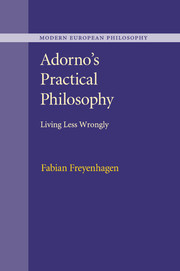
Adorno's Practical Philosophy
Adorno notoriously asserted that there is no 'right' life in our current social world. This assertion has contributed to the widespread perception that his philosophy has no practical import or coherent ethics, and he is often accused of being too negative. Fabian Freyenhagen reconstructs and defends Adorno's practical philosophy in response to these charges. He argues that Adorno's deep pessimism about the contemporary social world is coupled with a strong optimism about human potential, and that this optimism explains his negative views about the social world, and his demand that we resist and change it. He shows that Adorno holds a substantive ethics, albeit one that is minimalist and based on a pluralist conception of the bad - a guide for living less wrongly. His incisive study does much to advance our understanding of Adorno, and is also an important intervention into current debates in moral philosophy.
eBook

Decision-making capacity for treatment in psychiatric and medical in-patients: Cross-sectional, comparative study
Is the nature of decision-making capacity (DMC) for treatment significantly different in medical and psychiatric patients?
To compare the abilities relevant to DMC for treatment in medical and psychiatric patients who are able to communicate a treatment choice.
A secondary analysis of two cross-sectional studies of consecutive admissions: 125 to a psychiatric hospital and 164 to a medical hospital. The MacArthur Competence Assessment Tool - Treatment and a clinical interview were used to assess decision-making abilities (understanding, appreciating and reasoning) and judgements of DMC. We limited analysis to patients able to express a choice about treatment and stratified the analysis by low and high understanding ability.
Most people scoring low on understanding were judged to lack DMC and there was no difference by hospital (P = 0.14). In both hospitals there were patients who were able to understand yet lacked DMC (39% psychiatric v. 13% medical in-patients, P<0.001). Appreciation was a better 'test' of DMC in the psychiatric hospital (where psychotic and severe affective disorders predominated) (P<0.001), whereas reasoning was a better test of DMC in the medical hospital (where cognitive impairment was common) (P = 0.02).
Among those with good understanding, the appreciation ability had more salience to DMC for treatment in a psychiatric setting and the reasoning ability had more salience in a medical setting.
Journal Article

The Linguistic Turn in the Early Frankfurt School: Horkheimer and Adorno
Was there a linguistic turn in Frankfurt School Critical Theory before Habermas's communications-theoretic one? Might later Wittgenstein and the early Frankfurt School have adopted similar pictures of language? I propose that both questions should be answered affirmatively, focusing on Horkheimer's Eclipse of Reason. I argue that, thanks to the picture of language that Horkheimer and Adorno share with (later) Wittgenstein, we can reconstruct their theory in a way that renders it more defensible. Insofar as the human life form and language are inseparable, language can be an inextinguishable reservoir of what Horkheimer called \"objective reason.\" Recognizing this allows us to answer Habermas's critique of Horkheimer and Adorno. Moreover, paying attention to this inseparableness can enable us to engage in disclosing social critique (for example, regarding current debates about sustainability).
Journal Article

Acting Irrespective of Hope
Must we ascribe hope for better times to those who (take themselves to) act morally? Kant and later theorists in the Frankfurt School tradition thought we must. In this article, I disclose that it is possible – and ethical – to refrain from ascribing hope in all such cases. I draw on two key examples of acting irrespective of hope: one from a recent political context and one from the life of Jean Améry. I also suggest that, once we see that it is possible to make sense of (what I call) ‘merely expressive acts’, we can also see that the early Frankfurt School was not guilty of a performative contradiction in seeking to enlighten Enlightenment about its (self-)destructive tendencies, while rejecting the (providential) idea of progress.
Journal Article

Hidden substance: mental disorder as a challenge to normatively neutral accounts of autonomy
Mental capacity and autonomy are often understood to be normatively neutral – the only values or other norms they may presuppose are those the assessed person does or would accept. We show how mental disorder threatens normatively neutral accounts of autonomy. These accounts produce false positives, particularly in the case of disorders (such as depression, anorexia nervosa and schizophrenia) that affect evaluative abilities. Two normatively neutral strategies for handling autonomy-undermining disorder are explored and rejected: a blanket exclusion of mental disorder, and functional tests requiring consistency, expression of identity, reflective non-alienation or lack of compulsion. Finally, we suggest ways in which substantivist alternatives to neutrality can be made more promising through increased transparency, democratic contestability of conditions for capacity and autonomy, and a historically sensitive caution concerning restrictions of liberty.
Journal Article

Autonomy’s Substance
In this article, I argue that autonomy has to be conceived substantively in order to serve as the qualifying condition for receiving the full set of individual liberal rights. I show that the common distinction between content-neutral and substantive accounts of autonomy is riddled with confusion and ambiguities, and provide a clear alternative taxonomy. At least insofar as we are concerned with liberal settings, the real question is whether or not the value(s) and norm(s) implied by an account of autonomy are acceptable to reasonable people, not whether these accounts are content-neutral, procedural or input-focused. Finally, I demonstrate how substantive constraints are compatible with, or even implied in, the notion of autonomy at play in (Rawls’s) political liberalism. Overall, I present a normative reconstruction, clarification, and internal critique of liberalism, drawing on case law and statutes from England and Wales.
Journal Article
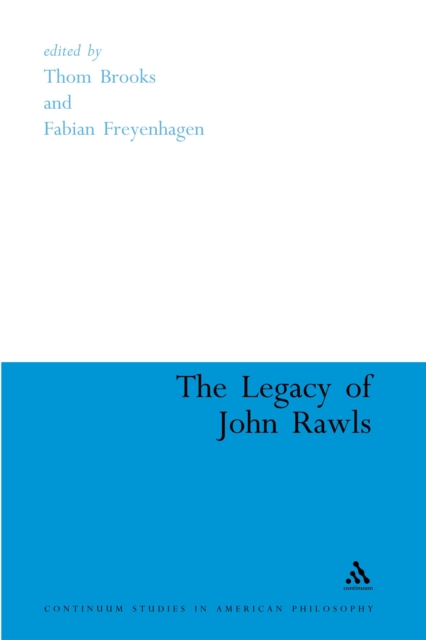
The legacy of John Rawls
John Rawls was unquestionably the most important moral and political philosopher of the last one hundred years. His A Theory of Justice published in 1971 is already a classic text, and his political philosophy is more widely studied than that of any other theorist. Interest in Rawls's work has increased still further since his recent death and the publication of his complete works, but until now, there has been no single volume that explores the legacy of his work. This book fills the void, making a substantial contribution not only to work on Rawls's thought but to contemporary debates in ethics and justice as well. The book will be of great interest to academics and students in philosophy, politics, and law departments alike.
eBook

XIII—Ethical (Self‐)Critique
If we grant that there can be no ethical validation that is external to our own ethical outlook, does this mean that we can only engage in internal piecemeal reflection, or could we still reflect on the whole of our outlook? In this paper I argue that the latter is possible, and that it is necessary if we face an ethical outlook that is wrong as a whole.
Journal Article

Habermas and Rawls
Habermas and Rawls are two heavyweights of social and political philosophy, and they are undoubtedly the two most written about (and widely read) authors in this field. However, there has not been much informed and interesting work on the points of intersection between their projects, partly because their work comes from different traditions-roughly the European tradition of social and political theory and the Anglo-American analytic tradition of political philosophy. In this volume, contributors re-examine the Habermas-Rawls dispute with an eye toward the ways in which the dispute can cast light on current controversies about political philosophy more broadly. Moreover, the volume will cover a number of other salient issues on which Habermas and Rawls have interesting and divergent views, such as the political role of religion and international justice.
eBook