
Catalogue Search | MBRL


Are you sure you want to remove the book from the shelf?

{{itemTitle}}
4,368
result(s) for
"Friedrich, F."
Sort by:


Circuit quantum electrodynamics of granular aluminum resonators
Granular aluminum (grAl) is a promising high kinetic inductance material for detectors, amplifiers, and qubits. Here we model the grAl structure, consisting of pure aluminum grains separated by thin aluminum oxide barriers, as a network of Josephson junctions, and we calculate the dispersion relation and nonlinearity (self-Kerr and cross-Kerr coefficients). To experimentally study the electrodynamics of grAl thin films, we measure microwave resonators with open-boundary conditions and test the theoretical predictions in two limits. For low frequencies, we use standard microwave reflection measurements in a low-loss environment. The measured low-frequency modes are in agreement with our dispersion relation model, and we observe self-Kerr coefficients within an order of magnitude from our calculation starting from the grAl microstructure. Using a high-frequency setup, we measure the plasma frequency of the film around 70 GHz, in agreement with the analytical prediction.
The electrodynamics of superconducting devices make them suitable for applications as detectors, amplifiers, and qubits. Here the authors show that resonators made from granular aluminum, which naturally realizes a network of Josephson junctions, have practically useful impedances and nonlinearities.
Journal Article

Exercise reduces inflammatory cell production and cardiovascular inflammation via instruction of hematopoietic progenitor cells
A sedentary lifestyle, chronic inflammation and leukocytosis increase atherosclerosis; however, it remains unclear whether regular physical activity influences leukocyte production. Here we show that voluntary running decreases hematopoietic activity in mice. Exercise protects mice and humans with atherosclerosis from chronic leukocytosis but does not compromise emergency hematopoiesis in mice. Mechanistically, exercise diminishes leptin production in adipose tissue, augmenting quiescence-promoting hematopoietic niche factors in leptin-receptor-positive stromal bone marrow cells. Induced deletion of the leptin receptor in Prrx1-creERT2; Leprfl/fl mice reveals that leptin’s effect on bone marrow niche cells regulates hematopoietic stem and progenitor cell (HSPC) proliferation and leukocyte production, as well as cardiovascular inflammation and outcomes. Whereas running wheel withdrawal quickly reverses leptin levels, the impact of exercise on leukocyte production and on the HSPC epigenome and transcriptome persists for several weeks. Together, these data show that physical activity alters HSPCs via modulation of their niche, reducing hematopoietic output of inflammatory leukocytes.
Journal Article

Sleep modulates haematopoiesis and protects against atherosclerosis
Sleep is integral to life
1
. Although insufficient or disrupted sleep increases the risk of multiple pathological conditions, including cardiovascular disease
2
, we know little about the cellular and molecular mechanisms by which sleep maintains cardiovascular health. Here we report that sleep regulates haematopoiesis and protects against atherosclerosis in mice. We show that mice subjected to sleep fragmentation produce more Ly-6C
high
monocytes, develop larger atherosclerotic lesions and produce less hypocretin—a stimulatory and wake-promoting neuropeptide—in the lateral hypothalamus. Hypocretin controls myelopoiesis by restricting the production of CSF1 by hypocretin-receptor-expressing pre-neutrophils in the bone marrow. Whereas hypocretin-null and haematopoietic hypocretin-receptor-null mice develop monocytosis and accelerated atherosclerosis, sleep-fragmented mice with either haematopoietic CSF1 deficiency or hypocretin supplementation have reduced numbers of circulating monocytes and smaller atherosclerotic lesions. Together, these results identify a neuro-immune axis that links sleep to haematopoiesis and atherosclerosis.
The fragmentation of sleep in
Apoe
−/−
mice induces monocytosis and accelerated atherosclerosis due to a reduction in hypocretin that otherwise restricts bone marrow CSF1 availability.
Journal Article
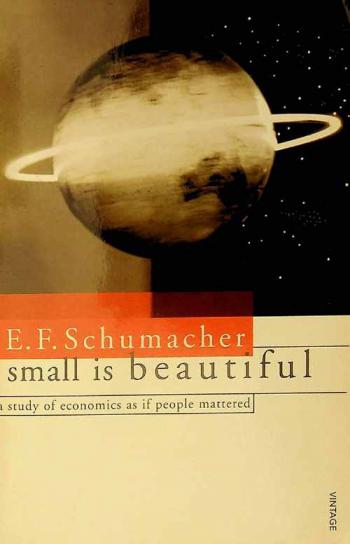
Small is beautiful : a study of economics as if people mattered
Small is Beautiful is E.F. Schumacher's stimulating and controversial study of world economies. This remarkable book is as relevant today and its themes as pertinent and thought-provoking as when it was first published thirty years ago. Small is Beautiful looks at the economic structure of the Western world in a revolutionary way. Schumacher maintains that Man's current pursuit of profit and progress, which promotes giant organisations and increased specialisation, has in fact resulted in gross economic inefficiency, environmental pollution and inhumane working conditions. Schumacher challenges the doctrine of economic, technological and scientific specialisation and proposes a system of Intermediate echnology, based on smaller working units, communal ownership and regional workplaces utilising local labour and resources.
Book

The plasma chemistry of polymer surfaces : advanced techniques for surface design
More than 99% of all visible matter in the universe occurs as highly ionized gas plasma with high energy content.Electrical low- and atmospheric-pressure plasmas are characterized by continuous source of moderate quantities of energy or enthalpy transferred predominantly as kinetic energy of electrons.
eBook

Psychotic-like experiences in non-clinical subgroups with and without specific beliefs
Background
Assuming a transdiagnostic and extended psychosis phenotype, psychotic-like experiences (PLEs) and psychotic symptoms are on a phenomenological and temporal continuum between clinical and non-clinical populations. Recent research points towards differences in PLE proneness in different subgroups and clinical impact of different PLE subtypes. This study examines the prevalence of PLEs in three groups of individuals with and without specific sets of beliefs aiming to elucidate the question whether proneness to PLEs varies according to traditional versus less traditional supernatural beliefs.
Methods
The anonymized 16-item version of the Prodromal Questionnaire (PQ-16) was used to assess PLEs in three groups including individuals with religious beliefs (RB), belief in esoterism and paranormal phenomena (EB), and those embedded in scientific evidence approach and scepticism towards para-scientific theories (non-believers, NB). Male and female participants between 18 and 90 years were eligible for participation.
Results
The sample comprised 159 individuals including 41 RB individuals, 43 EB individuals, and 75 NB individuals. The mean PQ-16 score of the EB individuals (6.86 ± 4.13) was significantly higher compared to NB individuals (3.43 ± 2.99) and to RB individuals (3.38 ± 3.23) with almost twice the score (both
p
-values < 0.001). There was no significant difference between the PQ-16 scores of the NB group and the RB group (
p
= 0.935). No significant impact of age (
p
= 0.330) and gender (
p
= 0.061) was found on the PQ16-Score.
Group affiliation to esoterism was associated with a higher PQ-16 score compared to group affiliation to religious beliefs (
p
< 0.001) and group affiliation to scepticism (
p
= 0.011), while the latter two did not differ significantly (
p
= 0.735). No significant difference was found between the three groups in the degree of distress related to the affirmatively answered PQ-16 items (
p
= 0.74).
Conclusion
Under the assumption of a transdiagnostic psychosis phenotype, our findings provide more insight which subgroups within non-clinical samples have a higher likelihood of reporting PLEs.
Journal Article