
Catalogue Search | MBRL


Are you sure you want to remove the book from the shelf?

{{itemTitle}}
19
result(s) for
"Frith, Margaret"
Sort by:
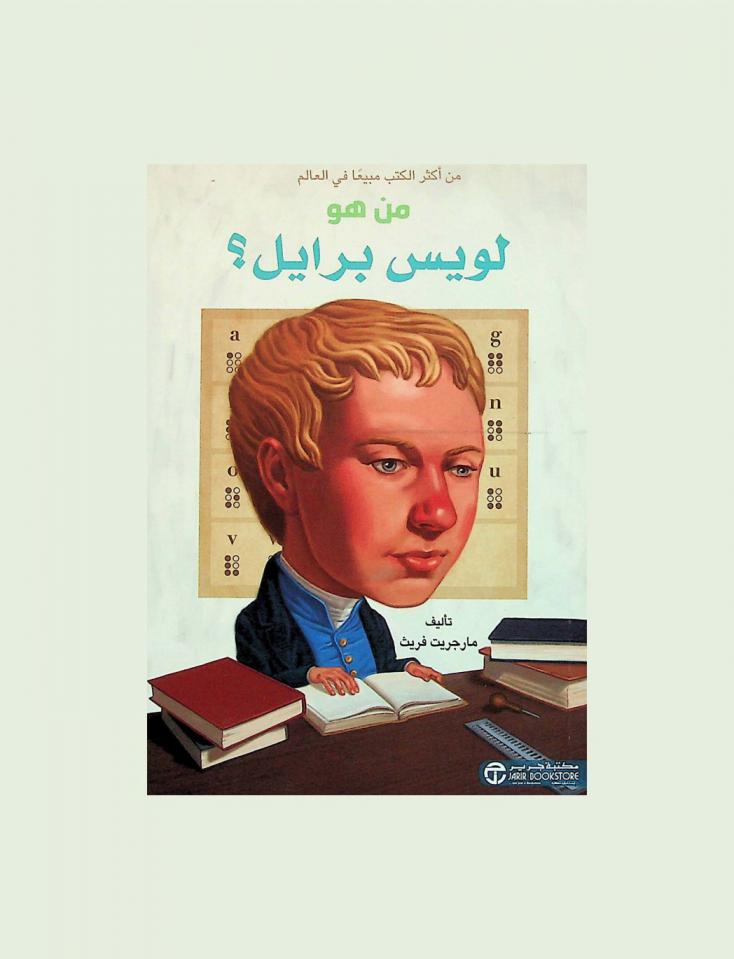
من هو لويس برايل ؟
تناول الكتاب حيث تعرض \"لويس\" لحادث مروع أفقده بصره في عمر الثالثة؛ لكن فقدانه لبصره لم يمنعه من أن يحظى بطفولة سعيدة، ولقد أثار العيش في الظلام فضوله حول العالم من حوله بدرجة أكبر. لقد كان طفلًا ذكيا ودمث الخلق، كما أنه كان يتمتع بذاكرة قوية. لم يكن يستطيع القراءة أو الكتابة ؛ لكن في مدرسته الموجودة في القرية الفرنسية الصغيرة التي كان يعيش فيها، تمكن من الاستماع والتذكر، وكان من بين الطلبة المتفوقين، في سن العاشرة، ذهب إلى باريس ليدرس في المدرسة الوحيدة للأطفال المكفوفين في فرنسا، وكانت مكتبة المدرسة تحتوي على أربعة عشر كتابا للمكفوفين مطبوعة بحروف منقوشة وبارزة، وقرأها المكفوفون باستخدام أصابعهم.
BOOK

SUN-933 Lactic Acidosis as a Rare and Unusual Presentation of Pheochromocytoma
Background: Pheochromocytoma is a rare catecholamine-producing tumor of chromaffin cells in the adrenal medulla or of a paraganglion. Typically it presents with sustained or paroxysmal hypertension, severe headaches, palpitations and sweating due to hormone excess. However, the presentation can be variable and can mimic many other diseases. If left undiagnosed or untreated, it can lead to life-threatening consequences. Case Presentation:A 35 year old female with significant past medical history of migraine headaches, poorly controlled hypertension and a recent new onset seizure, presented with progressive worsening shortness of breath and persistent abdominal pain following a gastrointestinal illness. She also reported diaphoresis, cold fingers and toes, abnormal weight gain, and orthostatic symptoms that gradually worsened for two months prior to presentation. Laboratory evaluation revealed lactic acidosis, leukocytosis, and hypokalemia. Subsequently, a CT scan of the abdomen was performed that revealed an adrenal mass with significant elevation in urine metanephrines. As a result, the patient was diagnosed with pheochromocytoma and successfully treated with laparoscopic left adrenalectomy. Conclusion: Pheochromocytoma is a rare but can be life threatening if left undiagnosed. It is of utmost importance for clinicians to keep in mind such unusual presentation of a potentially life threatening tumor. To the best of our knowledge, this is an unusual presentation of Pheochromocytoma with severe lactic acidosis.
Journal Article

Who was Thomas Alva Edison?
A short biography of the famous inventor. Some of his creations are discussed.
BOOK


Who was Louis Braille?
Examines the life and times of the nineteenth-century Frenchman who developed the system of raised dots by which blind people read and write.
Book

Who was Woodrow Wilson?
First he was known as Tommy, then Woodrow, and eventually, Mr. President. Born on December 28, 1856, in Staunton, Virginia, Thomas Woodrow Wilson was a born leader. He was the president of Princeton University, served as governor of New Jersey after that, and was then elected president of the United States. But not everything was so easy for Wilson. He was ahead of his time in wanting a League of Nations after World War I to help prevent another war like it, but his hopes were dashed when the United States refused to join. Margaret Frith offers a fascinating look at how this magnificent and tragic figure handled debilitating illness, heartbreak, and \"the war to end all wars.\"
BOOK

Who was Franklin Roosevelt?
An illustrated biography of Franklin Delano Roosevelt, the 32nd president of the United States, that provides information on his childhood in Hyde Park, marriage to Eleanor, political career, years as president, and influence on American history.
BOOK

Glycopyrronium once-daily significantly improves lung function and health status when combined with salmeterol/fluticasone in patients with COPD: the GLISTEN study—a randomised controlled trial
Background The optimal use of various therapeutic combinations for moderate/severe chronic obstructive pulmonary disease (COPD) is unclear. The GLISTEN trial compared the efficacy of two long-acting anti-muscarinic antagonists (LAMA), when combined with an inhaled corticosteroid (ICS) and a long-acting β2 agonist (LABA). Methods This randomised, blinded, placebo-controlled trial in moderate/severe COPD patients compared once-daily glycopyrronium (GLY) 50 µg, once-daily tiotropium (TIO) 18 µg or placebo (PLA), when combined with salmeterol/fluticasone propionate (SAL/FP) 50/500 µg twice daily. The primary objective was to determine the non-inferiority of GLY+SAL/FP versus TIO+SAL/FP on trough FEV1 after 12 weeks. An important secondary objective was whether addition of GLY to SAL/FP was better than SAL/FP alone. Results 773 patients (mean FEV1 57.2% predicted) were randomised; 84.9% completed the trial. At week 12, GLY+SAL/FP demonstrated non-inferiority to TIO+SAL/FP for trough FEV1: least square mean treatment difference (LSMdiff) −7 mL (SE 17.4) with a lower limit for non-inferiority of −60 mL. There was significant increase in week 12 trough FEV1 with GLY+SAL/FP versus PLA+SAL/FP (LSMdiff 101 mL, p<0.001). At 12 weeks, GLY+SAL/FP produced significant improvement in St George's Respiratory Questionnaire total score versus PLA+SAL/FP (LSMdiff −2.154, p=0.02). GLY+SAL/FP demonstrated significant rescue medication reduction versus PLA+SAL/FP (LSMdiff −0.72 puffs/day, p<0.001). Serious adverse events were similar for GLY+SAL/FP, TIO+SAL/FP and PLA+SAL/FP with an incidence of 5.8%, 8.5% and 5.8%, respectively. Conclusions GLY+SAL/FP showed comparable improvements in lung function, health status and rescue medication to TIO+SAL/FP. Importantly, addition of GLY to SAL/FP demonstrated significant improvements in lung function, health status and rescue medication compared to SAL/FP. Trial registration number NCT01513460.
Journal Article