
Catalogue Search | MBRL


Are you sure you want to remove the book from the shelf?

{{itemTitle}}
1,689
result(s) for
"Fry, L."
Sort by:

Deadly venomous mammals!
\"Learn all about rare venomous mammals in this engrossing new narrative nonfiction book for young readers. It's packed with exciting wildlife encounters, cutting-edge science, and loads of info about venom and its deadly effects\"-- Provided by publisher.
Book

Nitrate radicals and biogenic volatile organic compounds: oxidation, mechanisms, and organic aerosol
Oxidation of biogenic volatile organic compounds (BVOC) by the nitrate radical (NO3) represents one of the important interactions between anthropogenic emissions related to combustion and natural emissions from the biosphere. This interaction has been recognized for more than 3 decades, during which time a large body of research has emerged from laboratory, field, and modeling studies. NO3-BVOC reactions influence air quality, climate and visibility through regional and global budgets for reactive nitrogen (particularly organic nitrates), ozone, and organic aerosol. Despite its long history of research and the significance of this topic in atmospheric chemistry, a number of important uncertainties remain. These include an incomplete understanding of the rates, mechanisms, and organic aerosol yields for NO3-BVOC reactions, lack of constraints on the role of heterogeneous oxidative processes associated with the NO3 radical, the difficulty of characterizing the spatial distributions of BVOC and NO3 within the poorly mixed nocturnal atmosphere, and the challenge of constructing appropriate boundary layer schemes and non-photochemical mechanisms for use in state-of-the-art chemical transport and chemistry–climate models. This review is the result of a workshop of the same title held at the Georgia Institute of Technology in June 2015. The first half of the review summarizes the current literature on NO3-BVOC chemistry, with a particular focus on recent advances in instrumentation and models, and in organic nitrate and secondary organic aerosol (SOA) formation chemistry. Building on this current understanding, the second half of the review outlines impacts of NO3-BVOC chemistry on air quality and climate, and suggests critical research needs to better constrain this interaction to improve the predictive capabilities of atmospheric models.
Journal Article
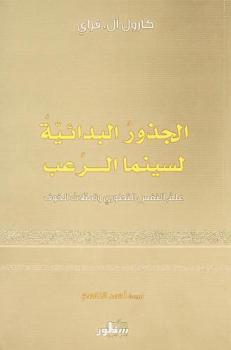
الجذور البدائية لسينما الرعب : علم النفس التطوري وتمثلات الخوف
سيكون الفيلم مرعبا بحق، ولأسابيع بعد مشاهدته، لن تستطيعوا النوم ”هذا ما قالته الدعاية التشويقية لفيلم رعب أنتج مؤخرا. يبقى من هذه الوصلة الإشهارية سؤال مهم: لماذا ندفع المال لمشاهدة فيلم يخيفنا إلى الحد الذي يحرمنا النوم ليلا؟ لغز محير شغل أجيالا من النقاد الأدبيين، وهو لب هذا الكتاب. تقترح كشوفات فرعي السوسيوبيولوجيا وعلم النفس التطوري أن استمتاعنا بالتمثيلات الفنية عموما وفي جنس أفلام الرعب خصوصا، وانجذابنا إليها إنما ينبعان من إرثنا التطوري وأنهما يشكلان جزءا أصيلا من بنيتنا الجينية كبشر. سيركز هذا الكتاب على نوعية الأفلام القادرة على أحداث اللذة الحسية العميقة بفعل التمثلات البدائية، وغالبا ما تكون الأفلام الأدبية مصدرا غنيا للهمسات الغابرة للسلوكيات التكيفية. وطرحي ببساطة هو أن بإمكاننا تشخيص هذه الأحلام البدائية المطمورة في طبيعتنا البشرية كي نستفيد من ذلك في كيفية استجابتنا للأفلام والأدب، باستخدام جنس أفلام الرعب كنموذج، كذلك ربما أمكننا، عن طريق تعقب همسات أحلامنا البدائية هذه، أن نفهم أنفسنا على نحو أعمق.
Book

Plant attributes explain the distribution of soil microbial communities in two contrasting regions of the globe
We lack strong empirical evidence for links between plant attributes (plant community attributes and functional traits) and the distribution of soil microbial communities at large spatial scales.
Using datasets from two contrasting regions and ecosystem types in Australia and England, we report that aboveground plant community attributes, such as diversity (species richness) and cover, and functional traits can predict a unique portion of the variation in the diversity (number of phylotypes) and community composition of soil bacteria and fungi that cannot be explained by soil abiotic properties and climate. We further identify the relative importance and evaluate the potential direct and indirect effects of climate, soil properties and plant attributes in regulating the diversity and community composition of soil microbial communities.
Finally, we deliver a list of examples of common taxa from Australia and England that are strongly related to specific plant traits, such as specific leaf area index, leaf nitrogen and nitrogen fixation.
Together, our work provides new evidence that plant attributes, especially plant functional traits, can predict the distribution of soil microbial communities at the regional scale and across two hemispheres.
Journal Article
Observations of gas- and aerosol-phase organic nitrates at BEACHON-RoMBAS 2011
At the Rocky Mountain Biogenic Aerosol Study (BEACHON-RoMBAS) field campaign in the Colorado front range, July–August 2011, measurements of gas- and aerosol-phase organic nitrates enabled a study of the role of NOx (NOx = NO + NO2) in oxidation of forest-emitted volatile organic compounds (VOCs) and subsequent aerosol formation. Substantial formation of peroxy- and alkyl-nitrates is observed every morning, with an apparent 2.9% yield of alkyl nitrates from daytime RO2 + NO reactions. Aerosol-phase organic nitrates, however, peak in concentration during the night, with concentrations up to 140 ppt as measured by both optical spectroscopic and mass spectrometric instruments. The diurnal cycle in aerosol fraction of organic nitrates shows an equilibrium-like response to the diurnal temperature cycle, suggesting some reversible absorptive partitioning, but the full dynamic range cannot be reproduced by thermodynamic repartitioning alone. Nighttime aerosol organic nitrate is observed to be positively correlated with [NO2] × [O3] but not with [O3]. These observations support the role of nighttime NO3-initiated oxidation of monoterpenes as a significant source of nighttime aerosol. Nighttime production of organic nitrates is comparable in magnitude to daytime photochemical production at this site, which we postulate to be representative of the Colorado front range forests.
Journal Article
Observations of gas-phase products from the nitrate-radical-initiated oxidation of four monoterpenes
Chemical ionization mass spectrometry with the nitrate reagent ion (NO3- CIMS) was used to investigate the products of the nitrate radical (NO3) initiated oxidation of four monoterpenes in laboratory chamber experiments. α-Pinene, β-pinene, Δ-3-carene, and α-thujene were studied. The major gas-phase species produced in each system were distinctly different, showing the effect of monoterpene structure on the oxidation mechanism and further elucidating the contributions of these species to particle formation and growth. By comparing groupings of products based on the ratios of elements in the general formula CwHxNyOz, the relative importance of specific mechanistic pathways (fragmentation, termination, and radical rearrangement) can be assessed for each system. Additionally, the measured time series of the highly oxidized reaction products provide insights into the ratio of relative production and loss rates of the high-molecular-weight products of the Δ-3-carene system. The measured effective O:C ratios of reaction products were anticorrelated with new particle formation intensity and number concentration for each system; however, the monomer : dimer ratios of products had a small positive trend. Gas-phase yields of oxidation products measured by NO3- CIMS correlated with particle number concentrations for each monoterpene system, with the exception of α-thujene, which produced a considerable amount of low-volatility products but no particles. Species-resolved wall loss was measured with NO3- CIMS and found to be highly variable among oxidized reaction products in our stainless steel chamber.
Journal Article
Molecular composition and volatility of multi-generation products formed from isoprene oxidation by nitrate radical
Isoprene oxidation by nitrate radical (NO3) is a potentially important source of secondary organic aerosol (SOA). It is suggested that the second or later-generation products are the more substantial contributors to SOA. However, there are few studies investigating the multi-generation chemistry of isoprene-NO3 reaction, and information about the volatility of different isoprene nitrates, which is essential to evaluate their potential to form SOA and determine their atmospheric fate, is rare. In this work, we studied the reaction between isoprene and NO3 in the SAPHIR chamber (Jülich) under near-atmospheric conditions. Various oxidation products were measured by a high-resolution time-of-flight chemical ionization mass spectrometer using Br− as the reagent ion. Most of the products detected are organic nitrates, and they are grouped into monomers (C4 and C5 products) and dimers (C10 products) with 1–3 nitrate groups according to their chemical composition. Most of the observed products match expected termination products observed in previous studies, but some compounds such as monomers and dimers with three nitrogen atoms were rarely reported in the literature as gas-phase products from isoprene oxidation by NO3. Possible formation mechanisms for these compounds are proposed. The multi-generation chemistry of isoprene and NO3 is characterized by taking advantage of the time behavior of different products. In addition, the vapor pressures of diverse isoprene nitrates are calculated by different parametrization methods. An estimation of the vapor pressure is also derived from their condensation behavior. According to our results, isoprene monomers belong to intermediate-volatility or semi-volatile organic compounds and thus have little effect on SOA formation. In contrast, the dimers are expected to have low or extremely low volatility, indicating that they are potentially substantial contributors to SOA. However, the monomers constitute 80 % of the total explained signals on average, while the dimers contribute less than 2 %, suggesting that the contribution of isoprene NO3 oxidation to SOA by condensation should be low under atmospheric conditions. We expect a SOA mass yield of about 5 % from the wall-loss- and dilution-corrected mass concentrations, assuming that all of the isoprene dimers in the low- or extremely low-volatility organic compound (LVOC or ELVOC) range will condense completely.
Journal Article
Coupling of organic and inorganic aerosol systems and the effect on gas–particle partitioning in the southeastern US
Several models were used to describe the partitioning of ammonia, water, and organic compounds between the gas and particle phases for conditions in the southeastern US during summer 2013. Existing equilibrium models and frameworks were found to be sufficient, although additional improvements in terms of estimating pure-species vapor pressures are needed. Thermodynamic model predictions were consistent, to first order, with a molar ratio of ammonium to sulfate of approximately 1.6 to 1.8 (ratio of ammonium to 2 × sulfate, RN∕2S ≈ 0.8 to 0.9) with approximately 70 % of total ammonia and ammonium (NHx) in the particle. Southeastern Aerosol Research and Characterization Network (SEARCH) gas and aerosol and Southern Oxidant and Aerosol Study (SOAS) Monitor for AeRosols and Gases in Ambient air (MARGA) aerosol measurements were consistent with these conditions. CMAQv5.2 regional chemical transport model predictions did not reflect these conditions due to a factor of 3 overestimate of the nonvolatile cations. In addition, gas-phase ammonia was overestimated in the CMAQ model leading to an even lower fraction of total ammonia in the particle. Chemical Speciation Network (CSN) and aerosol mass spectrometer (AMS) measurements indicated less ammonium per sulfate than SEARCH and MARGA measurements and were inconsistent with thermodynamic model predictions. Organic compounds were predicted to be present to some extent in the same phase as inorganic constituents, modifying their activity and resulting in a decrease in [H+]air (H+ in µg m−3 air), increase in ammonia partitioning to the gas phase, and increase in pH compared to complete organic vs. inorganic liquid–liquid phase separation. In addition, accounting for nonideal mixing modified the pH such that a fully interactive inorganic–organic system had a pH roughly 0.7 units higher than predicted using traditional methods (pH = 1.5 vs. 0.7). Particle-phase interactions of organic and inorganic compounds were found to increase partitioning towards the particle phase (vs. gas phase) for highly oxygenated (O : C ≥ 0.6) compounds including several isoprene-derived tracers as well as levoglucosan but decrease particle-phase partitioning for low O : C, monoterpene-derived species.
Journal Article

How does the pattern of root metabolites regulating beneficial microorganisms change with different grazing pressures?
Grazing disturbance can change the structure of plant rhizosphere microbial communities and thereby alter the feedback to promote plant growth or induce plant defenses. However, little is known about how such changes occur and vary under different grazing pressures or the roles of root metabolites in altering the composition of rhizosphere microbial communities. In this study, the effects of different grazing pressures on the composition of microbial communities were investigated, and the mechanisms by which different grazing pressures changed rhizosphere microbiomes were explored with metabolomics. Grazing changed composition, functions, and co-expression networks of microbial communities. Under light grazing (LG), some saprophytic fungi, such as Lentinus sp., Ramichloridium sp., Ascobolus sp. and Hyphoderma sp., were significantly enriched, whereas under heavy grazing (HG), potentially beneficial rhizobacteria, such as Stenotrophomonas sp., Microbacterium sp., and Lysobacter sp., were significantly enriched. The beneficial mycorrhizal fungus Schizothecium sp. was significantly enriched in both LG and HG. Moreover, all enriched beneficial microorganisms were positively correlated with root metabolites, including amino acids (AAs), short-chain organic acids (SCOAs), and alkaloids. This suggests that these significantly enriched rhizosphere microbial changes may be caused by these differential root metabolites. Under LG, it is inferred that root metabolites, especially AAs such as L-Histidine, may regulate specific saprophytic fungi to participate in material transformations and the energy cycle and promote plant growth. Furthermore, to help alleviate the stress of HG and improve plant defenses, it is inferred that the root system actively regulates the synthesis of these root metabolites such as AAs, SCOAs, and alkaloids under grazing interference, and then secretes them to promote the growth of some specific plant growth-promoting rhizobacteria and fungi. To summarize, grasses can regulate beneficial microorganisms by changing root metabolites composition, and the response strategies vary under different grazing pressure in typical grassland ecosystems.
Journal Article

Plant Functional Group Composition Modifies the Effects of Precipitation Change on Grassland Ecosystem Function
Temperate grassland ecosystems face a future of precipitation change, which can alter community composition and ecosystem functions through reduced soil moisture and waterlogging. There is evidence that functionally diverse plant communities contain a wider range of water use and resource capture strategies, resulting in greater resistance of ecosystem function to precipitation change. To investigate this interaction between composition and precipitation change we performed a field experiment for three years in successional grassland in southern England. This consisted of two treatments. The first, precipitation change, simulated end of century predictions, and consisted of a summer drought phase alongside winter rainfall addition. The second, functional group identity, divided the plant community into three groups based on their functional traits- broadly described as perennials, caespitose grasses and annuals- and removed these groups in a factorial design. Ecosystem functions related to C, N and water cycling were measured regularly. Effects of functional groupidentity were apparent, with the dominant trend being that process rates were higher under control conditions where a range of perennial species were present. E.g. litter decomposition rates were significantly higher in plots containing several perennial species, the group with the highest average leaf N content. Process rates were also very strongly affected by the precipitation change treatmentwhen perennial plant species were dominant, but not where the community contained a high abundance of annual species and caespitose grasses. This contrasting response could be attributable to differing rooting patterns (shallower structures under annual plants, and deeper roots under perennials) and faster nutrient uptake in annuals compared to perennials. Our results indicate that precipitation change will have a smaller effect on key process rates in grasslandscontaining a range of perennial and annual species, and that maintaining the presence of key functional groups should be a crucial consideration in future grassland management.
Journal Article