
Catalogue Search | MBRL


Are you sure you want to remove the book from the shelf?

{{itemTitle}}
13,547
result(s) for
"Fu, Guo"
Sort by:

النساء في الكومونات الشعبي /
لم يكن التسلط على المرأة أمرا جديدا في المجتمع الصيني، فقد كان متوارثا، تستطيع الاستدلال عليه من الأمثال الشعبية التي تتناول مكانة المرأة ضمنه، كالقول الكونفوشي : أن تكون المرأة عديمة الموهبة، فتلك فضيلة، أو كحقيقة أن بعضهن كبرن دون أن يتمكنَّ من الخروج من بيوتهن على الإطلاق إلا صوب بيوت أزواجهن أو القبر.
Book

Magnetic hysteresis up to 80 kelvin in a dysprosium metallocene single-molecule magnet
Single-molecule magnets could prove useful in miniaturizing a wide variety of devices. However, their application has been severely hindered by the need to cool them to extremely low temperature using liquid helium. Guo et al. now report a dysprosium compound that manifests magnetic hysteresis at temperatures up to 80 kelvin. The principles applied to tuning the ligands in this complex could point the way toward future architectures with even higher temperature performance. Science , this issue p. 1400 Ligand tuning raises the upper temperature for hysteresis in a single-molecule magnet just above nitrogen’s boiling point. Single-molecule magnets (SMMs) containing only one metal center may represent the lower size limit for molecule-based magnetic information storage materials. Their current drawback is that all SMMs require liquid-helium cooling to show magnetic memory effects. We now report a chemical strategy to access the dysprosium metallocene cation [(Cp i Pr5 )Dy(Cp*)] + (Cp i Pr5 , penta-iso-propylcyclopentadienyl; Cp *, pentamethylcyclopentadienyl), which displays magnetic hysteresis above liquid-nitrogen temperatures. An effective energy barrier to reversal of the magnetization of U eff = 1541 wave number is also measured. The magnetic blocking temperature of T B = 80 kelvin for this cation overcomes an essential barrier toward the development of nanomagnet devices that function at practical temperatures.
Journal Article

Angiogenin maintains gut microbe homeostasis by balancing α-Proteobacteria and Lachnospiraceae
ObjectiveAntimicrobial peptides (AMPs) play essential roles in maintaining gut health and are associated with IBD. This study is to elucidate the effect of angiogenin (ANG), an intestine-secreted AMP, on gut microbiota and its relevance with IBD.DesignThe effect of ANG on microbiota and its contribution to colitis were evaluated in different colitis models with co-housing and faecal microbiota transplantation. ANG-regulated bacteria were determined by 16S rDNA sequencing and their functions in colitis were analysed by bacterial colonisation. The species-specific antimicrobial activity of ANG and its underlying mechanism were further investigated with microbiological and biochemical methods. ANG level and the key bacteria were characterised in IBD faecal samples.ResultsANG regulated microbiota composition and inhibited intestinal inflammation. Specifically, Ang1 deficiency in mice led to a decrease in the protective gut commensal strains of Lachnospiraceae but an increase in the colitogenic strains of α-Proteobacteria. Direct binding of ANG to α-Proteobacteria resulted in lethal disruption of bacterial membrane integrity, and consequently promoted the growth of Lachnospiraceae, which otherwise was antagonised by α-Proteobacteria. Oral administration of ANG1 reversed the dysbiosis and attenuated the severity of colitis in Ang1-deficient mice. The correlation among ANG, the identified bacteria and IBD status was established in patients.ConclusionThese findings demonstrate a novel role of ANG in shaping gut microbe composition and thus maintaining gut health, suggesting that the ANG-microbiota axis could be developed as a potential preventive and/or therapeutic approach for dysbiosis-related gut diseases.
Journal Article
وثائق مكافحة كوفيد-19
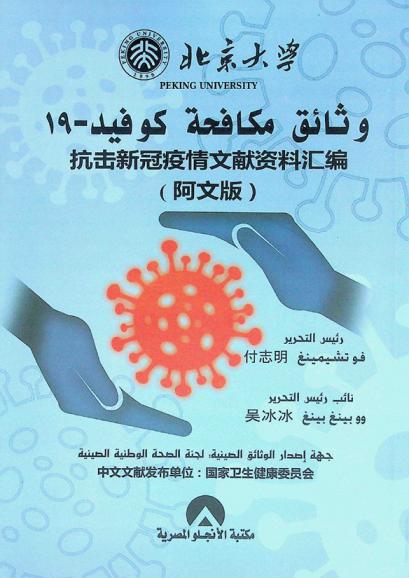
بين يدي القارئ كتاب يجمع بين دفتيه الترجمة العربية لوثائق مكافحة كوفيد 19- التي أصدرتها لجنة الصحة الوطنية الصينية، ومـن بـين هذه الوثائق النسخ الست مـن آليات الوقاية مـن الالتهاب الرئوي الناجم عـن فيروس كـورونا المستجد ومكافحته، والنسخة التجريبية السابعة لآليات تـشخيص الالتـِهاب الـرئوي الناجِم عـن فـيروس كـورونا المستجد وعلاجه وغـيرها مـن الـمرفقات. وعـمل على ترجمة النـسخة الـعربية لوثائق مكافحة كـوفيد 19- الصينية فريـق ترجمة به أكـثر من عشريـن أستاذا وطالبا مـن قسم اللغة العربية بكلية اللغات الأجنبية بجامعة بكين بـالتعاون مع كلية الآداب في جامعة القاهرة والمعهد العالي للغات بتونس في جامعة قرطاج، في الفترة مـن مارس وحتى مايو 2020، قام خلالها فـريق الترجمة بترجمة قرابة 100 ألـف رمز صيني.
BOOK

Angiogenin mediates paternal inflammation-induced metabolic disorders in offspring through sperm tsRNAs
Paternal environmental inputs can influence various phenotypes in offspring, presenting tremendous implications for basic biology and public health and policy. However, which signals function as a nexus to transmit paternal environmental inputs to offspring remains unclear. Here we show that offspring of fathers with inflammation exhibit metabolic disorders including glucose intolerance and obesity. Deletion of a mouse tRNA RNase, Angiogenin (
Ang
), abolished paternal inflammation-induced metabolic disorders in offspring. Additionally,
Ang
deletion prevented the inflammation-induced alteration of 5′-tRNA-derived small RNAs (5′-tsRNAs) expression profile in sperm, which might be essential in composing a sperm RNA ‘coding signature’ that is needed for paternal epigenetic memory. Microinjection of sperm 30–40 nt RNA fractions (predominantly 5′-tsRNAs) from inflammatory
Ang
+/+
males but not
Ang
–/–
males resulted in metabolic disorders in the resultant offspring. Moreover, zygotic injection with synthetic 5′-tsRNAs which increased in inflammatory mouse sperm and decreased by
Ang
deletion partially resembled paternal inflammation-induced metabolic disorders in offspring. Together, our findings demonstrate that Ang-mediated biogenesis of 5′-tsRNAs in sperm contributes to paternal inflammation-induced metabolic disorders in offspring.
Paternal environmental inputs can influence various phenotypes in offspring, with important implications for basic biology and public health. Here the authors show that Ang-mediated biogenesis of 5′-tsRNAs in sperm contributes to paternal inflammation-induced metabolic disorders in offspring.
Journal Article

Shortcuts to adiabatic holonomic quantum computation in decoherence-free subspace with transitionless quantum driving algorithm
By using transitionless quantum driving algorithm (TQDA), we present an efficient scheme for the shortcuts to the holonomic quantum computation (HQC). It works in decoherence-free subspace (DFS) and the adiabatic process can be speeded up in the shortest possible time. More interestingly, we give a physical implementation for our shortcuts to HQC with nitrogen-vacancy centers in diamonds dispersively coupled to a whispering-gallery mode microsphere cavity. It can be efficiently realized by controlling appropriately the frequencies of the external laser pulses. Also, our scheme has good scalability with more qubits. Different from previous works, we first use TQDA to realize a universal HQC in DFS, including not only two noncommuting accelerated single-qubit holonomic gates but also a accelerated two-qubit holonomic controlled-phase gate, which provides the necessary shortcuts for the complete set of gates required for universal quantum computation. Moreover, our experimentally realizable shortcuts require only two-body interactions, not four-body ones, and they work in the dispersive regime, which relax greatly the difficulty of their physical implementation in experiment. Our numerical calculations show that the present scheme is robust against decoherence with current experimental parameters.
Journal Article

Targeting Mitochondrial ROS-Mediated Ferroptosis by Quercetin Alleviates High-Fat Diet-Induced Hepatic Lipotoxicity
Background: The protective effect of quercetin on nonalcoholic fatty liver disease (NAFLD) has been reported, but its mechanism remains poorly understood. Recently, quercetin was reported to be capable of inhibiting ferroptosis, which is a recognized type of regulated cell death. Moreover, hepatic ferroptosis plays an important role in the progression of NAFLD, but experimental evidence is limited. Hence, our study aimed to investigate the effect of quercetin on hepatic ferroptosis in high-fat diet (HFD)-induced NAFLD and further elucidate the underlying molecular mechanism. Methods: C57BL/6J mice were fed either a normal diet (ND), an HFD, or an HFD supplemented with quercetin for 12 weeks. Hepatic lipid peroxidation, steatosis, ferroptosis and iron overload were examined. In vitro , steatotic L-02 cells was used to study the potential mechanism. Results: We found that the HFD caused lipid peroxidation, lipid accumulation and ferroptosis in the liver, which were rescued by quercetin supplementation. Consistent with the in vivo results, quercetin alleviated lipid droplet accumulation and reduced the levels of lipid reactive oxygen species (ROS) and ferroptosis in steatotic L-02 cells. Using a mitochondrial ROS (MtROS) scavenger (Mito-TEMPO) and ferroptosis specific inhibitor (Fer-1), we found that quercetin remarkably alleviated lipid droplet accumulation and lipid peroxidation by reducing MtROS-mediated ferroptosis in steatotic L-02 cells. Conclusion: Our data showed that HFD consumption induced lipid accumulation and triggered ferroptosis in liver, ultimately leading to hepatic lipotoxicity, which can be alleviated by quercetin. Findings from this study provide new insight into the mechanism by which quercetin can be used for the prevention and treatment of NAFLD.
Journal Article

Mitochondrial ROS accumulation inhibiting JAK2/STAT3 pathway is a critical modulator of CYT997-induced autophagy and apoptosis in gastric cancer
Background
Gastric cancer (GC) is a common form of malignant cancer in worldwide which has a poor prognosis. Despite recent improvements in the treatment of GC, the prognosis is not yet satisfactory for GC patients
.
CYT997, a novel microtubule-targeting agent, recently has been identified to be a promising anticancer candidate for the treatment of cancers; however, the effects of CYT997 in GC remain largely unknown.
Methods
Cell proliferation and apoptosis were detected by CCK8 assay and flow cytometry. The mitochondrial ROS were detected by confocal microscope and flow cytometry. Gastric cancer patient-derived xenograft (PDX) model was used to evaluate its antitumor activity of CYT997 in vivo.
Results
CYT997 inhibited gastric cancer cell proliferation and induced cell apoptosis and triggered autophagy. CYT997 induced apoptosis through triggering intracellular mitochondrial ROS generation in GC cells. ROS scavengers N-acetylcysteine (NAC) and Mitoquinone (MitoQ) distinctly weakened CYT997-induced cell cycle G2/M arrest and apoptosis in GC cells. Pretreatment with autophagy inhibitor 3-MA promoted the effect of CYT997 on cells apoptosis. Mechanistically, CYT997 performed its function through regulation of Janus kinase 2 (JAK2)/signal transducer and activator of transcription 3 (STAT3) signaling pathway in GC cells. In addition, CYT997 inhibited growth of gastric cancer patient-derived xenograft
(
PDX) tumors.
Conclusions
CYT997 induces autophagy and apoptosis in gastric cancer by triggering mitochondrial ROS accumulation to silence JAK2/STAT3 pathway. CYT997 might be a potential antitumor drug candidate to treat GC.
Journal Article