
Catalogue Search | MBRL


Are you sure you want to remove the book from the shelf?

{{itemTitle}}
10,380
result(s) for
"Fu, Yuan"
Sort by:


Single-cell RNA sequencing reveals intrahepatic and peripheral immune characteristics related to disease phases in HBV-infected patients
ObjectiveA comprehensive immune landscape for HBV infection is pivotal to achieve HBV cure.DesignWe performed single-cell RNA sequencing of 2 43 000 cells from 46 paired liver and blood samples of 23 individuals, including six immune tolerant, 5 immune active (IA), 3 acute recovery (AR), 3 chronic resolved and 6 HBV-free healthy controls (HCs). Flow cytometry and histological assays were applied in a second HBV cohort for validation.ResultsBoth IA and AR were characterised by high levels of intrahepatic exhausted CD8+ T (Tex) cells. In IA, Tex cells were mainly derived from liver-resident GZMK+ effector memory T cells and self-expansion. By contrast, peripheral CX3CR1+ effector T cells and GZMK+ effector memory T cells were the main source of Tex cells in AR. In IA but not AR, significant cell–cell interactions were observed between Tex cells and regulatory CD4+ T cells, as well as between Tex and FCGR3A+ macrophages. Such interactions were potentially mediated through human leukocyte antigen class I molecules together with their receptors CANX and LILRBs, respectively, contributing to the dysfunction of antiviral immune responses. By contrast, CX3CR1+GNLY+ central memory CD8+ T cells were concurrently expanded in both liver and blood of AR, providing a potential surrogate marker for viral resolution. In clinic, intrahepatic Tex cells were positively correlated with serum alanine aminotransferase levels and histological grading scores.ConclusionOur study dissects the coordinated immune responses for different HBV infection phases and provides a rich resource for fully understanding immunopathogenesis and developing effective therapeutic strategies.
Journal Article

التخفيف من حدة الفقر في الصين المعاصرة
استنادا إلى نظرة عامة على أوضاع الفقر، يقدم هذا الكتاب مسار التخفيف من حدة الفقر والتنمية في الصين، ويشرح نموذج التنمية والتخفي من حدة الفقر بخصائص صينية والتمسك بمباديء (سيطرة الحكومة ومشاركة المجتمع والاعتماد على الذات والتنمية الموجهة والتنمية الشاملة) كما يقدم الكتاب تلخيصا شاملا لإنجازات الصين العظيمة وخبراتها الهامة وإسهاماتها الرئيسية في قضية التخفيف من حدة الفقر في العالم، ويعرض بإيجاز نظرات وممارسات التخفيف المستهدف من الفقر في العصر الجديد من أجل توفير مراجع لكسب المعركة ضد الفقر في الصين وقضية التخفيف من حدة الفقر في العالم.
Book

Alternative Splicing and Its Roles in Plant Metabolism
Plant metabolism, including primary metabolism such as tricarboxylic acid cycle, glycolysis, shikimate and amino acid pathways as well as specialized metabolism such as biosynthesis of phenolics, alkaloids and saponins, contributes to plant survival, growth, development and interactions with the environment. To this end, these metabolic processes are tightly and finely regulated transcriptionally, post-transcriptionally, translationally and post-translationally in response to different growth and developmental stages as well as the constantly changing environment. In this review, we summarize and describe the current knowledge of the regulation of plant metabolism by alternative splicing, a post-transcriptional regulatory mechanism that generates multiple protein isoforms from a single gene by using alternative splice sites during splicing. Numerous genes in plant metabolism have been shown to be alternatively spliced under different developmental stages and stress conditions. In particular, alternative splicing serves as a regulatory mechanism to fine-tune plant metabolism by altering biochemical activities, interaction and subcellular localization of proteins encoded by splice isoforms of various genes.
Journal Article
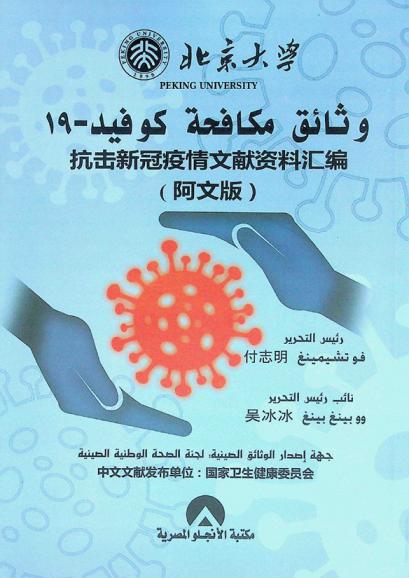
وثائق مكافحة كوفيد-19
بين يدي القارئ كتاب يجمع بين دفتيه الترجمة العربية لوثائق مكافحة كوفيد 19- التي أصدرتها لجنة الصحة الوطنية الصينية، ومـن بـين هذه الوثائق النسخ الست مـن آليات الوقاية مـن الالتهاب الرئوي الناجم عـن فيروس كـورونا المستجد ومكافحته، والنسخة التجريبية السابعة لآليات تـشخيص الالتـِهاب الـرئوي الناجِم عـن فـيروس كـورونا المستجد وعلاجه وغـيرها مـن الـمرفقات. وعـمل على ترجمة النـسخة الـعربية لوثائق مكافحة كـوفيد 19- الصينية فريـق ترجمة به أكـثر من عشريـن أستاذا وطالبا مـن قسم اللغة العربية بكلية اللغات الأجنبية بجامعة بكين بـالتعاون مع كلية الآداب في جامعة القاهرة والمعهد العالي للغات بتونس في جامعة قرطاج، في الفترة مـن مارس وحتى مايو 2020، قام خلالها فـريق الترجمة بترجمة قرابة 100 ألـف رمز صيني.
BOOK

Two-billion-year-old volcanism on the Moon from Chang’e-5 basalts
The Moon has a magmatic and thermal history that is distinct from that of the terrestrial planets
1
. Radioisotope dating of lunar samples suggests that most lunar basaltic magmatism ceased by around 2.9–2.8 billion years ago (Ga)
2
,
3
, although younger basalts between 3 Ga and 1 Ga have been suggested by crater-counting chronology, which has large uncertainties owing to the lack of returned samples for calibration
4
,
5
. Here we report a precise lead–lead age of 2,030 ± 4 million years ago for basalt clasts returned by the Chang’e-5 mission, and a
238
U/
204
Pb ratio (
µ
value)
6
of about 680 for a source that evolved through two stages of differentiation. This is the youngest crystallization age reported so far for lunar basalts by radiometric dating, extending the duration of lunar volcanism by approximately 800–900 million years. The
µ
value of the Chang’e-5 basalt mantle source is within the range of low-titanium and high-titanium basalts from Apollo sites (
µ
value of about 300–1,000), but notably lower than those of potassium, rare-earth elements and phosphorus (KREEP) and high-aluminium basalts
7
(
µ
value of about 2,600–3,700), indicating that the Chang’e-5 basalts were produced by melting of a KREEP-poor source. This age provides a pivotal calibration point for crater-counting chronology in the inner Solar System and provides insight on the volcanic and thermal history of the Moon.
Basalt samples returned from the Moon by the Chang’e-5 mission are revealed to be two billion years old by radioisotopic dating, providing insight on the volcanic history of the Moon.
Journal Article

Compartmentalized microbes and co-cultures in hydrogels for on-demand bioproduction and preservation
Most mono- and co-culture bioprocess applications rely on large-scale suspension fermentation technologies that are not easily portable, reusable, or suitable for on-demand production. Here, we describe a hydrogel system for harnessing the bioactivity of embedded microbes for on-demand small molecule and peptide production in microbial mono-culture and consortia. This platform bypasses the challenges of engineering a multi-organism consortia by utilizing a temperature-responsive, shear-thinning hydrogel to compartmentalize organisms into polymeric hydrogels that control the final consortium composition and dynamics without the need for synthetic control of mutualism. We demonstrate that these hydrogels provide protection from preservation techniques (including lyophilization) and can sustain metabolic function for over 1 year of repeated use. This approach was utilized for the production of four chemical compounds, a peptide antibiotic, and carbohydrate catabolism by using either mono-cultures or co-cultures. The printed microbe-laden hydrogel constructs’ efficiency in repeated production phases, both pre- and post-preservation, outperforms liquid culture.
Large scale suspension fermentation technology is not easily portable or reusable. Here the authors describe a hydrogel system suitable for long-term and reusable production with both single and multi-organism consortia.
Journal Article

Supramolecularly Engineered Conjugate of Bacteria and Cell Membrane‐Coated Magnetic Nanoparticles for Enhanced Ferroptosis and Immunotherapy of Tumors
Although various ferroptosis inducers including magnetic nanoparticles (Fe3O4) and iron‐organic frameworks have been applied in cancer treatment, the mild immunogenicity, low targeting efficiency to the tumor, and poor tissue penetration have limited the therapeutic efficacy. Herein, a supramolecularly engineered conjugate between living bacteria (facultative anaerobic Salmonella typhimurium VNP20009, VNP) and cancer cell membranes‐coated Fe3O4 nanoparticles is developed for improving targeted delivery of Fe3O4 nanoparticles into the tumor tissue and for synergistic ferroptosis and immunotherapy of tumor. The enhanced ferroptosis induced by both Fe3O4 nanoparticles and the loaded ferroptosis inducing agent (sulfasalazine (SAS)) effectively inhibits tumor growth and generates immune response via immunogenic cell death (ICD). The colonization of VNP in tumors also induces adaptive immune responses and further promotes ferroptosis. Fundamentally, the supramolecular conjugate of VNP and cell membranes‐coated Fe3O4 can potentiate the therapeutic capability of each other through mutually magnifying the ferroptosis and immunotherapy, resulting in significantly enhanced antitumor effects. A supramolecularly engineered conjugate between living bacteria and cancer cell membranes‐coated Fe3O4 nanoparticles is developed for improving targeted delivery of Fe3O4 nanoparticles into the tumor tissue for synergistc ferroptosis and immunotherapy of tumor.
Journal Article
Single‐Layered MoS2 Fabricated by Charge‐Driven Interlayer Expansion for Superior Lithium/Sodium/Potassium‐Ion‐Battery Anodes
Single‐layered MoS2 is a promising anode material for lithium‐ion batteries (LIBs), sodium‐ion batteries (SIBs), and potassium‐ion batteries (PIBs) due to its high capacity and isotropic ion transport paths. However, the low intrinsic conductivity and easy‐agglomerated feature hamper its applications. Here, a charge‐driven interlayer expansion strategy that Co2+ replaces Mo4+ in the doping form to endow MoS2 layers with negative charges, thus inducing electrostatic repulsion, together with the insertion of gaseous groups, to drive interlayer expansion which once breaks the confinement of interlayer van der Waals force, single‐layered MoS2 is obtained and uniformly dispersed into carbon matrix arising from the transformation of carbonaceous gaseous groups under high vapor pressure, is proposed. Co atom doping helps enhance the intrinsic conductivity of single‐layered MoS2. Carbon matrix effectively prevents agglomeration of single‐layered MoS2. The doped Co atoms can be fully transformed into ultrasmall Co nanoparticles during conversion reaction, which enables strong spin‐polarized surface capacitance and thus significantly boosts ion transport and storage. Consequently, the prepared material delivers superb Li/Na/K‐ion storage performances, which are best in the reported MoS2‐based anodes. The proposed charge‐driven interlayer expansion strategy provides a novel perspective for preparing single‐layered MoS2, which shows huge potential for energy storage. Single‐layered MoS2 has great potential in energy storage but suffers from low intrinsic conductivity and easy‐agglomerated feature. Here, a charge‐driven interlayer expansion strategy is proposed. The interlayer electrostatic repulsion induced by Co doping breaks the interlayer van der Waals force to fabricate Co‐doped single‐layered MoS2, which uniformly disperses in carbon matrix and shows superior lithium/sodium/potassium‐ion transport and storage capability.
Journal Article
Structural transformation and catalytic hydrogenation activity of amidinate-protected copper hydride clusters
Copper hydrides are important hydrogenation catalysts, but their poor stability hinders the practical applications. Ligand engineering is an effective strategy to tackle this issue. An amidinate ligand, N,N′-Di(5-trifluoromethyl-2-pyridyl)formamidinate (Tf-dpf) with four N-donors has been applied as a protecting agent in the synthesis of stable copper hydride clusters: Cu
11
H
3
(Tf-dpf)
6
(OAc)
2
(
Cu
11
) with three interfacial
μ
5
-H and [Cu
12
H
3
(Tf-dpf)
6
(OAc)
2
]·OAc (
Cu
12
) with three interstitial
μ
6
-H. A solvent-triggered reversible interconversion between
Cu
11
and
Cu
12
has been observed thanks to the flexibility of Tf-dpf.
Cu
11
shows high activity in the reduction of 4-nitrophenol to 4-aminophenol, while
Cu
12
displays very low activity. Deuteration experiments prove that the type of hydride is the key in dictating the catalytic activity, for the interfacial
μ
5
-H species in
Cu
11
are involved in the catalytic cycle whereas the interstitial
μ
6
-H species in
Cu
12
are not. This work highlights the role of hydrides with regard to catalytic hydrogenation activity.
Copper hydrides have been studied for their exciting structural chemistry and applications in hydrogenation catalysis. Here, the authors uncover the role of the amidinate ligand in yielding two closely related copper hydride clusters with quite different catalytic hydrogenation activity.
Journal Article