
Catalogue Search | MBRL


Are you sure you want to remove the book from the shelf?

{{itemTitle}}
81
result(s) for
"Fudge, Erica"
Sort by:


Quick Cattle and Dying Wishes
What was the life of a cow in early modern England like? What would it be like to milk that same cow, day-in, day-out, for over a decade? How did people feel about and toward the animals that they worked with, tended, and often killed? With these questions, Erica Fudge begins her investigation into a lost aspect of early modern life: the importance of the day-to-day relationships between humans and the animals with whom they worked. Such animals are and always have been, Fudge reminds us, more than simply stock; they are sentient beings with whom one must negotiate. It is the nature, meaning, and value of these negotiations that this study attempts to recover.
By focusing on interactions between people and their livestock,Quick Cattle and Dying Wishesrestores animals to the central place they once had in the domestic worlds of early modern England. In addition, the book uses human relationships with animals-as revealed through agricultural manuals, literary sources, and a unique dataset of over four thousand wills-to rethink what quick cattle meant to a predominantly rural population and how relationships with them changed as more and more people moved to the city. Offering a fuller understanding of both human and animal life in this period, Fudge innovatively expands the scope of early modern studies and how we think about the role that animals played in past cultures more broadly.
eBook

MILKING OTHER MEN'S BEASTS
This article takes as its point of departure a small piece of evidence: a single-line entry in a seventeenth-century Essex Sessions Roll about the theft of milk. This fragment of the legal archive and the world it offers us a glimpse of are used to explore what it might mean to take seriously the presence of animals as historical actors. The article also—and inseparably—asks us to think about the nature of that being called the human that so frequently goes without comment in historical (as in other humanities) scholarship. Using work from historiography, sensory history, social history, anthropology, and contemporary animal science, the article proposes that introducing animals as actors and not just as objects into historical work will not only broaden and deepen what we might know about the past, it will also challenge some assumptions as to what the focus of our discipline might be.
Journal Article

Renaissance Beasts
Animals, as Levi-Strauss wrote, are good to think with. This collection addresses and reassesses the variety of ways in which animals were used and thought about in Renaissance culture, challenging contemporary as well as historic views of the boundaries and hierarchies humans presume the natural world to contain._x000B__x000B_Taking as its starting point the popularity of speaking animals in sixteenth-century literature and ending with the decline of the imperial Menagerie during the French Revolution, Renaissance Beasts uses the lens of human-animal relationships to view issues as diverse as human status and power, diet, civilization and the political life, religion and anthropocentrism, spectacle and entertainment, language, science and skepticism, and domestic and courtly cultures._x000B__x000B_Within these pages scholars from a variety of disciplines discuss numerous kinds of texts--literary, dramatic, philosophical, religious, political--by writers including Calvin, Montaigne, Sidney, Shakespeare, Descartes, Boyle, and Locke. Through analysis of these and other writers, Renaissance Beasts uncovers new and arresting interpretations of Renaissance culture and the broader social assumptions glimpsed through views on matters such as pet ownership and meat consumption._x000B__x000B_Renaissance Beasts is certainly about animals, but of the many species discussed, it is ultimately humankind that comes under the greatest scrutiny._x000B__x000B_
eBook

\Forgiveness, Horse\
This chapter offers a brief critical history of Shakespeare's Richard II moving from mid-twentieth-century new critical analyses to contemporary ecocritical and animal sensitive ones. It traces differences, but also links, between presentist ecocritical and historicist animal studies readings, and offers a new interpretation of the play through a focus on its horses. This interpretation, informed by the emergence of skeptical ideas in the late sixteenth century, suggests an alternative possibility at the end of the play to that offered by recent critical analyses that figure this moment in Shakespeare's second tetralogy as marking a shift in conceptions of subjectivity and of the natural world.
Book Chapter
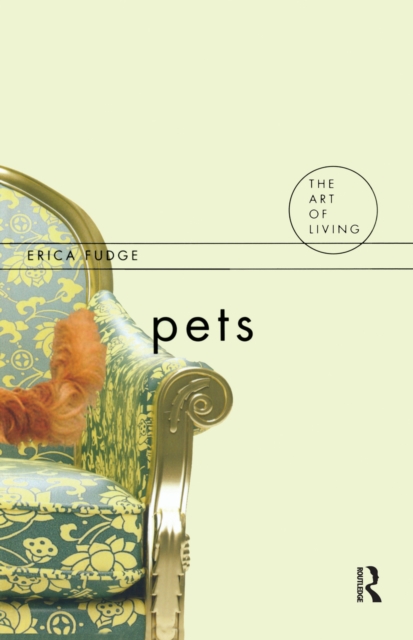
Pets
'When I play with my cat, who knows if I am not a pastime to her more than she is to me?' - Michel de Montaigne. Why do we live with pets? Is there something more to our relationship with them than simply companionship? What is it we look for in our pets and what does this say about us as human beings? In this fascinating book, Erica Fudge explores the nature of this most complex of relationships and the difficulties of knowing what it is that one is living with when one chooses to share a home with an animal. Fudge argues that our capacity for compassion and ability to live alongside others is evident in our relationships with our pets, those paradoxical creatures who give us a sense of comfort and security while simultaneously troubling the categories human and animal. For what is a pet if it isn't a fully-fledged member of the human family? This book proposes that by crossing over these boundaries pets help construct who it is we think we are. Drawing on the works of modern writers, such as J. M. Coetzee, Elizabeth Marshall Thomas and Jacques Derrida, Fudge shows how pets have been used to think with and to undermine our easy conceptions of human, animal and home. Indeed, \"Pets\" shows our obsession with domestic animals that reveals many of the paradoxes, contra - dictions and ambiguities of life. Living with pets provides thought-provoking perspectives on our notions of possession and mastery, mutuality and cohabitation, love and dominance. We might think of pets as simply happy, loved additions to human homes but as this captivating book reveals perhaps it is the pets that make the home and without pets perhaps we might not be the humans we think we are. For anyone who has ever wondered, like Montaigne, what their cat is thinking, it will be illuminating reading.
eBook

Pets
'When I play with my cat, who knows if I am not a pastime to her more than she is to me?' - Michel de Montaigne. Why do we live with pets? Is there something more to our relationship with them than simply companionship? What is it we look for in our pets and what does this say about us as human beings? In this fascinating book, Erica Fudge explores the nature of this most complex of relationships and the difficulties of knowing what it is that one is living with when one chooses to share a home with an animal. Fudge argues that our capacity for compassion and ability to live alongside others is evident in our relationships with our pets, those paradoxical creatures who give us a sense of comfort and security while simultaneously troubling the categories human and animal. For what is a pet if it isn't a fully-fledged member of the human family? This book proposes that by crossing over these boundaries pets help construct who it is we think we are. Drawing on the works of modern writers, such as J. M. Coetzee, Elizabeth Marshall Thomas and Jacques Derrida, Fudge shows how pets have been used to think with and to undermine our easy conceptions of human, animal and home. Indeed, \"Pets\" shows our obsession with domestic animals that reveals many of the paradoxes, contra - dictions and ambiguities of life. Living with pets provides thought-provoking perspectives on our notions of possession and mastery, mutuality and cohabitation, love and dominance. We might think of pets as simply happy, loved additions to human homes but as this captivating book reveals perhaps it is the pets that make the home and without pets perhaps we might not be the humans we think we are. For anyone who has ever wondered, like Montaigne, what their cat is thinking, it will be illuminating reading.
1. Introduction 2. Living with pets 3. Thinking with pets 4. Being with pets 5. Conclusion Further Reading
eBook
Pets
'When I play with my cat, who knows if I am not a pastime to her more than she is to me?' - Michel de Montaigne. Why do we live with pets? Is there something more to our relationship with them than simply companionship? What is it we look for in our pets and what does this say about us as human beings? In this fascinating book, Erica Fudge explores the nature of this most complex of relationships and the difficulties of knowing what it is that one is living with when one chooses to share a home with an animal. Fudge argues that our capacity for compassion and ability to live alongside others is evident in our relationships with our pets, those paradoxical creatures who give us a sense of comfort and security while simultaneously troubling the categories human and animal. For what is a pet if it isn't a fully-fledged member of the human family? This book proposes that by crossing over these boundaries pets help construct who it is we think we are. Drawing on the works of modern writers, such as J. M. Coetzee, Elizabeth Marshall Thomas and Jacques Derrida, Fudge shows how pets have been used to think with and to undermine our easy conceptions of human, animal and home. Indeed, \"Pets\" shows our obsession with domestic animals that reveals many of the paradoxes, contra - dictions and ambiguities of life. Living with pets provides thought-provoking perspectives on our notions of possession and mastery, mutuality and cohabitation, love and dominance. We might think of pets as simply happy, loved additions to human homes but as this captivating book reveals perhaps it is the pets that make the home and without pets perhaps we might not be the humans we think we are. For anyone who has ever wondered, like Montaigne, what their cat is thinking, it will be illuminating reading.
eBook
Milking other men's beastsi would Li
This article takes as its point of departure a small piece of evidence: a single-line entry in a seventeenth-century Essex Sessions Roll about the theft of milk. This fragment of the legal archive and the world it offers us a glimpse of are used to explore what it might mean to take seriously the presence of animals as historical actors. The article also-and inseparably-asks us to think about the nature of that being called the human that so frequently goes without comment in historical (as in other humanities) scholarship. Using work from historiography, sensory history, social history, anthropology, and contemporary animal science, the article proposes that introducing animals as actors and not just as objects into historical work will not only broaden and deepen what we might know about the past, it will also challenge some assumptions as to what the focus of our discipline might be. Reprinted by permission of Wesleyan University
Journal Article