
Catalogue Search | MBRL


Are you sure you want to remove the book from the shelf?

{{itemTitle}}
30
result(s) for
"GREGORY J. KALISS"
Sort by:

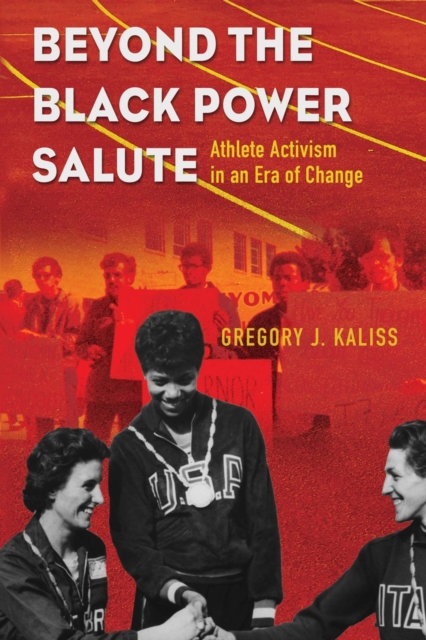
Beyond the Black Power Salute
Unequal opportunity sparked Jim Brown’s endeavors to encourage Black development while Billie Jean King fought so that women tennis players could earn more money and enjoy greater freedom. Gregory J. Kaliss examines these events and others to guide readers through the unprecedented wave of protest that swept sports in the 1960s and 1970s. The little-known story of the University of Wyoming football players suspended for their activism highlights an analysis of protests by college athletes. The 1971 Muhammad Ali–Joe Frazier clash provides a high-profile example of the Black male athlete’s effort to redefine Black masculinity. An in-depth look at the American Basketball Association reveals a league that put Black culture front and center with its style of play and shows how the ABA influenced the development of hip-hop. As Kaliss describes the breakthroughs achieved by these athletes, he also explores the barriers that remained--and in some cases remain today.
eBook

Richmond's Sherwood Park: A Forgotten Olmsted Neighborhood
Acquiring plants for Vanderbilt's estate led the firm to Richmond: the Franklin Davis & Co. nursery located in the city proved a useful location for supplying trees, shrubs, and vines for Biltmore, and it was there, probably in 1888, that Olmsted met Edward H. Bissell, one of Ginter's allies in the Sherwood Land Company.3 Olmsted's firm was a likely choice for planning the suburban community not only because of its national reputation for parks and public grounds but also for its history of suburban community design.\\n The influence of racial geography has also undoubtedly influenced Sherwood Park's historic preservation. [...]Dr. John Moeser answered several research questions, at one point locating and scanning a copy of an old insurance document for his Sherwood Park home that proved especially illuminating.
Journal Article

COLLEGE ATHLETES FLEX THEIR MUSCLES
In the winter of 1969, things were going well, on the surface, for college basket-ball star Charlie Scott. He was in the middle of a great season on the hardwood, leading his team at the University of North Carolina (UNC) to the top of the standings in the Atlantic Coast Conference (ACC). This was familiar territory: the previous year, as a sophomore, Scott had teamed with All-American Larry Miller to win the ACC championship and earn a trip to the NCAA men’s basketball tournament finals, where they fell to a powerhouse UCLA team. In the 1968–1969 season, with Miller
Book Chapter

Introduction
This chapter begins with Laura Ingraham’s 2018 admonishment to LeBron James to “shut up and dribble” and his public refutation of her criticisms regarding his politics. The chapter then situates this moment of athlete activism, and the backlash that accompanied it, by discussing the long history of African American athletes and women athletes in the United States. The bitter response to athletic pioneers like black boxer Jack Johnson in the 1910s, and the opening up of opportunities for women athletes such as Wilma Rudolph during the Cold War, show how different social contexts impacted athletes’ political possibilities. By highlighting the tensions that accompanied athletes’ efforts to contest systemic racism and patriarchy, this chapter sets the stage for the book’s five case studies.
Book Chapter
PROLOGUE
The date was February 26, 1964. It was nearly seventeen years after baseball pioneer Jackie Robinson took the field for the first time for the Brooklyn Dodgers. Almost ten years since the U.S. Supreme Court decided by a 9–0 vote that segregated schooling was unconstitutional. Just over one year since Betty Friedan had stirred up a new women’s rights movement in the United States with her classic text The Feminine Mystique. Only five months since Martin Luther King Jr. had captivated hundreds of thousands with his “I have a dream” speech.
But on that February day in the convention
Book Chapter