
Catalogue Search | MBRL


Are you sure you want to remove the book from the shelf?

{{itemTitle}}
56
result(s) for
"Gaille Marie"
Sort by:

The ethics of genomic medicine: redefining values and norms in the UK and France
This paper presents a joint position of the UK-France Genomics and Ethics Network (UK-FR GENE), which has been set up to reflect on the ethical and social issues arising from the integration of genomics into routine clinical care in the UK and France. In 2018, the two countries announced enhanced cooperation between their national strategies, Genomics England and Plan France Médecine Génomique 2025, which offers a unique opportunity to study the impact of genomic medicine and relevant policies in different national contexts. The paper provides first insights into the two national strategies and the norms, values and principles at stake in each country. It discusses the impact of genomic medicine on established relationships and existing regulations, and examines its effects on solidarity and trust in public healthcare systems. Finally, it uses the social contract as an analytical lens to explore and redefine the balance between individual rights and collective duties in the context of genomic medicine. This paper leads to three key observations: (1) despite each country’s strategy being at a different stage of implementation, the two countries face similar ethical issues; (2) each country tries to solve these issues by (re-)defining individual rights and collective duties in its own way; (3) the social contract presents a useful tool to analyse the ways the UK and France address the ethical challenges raised by genomics. This overview lays the groundwork for future in-depth comparison, and drive collaborative research, between the UK and France.
Journal Article

Ethical and social implications of approaching death prediction in humans - when the biology of ageing meets existential issues
Background
The discovery of biomarkers of ageing has led to the development of predictors of impending natural death and has paved the way for personalised estimation of the risk of death in the general population. This study intends to identify the ethical resources available to approach the idea of a long-lasting dying process and consider the perspective of death prediction. The reflection on human mortality is necessary but not sufficient to face this issue. Knowledge about death anticipation in clinical contexts allows for a better understanding of it. Still, the very notion of prediction and its implications must be clarified. This study outlines in a prospective way issues that call for further investigation in the various fields concerned: ethical, psychological, medical and social.
Methods
The study is based on an interdisciplinary approach, a combination of philosophy, clinical psychology, medicine, demography, biology and actuarial science.
Results
The present study proposes an understanding of death prediction based on its distinction with the relationship to human mortality and death anticipation, and on the analogy with the implications of genetic testing performed in pre-symptomatic stages of a disease. It leads to the identification of a multi-layered issue, including the individual and personal relationship to death prediction, the potential medical uses of biomarkers of ageing, the social and economic implications of the latter, especially in regard to the way longevity risk is perceived.
Conclusions
The present study work strives to propose a first sketch of what the implications of death prediction as such could be - from an individual, medical and social point of view. Both with anti-ageing medicine and the transhumanist quest for immortality, research on biomarkers of ageing brings back to the forefront crucial ethical matters: should we, as human beings, keep ignoring certain things, primarily the moment of our death, be it an estimation of it? If such knowledge was available, who should be informed about it and how such information should be given? Is it a knowledge that could be socially shared?
Journal Article

Patient’s lived experience
This editorial presents a special issue gathering four contributions about the patient’s lived experience in the context of deep-brain stimulation. It aims at clarifying the meaning of such an experience and its scope for medical practice, the health system and its legal frame.
Journal Article

Vers une médecine fondée sur l’idée de santé planétaire
Dans cet article, nous explorons la manière dont la médecine contemporaine est confrontée aux enjeux de santé environnementale. Tout en considérant le fait que le professionnel de santé, avec pour objectif d’agir au profit de la santé humaine, ne peut répondre seul à ces enjeux, nous nous interrogeons sur les modalités de son action et l’orientation à donner à la médecine. Nous analysons des éléments de réponse formulés à ce sujet au regard des impacts sanitaires du réchauffement climatique. Puis, nous examinons dans quelle mesure la médecine ne pourrait être amenée à réorienter son action sur la base d’une conception écologique de la santé. Nous formulons à ce titre l’hypothèse du nécessaire passage à une médecine fondée sur l’idée de santé planétaire. This article explores the way in which contemporary medicine is confronted with environmental health issues. While considering that the health professional cannot act alone in the face of these issues for the benefit of human health, it questions the modalities of his/her action and the orientation to be given to medicine. It analyses some of the answers formulated on this subject in relation to the health impacts of global warming. Then, in a second step, it examines to what extent medicine should not reorient its action on the basis of an ecological conception of health. It formulates the hypothesis that a shift to a medicine based on the idea of global health is necessary.
Journal Article
RETRACTED ARTICLE: What it means to care for a person with a chronic disease: integrating the patient’s experience into the medical viewpoint
In this contribution, we intend to shed light on the challenges involved in the requirement for greater medical attention to the meaning of chronic illness for the person affected by it. Two philosophical approaches dating from the twentieth century, hermeneutics and phenomenology, are especially pertinent to this questioning about the meaning of chronic illness for the patient. After making a clear distinction between merely listening to the patient in order to improve diagnosis and treatment and applying interest to the actual meaning of the disease for the person who has it (I), our contribution presents the ideas of H. Gadamer and S. K. Toombs, demonstrating the grounds for these approaches and the structure of their reasoning (II). These approaches underscore the fact that there is a gap between the way each agent, doctor and patient, views the disease. They suggest bridging the gap by recommending that doctors integrate the viewpoint rooted in the patient’s first-person experience of the disease into their own viewpoint as health-care professionals. We shall examine this ambition, its conditions and limitations. Is it possible to integrate a medical viewpoint and patient experience? How would these recommendations be implemented, in daily practice? What issues will arise from such an integration (III)?
Journal Article
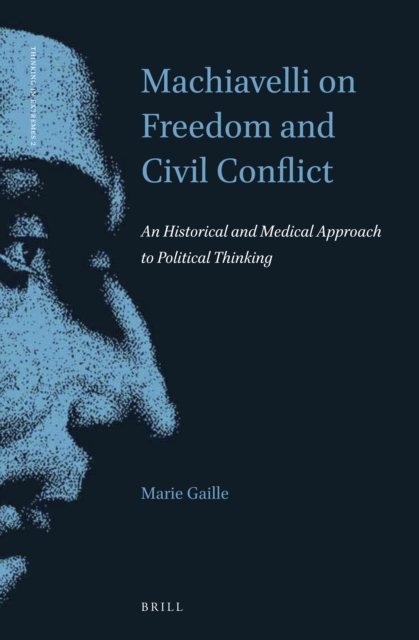
Machiavelli on freedom and civil conflict : an historical and medical approach to political thinking
In Machiavelli on Freedom and Civil Conflict, Marie Gaille discusses Machiavelli's conception of civil conflict, its historical and medical language, and its uses in contemporary conceptions of democracy.
eBook
On prenatal diagnosis and the decision to continue or terminate a pregnancy in France: a clinical ethics study of unknown moral territories
This article presents a part of the results of an empirical study conducted at a Parisian hospital between 2011 and 2014. It aimed at understanding the women and couples’ motivations to terminate or not a pregnancy once a prenatal diagnosis has revealed a genetically related disease in the embryo or fetus. The article first presents the social and legal context of the study, the methodology used and the pathologies that were encountered. Then, it examines the results of the interviews conducted with 5 women alone and 23 couples explaining their reasons for deciding to terminate or not the pregnancy. Finally, it explores the patients’ views about the doctor’s involvement in the decision-making process. The findings reveal the reasons they formulate when they ponder whether to terminate or not the pregnancy. It highlights the process of their deliberation, their hierarchisation of arguments and concerns. They also show how patients, though often consumed in sorrow, claim to be the legitimate decision-makers, especially women, in a social and legal context in which the rejection of eugenics is viewed as an undisputable principle.
Journal Article

The role of ‘accompagnement’ in the end-of-life debate in France: from solidarity to autonomy
This article traces the way autonomy has become a recognised value in health care in France. In a country that based its social fundamentals on the very idea of solidarity for many years, autonomy has long been considered a foreign ‘Anglo-American principle’. Taking the example of the end-of-life debate, the article shows, however, how the use of the French term ‘
accompagnement
’ allowed autonomy to be redefined and to be associated with the concept of solidarity. Exploring the arguments used over the past 25 years in professional guidelines, parliamentary reports, ethics committee reports, and legal texts, the authors describe the shift that took place in public and legal discourses on end-of-life care. The analysis demonstrates how the scope of autonomy has been limited by other social values, such as the protection of the dying person, in order to become an accepted social value in its own right. The example of the French end-of-life debate shows that depending on how the concept of autonomy is adapted and applied in a specific context, it can be compatible with the idea of solidarity. Such compatibility has been challenged previously in the international bioethics debate. By demonstrating the possibility of combining autonomy and solidarity, this article makes an important contribution to the international bioethics debate and to the dialogue between countries that are often perceived as significantly different.
Journal Article
On prenatal diagnosis and the decisionto continue or terminate a pregnancy in France: a clinical ethics study of unknown moral territories
This article presents the results of an empirical study conducted at a Parisian hospital between 2011 and 2014. It aimed at understanding the women and couples' motivations to terminate or not a pregnancy once a prenatal diagnosis has revealed a genetically related disease in the embryo or fetus. The article first presents the social and legal context of the study, the methodology used and the pathologies that were encountered. Then, it examines the results of the interviews conducted with 5 women alone and 23 couples explaining their reasons for deciding to terminate or not the pregnancy. Finally, it explores the patients' views about the doctor's involvement in the decision-making process. The findings reveal the reasons they formulate when they ponder whether to terminate or not the pregnancy. It highlights the process of their deliberation, their hierarchisation of arguments and concerns. They also show how patients, though often consumed in sorrow, claim to be the legitimate decision-makers, especially women, in a social and legal context in which the rejection of eugenics is viewed as an undisputable principle.
Journal Article
