Catalogue Search | MBRL


Are you sure you want to remove the book from the shelf?

{{itemTitle}}
6
result(s) for
"Galilei, Galileo, 1564-1642. author"
Sort by:
Dialogo di Galileo Galilei Linceo : matematico sopraordinario dello studio di Pisa. E filosofo e matematico primario del serenissimo gr. duca di Toscana, doue ne i congressi di quattro giornate si discorre sopra i due massimi sistemi del mondo tolemaico e copernicano, proponendo indeterminatamente le ragioni filosofiche e naturali tanto per l'una quanto per l'altra parte
The Dialogue Concerning the Two Chief World Systems was an attempt by Galileo to promote the heliocentric theory of the universe. In the Copernican system the Earth and other planets revolved around the sun, while in the Ptolemaic system everything in the universe circles around the Earth. The Dialogue, published in Florence under a formal license from the Inquisition, attempted to skirt the controversy by couching the discussion in a fictional dialogue between Aristotle, Copernicus, and Ptolemy. The ruse was unsuccessful, and in 1633 Galileo was convicted of grave suspicion of heresy. Galileo was imprisoned, and the Dialogo was placed on the Index of Forbidden Books, from which it was not removed until 1835.
Rare Book
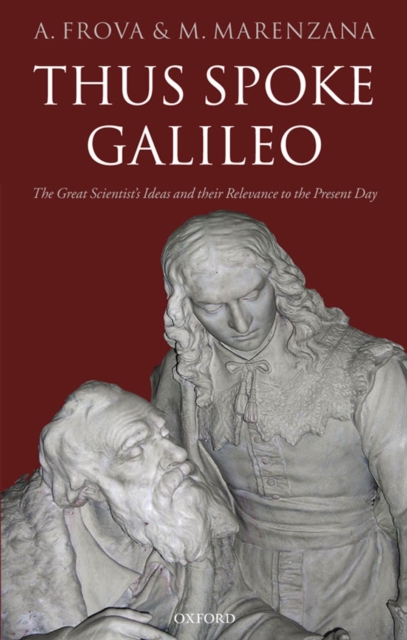
Thus spoke Galileo : the great scientist's ideas and their relevance to the present day
You might know what is said about Galileo, but not many people know what Galileo himself actually said! His elusive and often misquoted discourse has resulted, over the years, in slurs against his name and reputation as a scientist. Let him speak then, so that he can bring to everyone's attention his message of reason, of intellectual honesty, and of free thinking. A message that, more than ever, is of great relevance in the rampant irrationality of the new millennium. The exposition begins with a blunt 'self-portrait'. A 'forgery' of course, based mainly on extracts from Galileo's writings and private letters; something he would never have dared, nor been allowed, to write for the public. The selection of writings offered includes many of the subjects that were closest to Galileo's heart and mind with lively commentary from both the literary, scientific, and historical viewpoints. For those who want to know the mathematics behind Galileo's theories, each chapter closes with a separate self contained summary. Thus Spoke Galileo will allow the reader to appreciate the work and the writing-style of a great scientist and author who had a tremendous influence on the modern world.
eBook
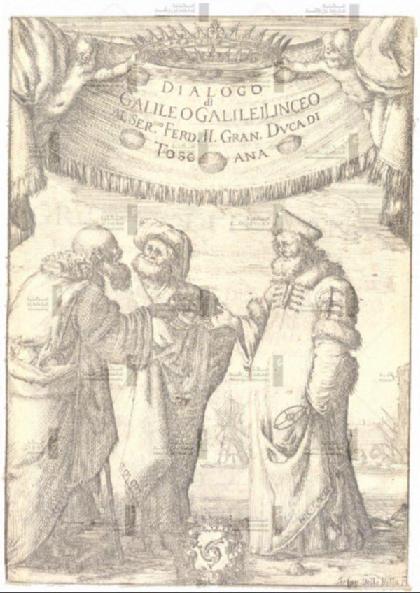
Dialogue by Galileo Galilei Linceo
The Dialogue Concerning the Two Chief World Systems was an attempt by Galileo to promote the heliocentric theory of the universe. In the Copernican system the Earth and other planets revolved around the sun, while in the Ptolemaic system everything in the universe circles around the Earth. The Dialogue, published in Florence under a formal license from the Inquisition, attempted to skirt the controversy by couching the discussion in a fictional dialogue between Aristotle, Copernicus, and Ptolemy. The ruse was unsuccessful, and in 1633 Galileo was convicted of grave suspicion of heresy. Galileo was imprisoned, and the Dialogo was placed on the Index of Forbidden Books, from which it was not removed until 1835.
Rare Book
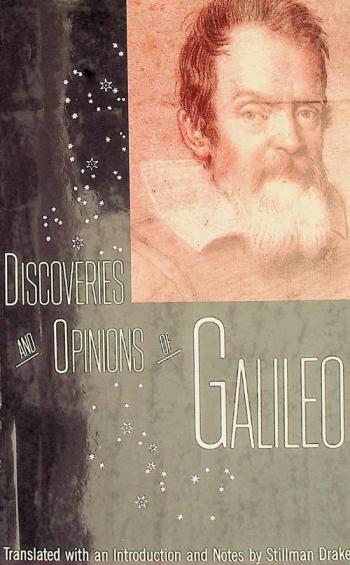
Discoveries and opinions of Galileo : including the starry messenger (1610), letter to the grand duchess Christina (1615), and excerpts from letters on sunspots (1613), the assayre (1623)
Directing his polemics against the pedantry of his time, Galileo, as his own popularizer, addressed his writings to contemporary laymen. His support of Copernican cosmology, against the Church's strong opposition, his development of a telescope, and his unorthodox opinions as a philosopher of science were the central concerns of his career and the subjects of four of his most important writings. Drake's introductory essay place them in their biographical and historical context.
Book