
Catalogue Search | MBRL


Are you sure you want to remove the book from the shelf?

{{itemTitle}}
429
result(s) for
"Gallagher, Anne"
Sort by:

The international law of migrant smuggling
This companion volume to 'The International Law of Human Trafficking' presents a comprehensive and in-depth analysis of the international law of migrant smuggling. The authors call on their experience of working with the UN to chart the development of new international laws and to link these specialist rules to other relevant areas of international law, including law of the sea, human rights law, and international refugee law.
Book

The International Law of Human Trafficking
Although human trafficking has a long and ignoble history, it is only recently that trafficking has become a major political issue for states and the international community and the subject of detailed international rules. Anne T. Gallagher calls on her direct experience working within the United Nations to chart the development of new international laws on this issue. She links these rules to the international law of state responsibility as well as key norms of international human rights law, transnational criminal law, refugee law and international criminal law, in the process identifying and explaining the major legal obligations of states with respect to preventing trafficking, protecting and supporting victims, and prosecuting perpetrators. This book is a groundbreaking work: a unique and valuable resource for policymakers, advocates, practitioners and scholars working in this controversial and important field.
eBook

Functional Brain Connectivity of Language Functions in Children Revealed by EEG and MEG: A Systematic Review
The development of language functions is of great interest to neuroscientists, as these functions are among the fundamental capacities of human cognition. For many years, researchers aimed at identifying cerebral correlates of language abilities. More recently, the development of new data analysis tools has generated a shift toward the investigation of complex cerebral networks. In 2015, Weiss-Croft and Baldeweg published a very interesting systematic review on the development of functional language networks, explored through the use of functional magnetic resonance imaging (fMRI). Compared to fMRI and because of their excellent temporal resolution, magnetoencephalography (MEG) and electroencephalography (EEG) provide different and important information on brain activity. Both therefore constitute crucial neuroimaging techniques for the investigation of the maturation of functional language brain networks. The main objective of this systematic review is to provide a state of knowledge on the investigation of language-related cerebral networks in children, through the use of EEG and MEG, as well as a detailed portrait of relevant MEG and EEG data analysis methods used in that specific research context. To do so, we have summarized the results and systematically compared the methodological approach of 24 peer-reviewed EEG or MEG scientific studies that included healthy children and children with or at high risk of language disabilities, from birth up to 18 years of age. All included studies employed functional and effective connectivity measures, such as coherence, phase locking value, and Phase Slope Index, and did so using different experimental paradigms (e.g., at rest or during language-related tasks). This review will provide more insight into the use of EEG and MEG for the study of language networks in children, contribute to the current state of knowledge on the developmental path of functional connectivity in language networks during childhood and adolescence, and finally allow future studies to choose the most appropriate type of connectivity analysis.
Journal Article

What's Wrong with the Global Slavery Index?
The Global Slavery Index (GSI), which has been produced by the Walk Free Foundation in 2013, 2014 and 2016, seeks to calculate the number of victims of human trafficking (or ‘modern slavery’) in each country and to assess and rank government responses. Using the latest iteration of the Index, this article examines each of the three elements (vulnerability measurement; prevalence measurement and response measurement), making some preliminary findings about the quality of the methodology and its application under each heading. It concludes with a consideration of two broader issues: (i) the conspicuous lack of critical engagement with the Index; and (ii) what the Index reveals about the changing face of anti-trafficking/anti-slavery work—most particularly, the growing involvement of metrics-focused strategic philanthropy in defining the ‘problem’ and directing responses.
Journal Article

Functional near-infrared spectroscopy in pediatric clinical research: Different pathophysiologies and promising clinical applications
Over its 30 years of existence, functional near-infrared spectroscopy (fNIRS) has matured into a highly versatile tool to study brain function in infants and young children. Its advantages, amongst others, include its ease of application and portability, the option to combine it with electrophysiology, and its relatively good tolerance to movement. As shown by the impressive body of fNIRS literature in the field of cognitive developmental neuroscience, the method’s strengths become even more relevant for (very) young individuals who suffer from neurological, behavioral, and/or cognitive impairment. Although a number of studies have been conducted with a clinical perspective, fNIRS cannot yet be considered as a truly clinical tool. The first step has been taken in this direction by studies exploring options in populations with well-defined clinical profiles. To foster further progress, here, we review several of these clinical approaches to identify the challenges and perspectives of fNIRS in the field of developmental disorders. We first outline the contributions of fNIRS in selected areas of pediatric clinical research: epilepsy, communicative and language disorders, and attention-deficit/hyperactivity disorder. We provide a scoping review as a framework to allow the highlighting of specific and general challenges of using fNIRS in pediatric research. We also discuss potential solutions and perspectives on the broader use of fNIRS in the clinical setting. This may be of use to future research, targeting clinical applications of fNIRS in children and adolescents.
Journal Article

A qualitative exploration of cardiovascular disease patients’ views and experiences with an eHealth cardiac rehabilitation intervention: The PATHway Project
The aim of this study is to explore participants' views and experiences of an eHealth phase 3 cardiac rehabilitation (CR) intervention: Physical Activity Towards Health (PATHway). Sixty participants took part in the PATHway intervention. Debriefs were conducted after the six-month intervention. All interviews were audio recorded and transcribed verbatim. Transcripts were analysed with Braun and Clarke's thematic analysis. Forty-four (71%) debriefs were conducted (n = 34 male, mean (SD) age 61 (10) years). Five key themes were identified: (1) Feedback on the components of the PATHway system, (2) Motivation, (3) Barriers to using PATHway, (4) Enablers to using PATHway, and (5) Post programme reflection. There were a number of subthemes within each theme, for example motivation explores participants motivation to take part in PATHway and participants motivation to sustain engagement with PATHway throughout the intervention period. Participant engagement with the components of the PATHway system was variable. Future research should focus on optimising participant familiarisation with eHealth systems and employ an iterative approach to development and evaluation.
Journal Article

Early protein energy malnutrition impacts life-long developmental trajectories of the sources of EEG rhythmic activity
•We recorded 202 EEGs in 1978 and 2018 for malnourished individuals and controls.•Malnutrition, only in the first year, slowed the alpha rhythm in adulthood.•Malnutrition also slowed the increase of beta activity in adulthood.•Temporal high-alpha sources correlated with the adult Montreal cognitive aging scale.•qEEG changes might thus signal accelerated cognitive decline due to early malnutrition.
Protein Energy Malnutrition (PEM) has lifelong consequences on brain development and cognitive function. We studied the lifelong developmental trajectories of resting-state EEG source activity in 66 individuals with histories of Protein Energy Malnutrition (PEM) limited to the first year of life and in 83 matched classmate controls (CON) who are all participants of the 49 years longitudinal Barbados Nutrition Study (BNS). qEEGt source z-spectra measured deviation from normative values of EEG rhythmic activity sources at 5–11 years of age and 40 years later at 45–51 years of age. The PEM group showed qEEGt abnormalities in childhood, including a developmental delay in alpha rhythm maturation and an insufficient decrease in beta activity. These profiles may be correlated with accelerated cognitive decline.
Journal Article
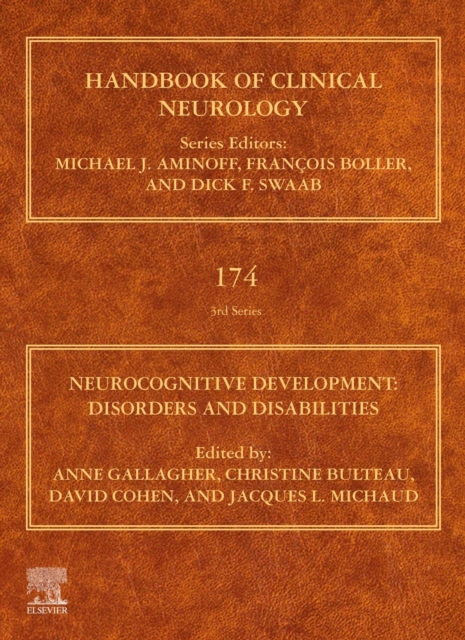
Neurocognitive Development: Disorders and Disabilities
This is one volume of a two-volume work on neurocognitive development, focusing separately on normative and non-normative development. The disorders and disabilities volume focuses on disorders of intellectual abilities, language, learning memory as well as psychiatric developmental disorders. The developmental aspects of neurological diseases in children is also covered. Chapters discuss when and how these disorders develop, the genetics and neurophysiology of their operation, and their evaluation and assessment in clinical practice. Assessment, treatment, and long-term outcome are provided as well as advances in methods and tools for assessment. This book will serve as a comprehensive reference to researchers in cognitive development in neuroscience, psychology, and medicine, as well as to clinicians and allied health professionals focused on developmental disabilities (child neurologists, pediatric neuropsychologists, child psychiatrists, speech and language therapists, and occupational therapists.)
eBook
Brain language networks and cognitive outcomes in children with frontotemporal lobe epilepsy
Pediatric frontal and temporal lobe epilepsies (FLE, TLE) have been associated with language impairments and structural and functional brain alterations. However, there is no clear consensus regarding the specific patterns of cerebral reorganization of language networks in these patients. The current study aims at characterizing the cerebral language networks in children with FLE or TLE, and the association between brain network characteristics and cognitive abilities.
Twenty (20) children with FLE or TLE aged between 6 and 18 years and 29 age- and sex-matched healthy controls underwent a neuropsychological evaluation and a simultaneous functional near-infrared spectroscopy and electroencephalography (fNIRS-EEG) recording at rest and during a receptive language task. EEG was used to identify potential subclinical seizures in patients. We removed these time intervals from the fNIRS signal to investigate language brain networks and not epileptogenic networks. Functional connectivity matrices on fNIRS oxy-hemoglobin concentration changes were computed using cross-correlations between all channels.
Group comparisons of residual matrices (=individual task-based matrix minus individual resting-state matrix) revealed significantly reduced connectivity within the left and between hemispheres, increased connectivity within the right hemisphere and higher right hemispheric local efficiency for the epilepsy group compared to the control group. The epilepsy group had significantly lower cognitive performance in all domains compared to their healthy peers. Epilepsy patients' local network efficiency in the left hemisphere was negatively associated with the estimated IQ (
= 0.014), suggesting that brain reorganization in response to FLE and TLE does not allow for an optimal cognitive development.
Journal Article
Two Cheers for the Trafficking Protocol
The Trafficking Protocol makes an easy target for attack. Its origins lie in an attempt to control a particularly exploitative form of migration that was challenging the ability of States to control their own borders. Its parent instrument is a framework agreement to address transnational organised crime. While paying fleeting attention to the rights of victims, the Protocol, with its emphasis on criminalisation and border protection is nowhere near being a human rights treaty. On top of all that it does not even have a credible enforcement mechanism, allowing states parties wide latitude in interpreting and applying their obligations. Strangely, these seemingly insurmountable flaws have not stopped the Protocol’s emergence as perhaps the single most important development in the fight against human trafficking. Without the Protocol, arguments around definitions would have continued to block the evolution of principles and rules. Without the Protocol it is likely that the human rights system would have continued its shameful tradition of sidelining issues such as forced labour, forced sex, forced marriage and the ritual exploitation of migrant workers through debt. Most critically, the Protocol provided the impetus and template for a series of legal and political developments that, over time, have served to ameliorate some of its greatest weaknesses, including the lack of human rights protections and of a credible oversight mechanism.
Journal Article