
Catalogue Search | MBRL


Are you sure you want to remove the book from the shelf?

{{itemTitle}}
24
result(s) for
"Gallup-Diaz, Ignacio"
Sort by:


Anglicizing America
The thirteen mainland colonies of early America were arguably never more British than on the eve of their War of Independence from Britain. Though home to settlers of diverse national and cultural backgrounds, colonial America gradually became more like Britain in its political and judicial systems, material culture, economies, religious systems, and engagements with the empire. At the same time and by the same process, these politically distinct and geographically distant colonies forged a shared cultural identityone that would bind them together as a nation during the Revolution.
Anglicizing Americarevisits the theory of Anglicization, considering its application to the history of the Atlantic world, from Britain to the Caribbean to the western wildernesses, at key moments before, during, and after the American Revolution. Ten essays by senior historians trace the complex processes by which global forces, local economies, and individual motives interacted to reinforce a more centralized and unified social movement. They examine the ways English ideas about labor influenced plantation slavery, how Great Britain's imperial aspirations shaped American militarization, the influence of religious tolerance on political unity, and how Americans' relationship to Great Britain after the war impacted the early republic's naval and taxation policies. As a whole,Anglicizing Americaoffers a compelling framework for explaining the complex processes at work in the western hemisphere during the age of revolutions.
Contributors: Denver Brunsman, William Howard Carter, Ignacio Gallup-Diaz, Anthony M. Joseph, Simon P. Newman, Geoffrey Plank, Nancy L. Rhoden, Andrew Shankman, David J. Silverman, Jeremy A. Stern.
eBook
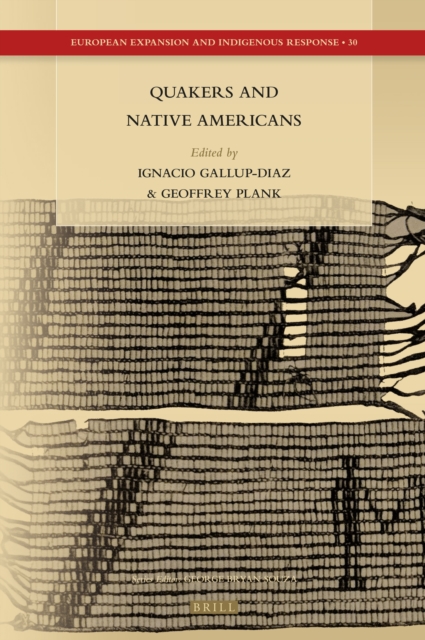
Quakers and Native Americans
Quakers and Native Americans is a collection of essays examining the history of interactions between Quakers and American Indians from the 1650s, emphasising American Indian influence on Quaker history as well as Quaker influence on U.S. policy toward American Indians.
eBook

CONCLUSION
Anglicization wields its explanatory power through an attention to both the general and the specific, incorporating an analysis of macrolevel themes and structures while at the same time exploring action on the microlevel, the arena of contingent events and face-to-face interactions. This essay explores how it balances structural mechanisms with the unpredictable motivations of individuals and the manner in which it is both relativistic and naturally transatlantic. Anglicization, a concept most often associated with the realms of political history and political economy, is placed beside recent philosophical and anthropological examinations of empire that place personal enactments of identity at the
Book Chapter


Slavery and Salvation in Colonial Cartagena de Indias
Gallup-Diaz reviews Slavery and Salvation in Colonial Cartagena de Indias by Margaret M. Olsen.
Book Review

The \door of the seas and key to the universe\: Indian politics and imperial rivalry in the Darien, 1640--1750
This dissertation analyses the early modern history of the Kuna Indians of eastern Panamá, and focuses on Spanish attempts to dominate the region in the face of frequent interference from England, the Netherlands, Scotland, and France. The problems which colonial officials experienced in their attempts to subjugate the indigenous population ultimately forced them to implement a range of innovative policies which shaped the unique history of the Darién. Eastern Panamá was both highly contested and largely devoid of European settlement. While its climate and terrain made it inhospitable to settlers, the Darién's strategic placement at the confluence of vital transportation routes kept it uppermost in the minds of Spanish administrators. These imperial planners believed that Christianized, loyal Indians would serve as surrogates for Spanish settlers, and their attempts to administer the region were grounded upon alliances with Indian leaders. At the same time, intruders attempting to gain a foothold in Panamá also saw the need for alliances with Indian men. Europeans seeking indigenous chieftains with whom to make alliances were often able to find them. Indeed, the need for alliances was so great that when such men could not be found, they were created. The process through which new Kuna leaders were created, which took place throughout the entire early modern period, was complicated. It involved more than the simple imposition, by Europeans, of unwanted leaders upon an unsuspecting, or resistant, indigenous polity. Rather, new Kuna leaders were made through a process of mutual interaction and negotiation which was primarily driven by dynamics operating within the indigenous community. The early modern period saw the creation of such leaders through a process in which Europeans and Indians played an equal part. The chieftains who interacted with outsiders were forced by circumstances to create new ways of ruling on the ground as they navigated through an evolving colonial world in the Darién. This was a world which, though it had been built upon indigenous models, was not exactly indigenous. And though it drew upon European administrative forms and symbols for a good part of its legitimacy, it was not recognizably European either.
Dissertation

Introduction
Anglicizing Americareevaluates the idea of Anglicization, a seminal theoretical model for the study of early American history. Anglicization explains the process through which the English colonies of the Americas emerged from their diverse beginnings to become increasingly more alike, expressing a shared Britishness in their political and judicial systems, material culture, economies, religious systems, and engagements with the empire. Anglicization hinges on two powerful ironies: first, that the thirteen mainland colonies had never been more British than they were on the eve of their War of Independence from Britain; and, second, that this shared Britishness, rather than a sense
Book Chapter