
Catalogue Search | MBRL


Are you sure you want to remove the book from the shelf?

{{itemTitle}}
44
result(s) for
"Gandy, Joan"
Sort by:
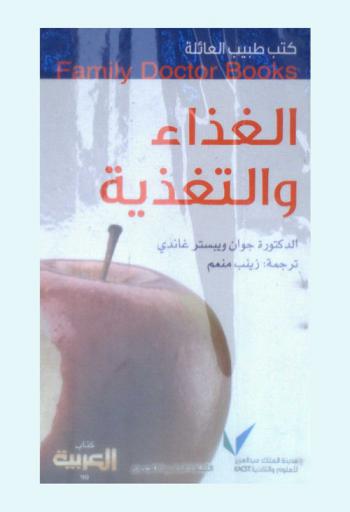
الغذاء والتغذية
يتناول كتاب (الغذاء والتغذية) والذي قام بتأليفه (جوان ويبست) في حوالي (149 صفحة) من القطع المتوسط موضوع (الغذاء) مستعرضا المحتويات التالية : كيف يستعمل جسمك الطعام ؟، الطاقة، البروتين، الدهون، الكربوهيدرات، الفيتامينات والمعادن، الطعام الصحي، البطاقة الغذائية، المواد المضافة الغذائية، الحساسية تجاه بعض الأطعمة وعدم القدرة على تحمل بعضها الآخر، المكملات الغذائية والأنظمة الغذائية البديلة والأطعمة الصحية وفي أخر صفحات الكتاب يأتي الفهرس.
BOOK

Manual of dietetic practice
The authoritative guide for dietetic students and both new and experienced dietitians – endorsed by the British Dietetic Association
Now in its sixth edition, the bestselling Manual of Dietetic Practice has been thoroughly revised and updated to include the most recent developments and research on the topic. Published on behalf of the British Dietetic Association, this comprehensive resource covers the entire dietetics curriculum, and is an ideal reference text for healthcare professionals to develop their expertise and specialist skills in the realm of dietetic practice. This important guide includes:
* The latest developments and scientific evidence in the field
* New data on nutrition and health surveillance programs
* Revised and updated evidence-based guidelines for dietetic practice
* An exploration of how Public Health England has influenced the field
* Practical advice on public health interventions and monitoring
* A companion website with helpful materials to support and develop learning
Written for dietitians, clinical nutritionists, and other healthcare professionals by leading dietitians and other professionals, the Manual of Dietetic Practice continues to provide a crucial resource for experts and novices alike.
eBook

Manual of dietetic practice
This is a set comprising of the 'Manual of Dietetic Practice' and 'Dietetic and Nutrition Case Studies'.
Book

Water intake: validity of population assessment and recommendations
Good hydration is vital for good health and well-being. Until recently, there was little interest in collecting data on water and drink and beverage intake. However, there is increasing evidence that a low water intake or mild dehydration may be linked with the risk of chronic diseases. Accurate estimates of intake in populations are essential to explore these relationships. This will enable the identification of specific populations at the risk of low water intake and allow exposure assessment of potential contaminates and specific nutrients present in drinks and beverages. In addition, data from these population studies are used as the basis of national and international recommendations on water intake and to set and evaluate national health policies. For example, EFSA based their recommendations on data from population studies from 13 European countries. The range of intakes varied from 720 to 2621 mL/day; this diversity cannot be explained by environmental differences alone. However, this variability may, at least partially, be explained by the inconsistency in methodologies used as none of surveys used a dietary assessment tool validated for total water intake or beverage and drink intake. It is reasonable to suggest that this may result in incomplete data collection and it raises questions on the validity of the recommendations. The relationship between water consumption and health warrants further investigation, and robust methodologies are essential to ensure that these data are accurate and useful for setting public health priorities and policies.
Journal Article

Contribution of Water from Food and Fluids to Total Water Intake: Analysis of a French and UK Population Surveys
Little has been published on the contribution of food moisture (FM) to total water intake (TWI); therefore, the European Food Safety Authority assumed FM to contribute 20%–30% to TWI. The aim of the present analysis was to estimate and compare TWI, the percentage of water from FM and from fluids in population samples of France and UK. Data from 2 national nutrition surveys (Enquête Comportements et Consommations Alimentaires en France (CCAF) 2013 and the National Diet and Nutrition Survey (NDNS) 2008/2009–2011/2012) were analyzed for TWI and the contribution of water from FM and fluids. Children and adults TWI were significantly lower in France than in the UK. The contribution of water from foods was lower in the UK than in France (27% vs. 36%). As TWI increased, the proportion of water from fluids increased, suggesting that low drinkers did not compensate by increasing intake of water-rich foods. In addition, 80%–90% of the variance in TWI was explained by differences in water intake from fluids. More data on the contribution of FM to TWI is needed to develop more robust dietary recommendations on TWI and guidance on fluid intake for the general public.
Journal Article

Manual of Dietetic Practice
Since publication of its first edition, Manual of Dietetic Practice has remained an essential guide to the key principles of dietetics and a core text for healthcare professionals looking to develop their expertise and specialist skills. Published on behalf of the British Dietetic Association, the UK professional body for dietitians, it covers the entire dietetics curriculum and is also an ideal reference text for qualified practitioners.
The book has been extensively restructured for its fifth edition and is now divided into two parts to make it easier to locate key topics. The first part covers professional practice, nutrition in specific groups, nutritional status and non-clinical areas of dietetic practices, while the second focuses on clinical dietetic practice, including nutrition support, and dietetic practice in individual areas of disease, from respiratory and renal disorders to mental health and palliative care.
eBook

Dietetic and nutrition case studies
The ideal companion resource to 'Manual of Dietetic Practice', this book takes a problem-based learning approach to dietetics and nutrition with cases written and peer reviewed by registered dietitians, drawing on their own experiences and specialist knowledge
* Each case study follows the Process for Nutrition and Dietetic Practice published by the British Dietetic Association in 2012
* Includes case studies in public health, an increasingly important area of practice
eBook

Fluid Intake – A Scientific Approach
Water has been described as a forgotten nutrient. Looking into the history of the dietary advices of USDA since 1947 water has not been included in the any of the nutritional advices including myPlate or different versions of the dietary pyramids. Interestingly even in nutrition conferences or scientific journals you rarely find any section related to water intake and health. Majority of what we know regarding water balance comes from dehydration, temperature regulation and exercise performance. Total body water that account approximately 60% of body weight is distributed inside (intracellular) and out of cells (extracellular). Extracellular water is the water between cells called interstitial water and the water contained as part of the blood known as plasma water. Osmoreceptors and baroreceptor in circulation are primarily responsible for body water regulation by activating thirst and the fluid regulating hormones. Increase in osmolality activates the hormone vasopressin (also known as anti-diuretic) that decreased urinary output. What is interested is that this hormone gets activated well before thirst is activated. People who consume low amount of water have higher levels of vasopressin which has been associated with many negative health outcomes, like diabetes and chronic kidney diseases. On the other side adequate water intake decreases vasopressin.
Journal Article
Eleventh Annual Hydration for Health Scientific Conference: From Water Resources to Metabolic Health and Drinking Behavior
The Hydration for Health (H4H) Scientific Conference moved into its second decade with a meeting held in Evian, France, on June 25th-26th, 2019. Every year since 2008, this unique international conference has brought people together who share a common goal: to explore the relationship between hydration and health. As has become the norm, the conference was preceded by the Hydration for Health Academy. Each year, the academy evolves to target the needs of the audience and this conference saw the addition of the European Association for the Study of Obesity's teaching course. The conference was split into three main sessions: Hydration and Metabolic Health, Water Resource Management, and Water and Behavior Change. The sessions were followed by an expert panel discussion that addressed the question, \"How can cutting edge technology help us drink better?\" The now well-established Pitch Your Science Challenge completed the program with presentations from six young hydrationists aiming to win the Young Researcher Award.
Journal Article