
Catalogue Search | MBRL


Are you sure you want to remove the book from the shelf?

{{itemTitle}}
646
result(s) for
"Gann, Kyle"
Sort by:

No such thing as silence : John Cage's 4'33''
First performed at the midpoint of the 20th century, John Cage's '4'33\"', a composition conceived of without a single note, is among the most celebrated and ballyhooed cultural gestures in the history of modern music. This book explains '4'33\"' as a unique moment in American culture and musical composition.
Book
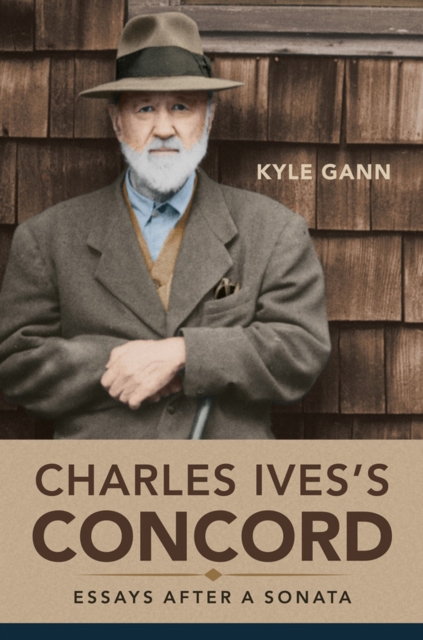
Charles Ives's Concord
In 1921, insurance executive Charles Ives sent out copies of a piano sonata to two hundred strangers. Laden with dissonant chords, complex rhythm, and a seemingly chaotic structure, the so-called Concord Sonata confounded the recipients, as did the accompanying book, Essays before a Sonata . Kyle Gann merges exhaustive research with his own experience as a composer to reveal the Concord Sonata and the essays in full. Diffracting the twinned works into their essential aspects, Gann lays out the historical context that produced Ives's masterpiece and illuminates the arguments Ives himself explored in the Essays . Gann also provides a movement-by-movement analysis of the work's harmonic structure and compositional technique; connects the sonata to Ives works that share parts of its material; and compares the 1921 version of the Concord with its 1947 revision to reveal important aspects of Ives's creative process. A tour de force of critical, theoretical, and historical thought, Charles Ives's Concord provides nothing less than the first comprehensive consideration of a work at the heart of twentieth century American music.
eBook


The Ashgate Research Companion to Minimalist and Postminimalist Music
In recent years the music of minimalist composers such as La Monte Young, Terry Riley, Steve Reich and Philip Glass has, increasingly, become the subject of important musicological reflection, research and debate. Scholars have also been turning their attention to the work of lesser-known contemporaries such as Phill Niblock and Eliane Radigue, or to second and third generation minimalists such as John Adams, Louis Andriessen, Michael Nyman and William Duckworth, whose range of styles may undermine any sense of shared aesthetic approach but whose output is still to a large extent informed by the innovative work of their minimalist predecessors. Attempts have also been made by a number of academics to contextualise the work of composers who have moved in parallel with these developments while remaining resolutely outside its immediate environment, including such diverse figures as Karel Goeyvaerts, Robert Ashley, Arvo Pärt and Brian Eno.
Theory has reflected practice in many respects, with the multimedia works of Reich and Glass encouraging interdisciplinary approaches, associations and interconnections. Minimalism's role in culture and society has also become the subject of recent interest and debate, complementing existing scholarship, which addressed the subject from the perspective of historiography, analysis, aesthetics and philosophy. The Ashgate Research Companion to Minimalist and Postminimalist Music provides an authoritative overview of established research in this area, while also offering new and innovative approaches to the subject.
eBook

Charles Ives's Concord : essays after a sonata
In 1921, insurance executive Charles Ives sent out copies of a piano sonata to two hundred strangers. Laden with dissonant chords, complex rhythm, and a seemingly chaotic structure, the so-called Concord Sonata confounded the recipients, as did the accompanying book, Essays before a Sonata. Kyle Gann merges exhaustive research with his own experience as a composer to reveal the Concord Sonata and the essays in full. Diffracting the twinned works into their essential aspects, Gann lays out the historical context that produced Ives's masterpiece and illuminates the arguments Ives himself explored in the Essays. Gann also provides a movement-by-movement analysis of the work's harmonic structure and compositional technique; connects the sonata to Ives works that share parts of its material; and compares the 1921 version of the Concord with its 1947 revision to reveal important aspects of Ives's creative process. A tour de force of critical, theoretical, and historical thought, Charles Ives's Concord provides nothing less than the first comprehensive consideration of a work at the heart of twentieth century American music.
Book

Robert Ashley
_x000B_This book explores the life and works of the pioneering opera composer Robert Ashley, one of the leading American composers of the post-Cage generation. Ashley's innovations began in the 1960s when he, along with Alvin Lucier, Gordon Mumma, and David Behrman, formed the Sonic Arts Union, a group that turned conceptualism toward electronics. He was also instrumental in the influential ONCE Group, a theatrical ensemble that toured extensively in the 1960s. During his tenure as its director, the ONCE Festival in Ann Arbor presented most of the decade's pioneers of the performing arts. Particularly known for his development of television operas beginning with Perfect Lives, Ashley spun a long series of similar text/music works, sometimes termed \"performance novels.\" These massive pieces have been compared with Wagner's Ring Cycle for the vastness of their vision, though the materials are completely different, often incorporating noise backgrounds, vernacular music, and highly structured, even serialized, musical structures. _x000B__x000B_Drawing on extensive research into Ashley's early years in Ann Arbor and interviews with Ashley and his collaborators, Kyle Gann chronicles the life and work of this musical innovator and provides an overview of the avant-garde milieu of the 1960s and 1970s to which he was so central. Gann examines all nine of Ashley's major operas to date in detail, along with many minor works, revealing the fanatical structures that underlie Ashley's music as well as private references hidden in his opera librettos._x000B_
eBook

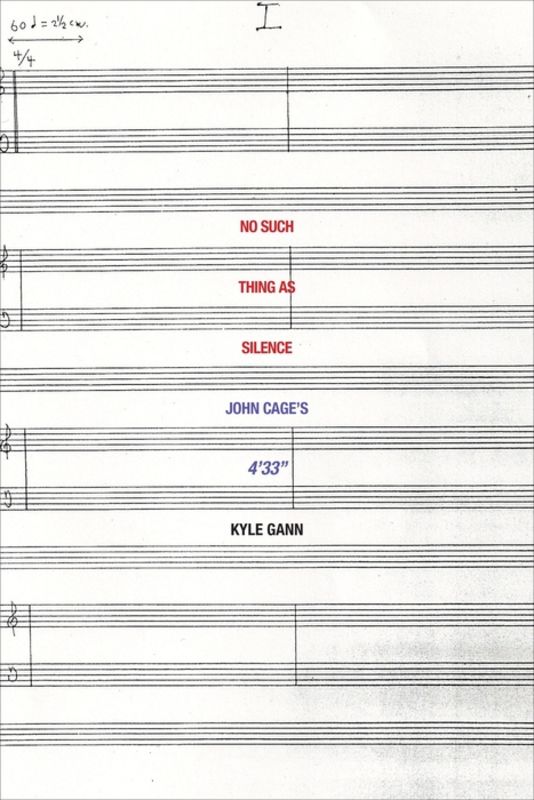
No Such Thing as Silence
First performed at the midpoint of the twentieth century, John Cage's4'33\", a composition conceived of without a single musical note, is among the most celebrated and ballyhooed cultural gestures in the history of modern music. A meditation on the act of listening and the nature of performance, Cage's controversial piece became the iconic statement of the meaning of silence in art and is a landmark work of American music.
In this book, Kyle Gann, one of the nation's leading music critics, explains4'33\"as a unique moment in American culture and musical composition. Finding resemblances and resonances of4'33\"in artworks as wide-ranging as the paintings of the Hudson River School and the music of John Lennon and Yoko Ono, he provides much-needed cultural context for this fundamentally challenging and often misunderstood piece. Gann also explores Cage's craft, describing in illuminating detail the musical, philosophical, and even environmental influences that informed this groundbreaking piece of music. Having performed4'33\"himself and as a composer in his own right, Gann offers the reader both an expert's analysis and a highly personal interpretation of Cage's most divisive work.
eBook


Charles Ives's Concord
In 1921, insurance executive Charles Ives sent out copies of a piano sonata to two hundred strangers. Laden with dissonant chords, complex rhythm, and a seemingly chaotic structure, the so-called Concord Sonata confounded the recipients, as did the accompanying book, Essays before a Sonata . Kyle Gann merges exhaustive research with his own experience as a composer to reveal the Concord Sonata and the essays in full. Diffracting the twinned works into their essential aspects, Gann lays out the historical context that produced Ives's masterpiece and illuminates the arguments Ives himself explored in the Essays . Gann also provides a movement-by-movement analysis of the work's harmonic structure and compositional technique; connects the sonata to Ives works that share parts of its material; and compares the 1921 version of the Concord with its 1947 revision to reveal important aspects of Ives's creative process. A tour de force of critical, theoretical, and historical thought, Charles Ives's Concord provides nothing less than the first comprehensive consideration of a work at the heart of twentieth century American music.
eBook