Search Results Heading

MBRLSearchResults

mbrl.module.common.modules.added.book.to.shelf
Title added to your shelf!
View what I already have on My Shelf.
Oops! Something went wrong.
While trying to add the title to your shelf something went wrong :( Kindly try again later!
Are you sure you want to remove the book from the shelf?

Oops! Something went wrong.
While trying to remove the title from your shelf something went wrong :( Kindly try again later!
    Done
    Filters
    Reset
  • Discipline
      Discipline
      Clear All
      Discipline
  • Is Peer Reviewed
      Is Peer Reviewed
      Clear All
      Is Peer Reviewed
  • Reading Level
      Reading Level
      Clear All
      Reading Level
  • Content Type
      Content Type
      Clear All
      Content Type
  • Year
      Year
      Clear All
      From:
      -
      To:
  • More Filters
      More Filters
      Clear All
      More Filters
      Item Type
    • Is Full-Text Available
    • Subject
    • Publisher
    • Source
    • Donor
    • Language
    • Place of Publication
    • Contributors
    • Location
4 result(s) for "García Santo-Tomás, Enrique, author"
Sort by:
The Refracted Muse
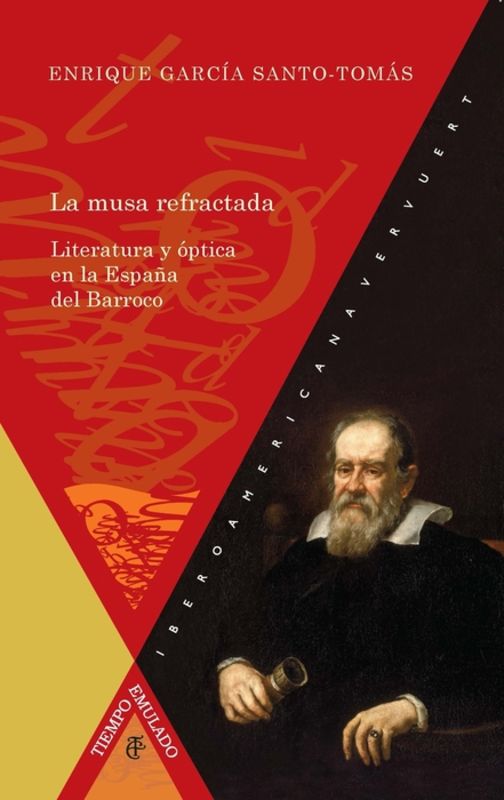
Galileo never set foot on the Iberian Peninsula, yet, as Enrique García Santo-Tomás unfolds in The Refracted Muse, the news of his work with telescopes brought him to surprising prominence—not just among Spaniards working in the developing science of optometry but among creative writers as well. While Spain is often thought to have taken little notice of the Scientific Revolution, García Santo-Tomás tells a different story, one that reveals Golden Age Spanish literature to be in close dialogue with the New Science. Drawing on the work of writers such as Cervantes, Lope de Vega, Calderón de la Barca, and Quevedo, he helps us trace the influence of science and discovery on the rapidly developing and highly playful genre of the novel. Indeed, García Santo-Tomás makes a strong case that the rise of the novel cannot be fully understood without taking into account its relationship to the scientific discoveries of the period.
La musa refractada
Analiza las relaciones entre la ficción del siglo XVII y el desarrollo de la ciencia en la Península Ibérica que sirven para reflexionar, en última instancia, en torno a los cambios que fueron definiendo la vida cotidiana en el Barroco. [Texto de la editorial].