
Catalogue Search | MBRL


Are you sure you want to remove the book from the shelf?

{{itemTitle}}
190
result(s) for
"Gardner, Fiona"
Sort by:
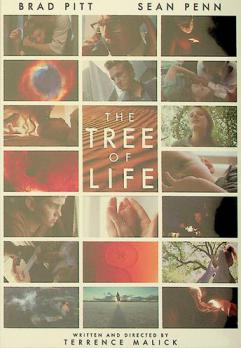
The tree of life
This is a film about the conflict between nature and grace, the agonizing mystery of God, and the meaning of life itself. The death of his brother forces Jack O'Brien to confront his past, which is dominated by his difficult relationship with his father. Jack's father was a stern authoritarian whose no-nonsense demeanor masked a host of unfulfilled dreams. His mother was a gentle, kind woman who often allowed her own needs and desires to give way to those of her husband and children. As Jack's memories come flooding back--of the course of a Texas summer in the 1950s--viewers observe Jack's evolving relationship with his parents, his younger brother, and God, while adult Jack questions the meanings of life, love, and family.
DVD

A social work contribution in end-of-life care: incorporating critical spirituality
This article outlines how a framework for critical spirituality incorporated into a social work perspective, can contribute to work in end-of-life care. This is based on my experience of working in interdisciplinary teams, including pastoral care workers or chaplains, nurses, doctors, a range of carers and other allied health professionals. Traditionally, social workers have focused on the holistic well-being of the dying person and their families but tended not to actively include the spiritual. However, there is increased recognition in social work of the value of integrating critical spirituality: understanding the person’s own sense of meaning and the social assumptions that might influence how this can be expressed. This might mean working with individuals and families on understanding how societal expectations of the dying process are undermining the person’s desire to die in a particular way. To do this, workers must themselves recognise their own internalised societal assumptions and be willing to challenge these. The article explores the potential value of how such a social work approach can integrate critical, postmodern, green and relational theories as well as indigenous worldviews with key qualities of practice such as humility, deep listening and waiting, and the ability to be critically reflective. Key ideas are used to help focus practice and the inclusion of critical spirituality. These include (1) exploring the influence of the person’s history and social context; (2) the value of particular relationships and networks, including community and environmental connections and activities and processes that are an intrinsic aspect of the person’s well-being; (3) challenging workers to be critically and reflectively aware of their own assumptions and values to ensure the dying person can truly express their preferences related to death and dying. Examples from my experience are used to illuminate how such perspectives can be actively included in practice across professional boundaries to shift perceptions of ‘how things are done here’ to what can be more life enhancing for those in palliative care.
Journal Article

Institutional Betrayal, Psychoanalytic Insights on the Anglican Church’s Response to Abuse
Psychoanalysis can advance our understanding of responses from the hierarchy of mainstream religious denominations to disclosures of abuse by clergy. This paper takes analytic insights to discuss how and why the Anglican institutional church has responded so callously to disclosures of child sexual abuse within the church. Inhumane responses have led to feelings of institutional betrayal in survivor groups. The subject is explored firstly in the context of organizational and group dynamics, and, secondly, by analysing defences that underly the interaction between the person who has been abused and the member of the church hierarchy who is hearing the disclosure. Defences and deceptions have been consciously and unconsciously used within the organization that have obstructed contact with reality, and so hindered it both in fulfilling its task in responding appropriately to what has taken place, and in adapting to changing circumstances. Churches have been active agents in re-traumatising individuals. Examples to illustrate are taken from hearings on the Anglican Church by the Independent Inquiry into Child Sexual Abuse in England, UK. The idea of organizational redemption is presented.
Journal Article
Therapeutic but Not Therapy: Using Critical Spirituality to Engage with Traumatic Experiences
Participants in critical reflection workshops and peer supervision often comment that the process feels therapeutic, enabling them to engage with challenging experiences, even although it is clearly not therapy. This reflective article explores these comments, particularly how the processes of critical reflection embedded in critical spirituality can foster a deep exploration of traumatic experiences that undermine the sense of self and the ability to act with agency. While spirituality is broadly defined as that which gives life meaning including a sense of the transcendent, the ‘critical’ aspect includes the influence of the person’s own and the broader social context. Using two participant examples for illustration, key aspects of the process are identified: unearthing and naming deeply held, limiting and often longstanding assumptions influencing the person’s sense of who they are and how they operate. Next, understanding the prevailing social context can generate liberating new perspectives. Asking what is meaningful and why given the person’s spirituality can foster new, freeing and enabling assumptions, values and beliefs and experimenting with new ways of being and acting. What often emerges is that participants come to recognise the depth of meaning that transforms their perception of their experience and sense of themselves.
Journal Article

Educator perspectives on teaching students from traumatic backgrounds and the potential for reflective circles
Educators are involved in complex, interpersonal and emotionally demanding work on a daily basis. In many schools this includes working with students with extreme and challenging behaviours, many of whom come from traumatic
backgrounds. This work requires educators to have high levels of self-awareness, emotional understanding, empathy and calm. Despite this, limited attention has been paid to processes which might support the educator in the development
and strengthening of these interpersonal aspects of their work. We report on the results from initial interviews with teachers and principals in three low SES schools in regional Victoria and introduce a model of critical reflection
(Reflective Circles) adapted for an education context. Findings highlight the challenges educators currently experience and their reasons for participating in Reflective Circles. [Author abstract]
Journal Article

The Only Mind Worth Having
In The Only Mind Worth Having, Fiona Gardner takes Thomas Merton's belief that the child mind is \"the only mind worth having\" and explores it in the context of Jesus' challenging, paradoxical, and enigmatic command to become like small children. She demonstrates how Merton's belief and Jesus's command can be understood as part of contemporary spirituality and spiritual practice. To follow Christ's command requires a great leap of the imagination. Gardner examines what it might mean to make this leap when one is an adult without it becoming sentimental and mawkish, or regressive and pathological. Using both psychological and spiritual insights, and drawing on the experiences of Thomas Merton and others, Gardner suggests that in some mysterious and paradoxical way recovering a sense of childhood spirituality is the path toward spiritual maturity. The move from childhood spirituality to adulthood and on to a spiritual maturity through the child mind is a move from innocence to experience to organized innocence, or from dependence to independence to a state of being in-dependence with God.
eBook

Parents’ experiences and use of parenting resources during the transition to parenthood
The purpose of this paper is to report on new parents’ experiences of using the available range of parenting resources that help to guide parenting choices and practices. Using a semi-structured interview schedule, 30 participants were asked about their engagement with parenting resources. The types of resources considered most salient to the participants of this study in Victoria, Australia, included professional services, peers, family and friends, and written material. On the whole, these parents valued expert opinion when they encountered problems but experienced a level of frustration when they did not ‘feel heard’ by professionals or when faced with mixed messages. While they reported some resistance to overt advice offered by family and friends, especially if the information was considered ‘out-dated’, they relied heavily on informal advice and support from peers, even if this was supported only by anecdotal evidence.
Journal Article
Right brain to right brain therapy: how tactile, expressive arts therapy emulates attachment
The impact of a manipulative art therapy technique combined with an attuned therapeutic relationship which aims to replicate the experience of nurturing touch in infancy is explored in this paper. The current literature will be reviewed in relation to the interface between attachment-related trauma and the use of expressive art and play therapy in the context of relevant clinical experience. Specific experiences of clinical practice with children and associated therapeutic outcomes are used to illustrate the potential of this combination. In addition, we argue for further investigation of therapeutic benefits inherent in manipulative art and play in replication of the regulating role of touch with children who have experienced early relational trauma.
Journal Article
Parents’ Experiences of Early Parenthood – Preliminary Findings
Parents are instrumental in the healthy development of their children, and consequently future generations, and should therefore be supported in their parental role. Using a Grounded Theory framework, 24 parents of 0- to 10-year-olds were interviewed about their experiences and preparation for parenthood. Despite their overall satisfaction, many felt underprepared, unsure, alone and inadequate during their transition to parenthood. Most of them felt like they struggled unnecessarily during the first year of parenthood, commenting on changes that would help support new parents. This paper reports the preliminary findings of the study.
Journal Article

Critical Reflection in Context
Critical reflection enables practitioners - especially those within health and social care -to theorise from their own practice, improving and developing their work and practising both creatively and professionally.
This book provides an accessible overview of the influential Fook/Gardner Critical Reflection framework for students, researchers and professionals. It then presents a wide range of illustrative case studies from a variety of different health and social care settings, demonstrating how it can be used in effective and innovative practice around the world. By highlighting how professionals are actually using the Fook/Gardner model of critical reflection, it shares practical and resourceful ideas and provides specific theoretical and practical guidelines for use. It also further conceptualises and develops the theory of critical reflection by articulating underlying theory used in practice. The book also draws out particular issues for how critical reflection might be better practised within organisations, and develops a framework for a better understanding of this. The book is divided into four parts, discussing critical reflection in:
Professional Practice
Supervision and Management
Research
Education
Including an up-to-date overview of the framework written by Jan Fook, this helpful text makes a significant contribution in terms of the practical theorizing of critical reflection. It will be of use to health and social care professionals keen to practice creatively and effectively, especially those undertaking short courses or further development in supervision, critical reflection, advanced practice, and leadership and management.
eBook