
Catalogue Search | MBRL


Are you sure you want to remove the book from the shelf?

{{itemTitle}}
313
result(s) for
"Garner, V."
Sort by:

Zebrafish cardiotoxicity: the effects of CYP1A inhibition and AHR2 knockdown following exposure to weak aryl hydrocarbon receptor agonists
The aryl hydrocarbon receptor (AHR) is a ligand-activated transcription factor that mediates many of the toxic effects of dioxin-like compounds (DLCs) and some polycyclic aromatic hydrocarbons (PAHs). Strong AHR agonists, such as certain polychlorinated biphenyls and 2,3,7,8-tetrachlorodibenzo-p-dioxin (TCDD), cause severe cardiac teratogenesis in fish embryos. Moderately strong AHR agonists, such as benzo[a]pyrene and β-naphthoflavone, have been shown to cause similar cardiotoxic effects when coupled with a cytochrome P450 1A (CYP1A) inhibitor, such as fluoranthene (FL). We sought to determine if weak AHR agonists, when combined with a CYP1A inhibitor (FL) or CYP1A morpholino gene knockdown, are capable of causing cardiac deformities similar to moderately strong AHR agonists (Wassenberg and Di Giulio Environ Health Perspect 112(17):1658–1664, 2004a; Wassenberg and Di Giulio Res 58(2–5):163–168, 2004b; Billiard et al. Toxicol Sci 92(2):526–536, 2006; Van Tiem and Di Giulio Toxicol Appl Pharmacol 254(3):280–287, 2011). The weak AHR agonists included the following: carbaryl, phenanthrene, 2-methylindole, 3-methylindole, indigo, and indirubin. Danio rerio (zebrafish) embryos were first exposed to weak AHR agonists at equimolar concentrations. The agonists were assessed for their relative potency as inducers of CYP1 enzyme activity, measured by the ethoxyresorufin-O-deethylase (EROD) assay, and cardiac deformities. Carbaryl, 2-methylindole, and 3-methylindole induced the highest CYP1A activity in zebrafish. Experiments were then conducted to determine the individual cardiotoxicity of each compound. Next, zebrafish were coexposed to each agonist (at concentrations below those determined to be cardiotoxic) and FL in combination to assess if CYP1A inhibition could induce cardiac deformities. Carbaryl, 2-methylindole, 3-methylindole, and phenanthrene significantly increased pericardial edema relative to controls when combined with FL. To further evaluate the interaction of the weak AHR agonists and CYP1A inhibition, a morpholino was used to knockdown CYP1A expression, and embryos were then exposed to each agonist individually. In embryos exposed to 2-methylindole, CYP1A knockdown caused a similar level of pericardial edema to that caused by exposure to 2-methylindole and FL. The results showed a complex pattern of cardiotoxic response to weak agonist inhibitor exposure and morpholino-knockdown. However, CYP1A knockdown in phenanthrene and 3-methylindole only moderately increased pericardial edema relative to coexposure to FL. AHR2 expression was also knocked down using a morpholino to determine its role in mediating the observed cardiac teratogenesis. Knockdown of AHR2 did not rescue the pericardial edema as previously observed with strong AHR agonists. While some of the cardiotoxicity observed may be attributed to the combination of weak AHR agonism and CYP1A inhibition, other weak AHR agonists appear to be causing cardiotoxicity through an AHR2-independent mechanism. The data show that CYP1A is protective of the cardiac toxicity associated with weak AHR agonists and that knockdown can generate pericardial edema, but these findings are also suggestive of differing mechanisms of cardiac toxicity among known AHR agonists.
Journal Article

Proper understanding of recurrent stress urinary incontinence treatment in women (PURSUIT): a randomised controlled trial of endoscopic and surgical treatment
Background
Women with stress urinary incontinence (SUI) experience urine leakage with physical activity. Currently, the interventional treatments for SUI are surgical, or endoscopic bulking injection(s). However, these procedures are not always successful, and symptoms can persist or come back after treatment, categorised as recurrent SUI. There are longstanding symptoms and distress associated with a failed primary treatment, and currently, there is no consensus on how best to treat women with recurrent, or persistent, SUI.
Methods
A two-arm trial, set in at least 20 National Health Service (NHS) urology and urogynaecology referral units in the UK, randomising 250 adult women with recurrent or persistent SUI 1:1 to receive either an endoscopic intervention (endoscopic bulking injections) or a standard NHS surgical intervention, currently colposuspension, autologous fascial sling or artificial urinary sphincter. The aim of the trial is to determine whether surgical treatment is superior to endoscopic bulking injections in terms of symptom severity at 1 year after randomisation. This primary outcome will be measured using the patient-reported International Consultation on Incontinence Questionnaire - Urinary Incontinence - Short Form (ICIQ-UI-SF). Secondary outcomes include assessment of longer-term clinical impact, improvement of symptoms, safety, operative assessments, sexual function, cost-effectiveness and an evaluation of patients’ and clinicians’ views and experiences of the interventions.
Discussion
There is a lack of high-quality, randomised, scientific evidence for which treatment is best for women presenting with recurrent SUI. The PURSUIT study will benefit healthcare professionals and patients and provide robust evidence to guide further treatment and improve symptoms and quality of life for women with this condition
.
Trial registration
International Standard Randomised Controlled Trials Number (ISRCTN) registry ISRCTN12201059. Registered on 09 January 2020
Journal Article


An inhibitor of the sodium pump obtained from human placenta
Much effort has been expended in the search for an endogenous inhibitor of the cellular sodium/potassium pump, a compound of major physiological importance, which has been implicated in the mechanism of essential hypertension. Others have suggested that ouabain or an isomer of ouabain may be the endogenous pump inhibitor. Neonatal cord serum contains an inhibitor of the sodium pump; we attempted to isolate and characterise this substance from human placentas.
Homogenised placentas were dialysed and the resulting solutes were trapped on octadecylsilyl silica and then separated by high-performance liquid chromatography. Measurement of the activity of the sodium pump of human leucocytes was used to test each fraction for the presence of the inhibitor.
An inhibitor of the sodium pump was obtained by this technique in a mass spectrometrically pure form with a mass of 370 Da, an empirical formula of C
24H
34O
3 and only one hydroxyl group. The characteristic fragmentation pattern observed in negative-ion mass spectrometry was compared with those of various model compounds; this comparison suggested that the active material was a dihydropyrone-substituted steroid.
These results suggest that a dihydropyrone-substituted steroid is an endogenous regulator of the sodium pump in humans and, presumably, other mammals. Proof of the endogenous origin will require the demonstration of a previously unrecognised biosynthetic pathway.
Journal Article
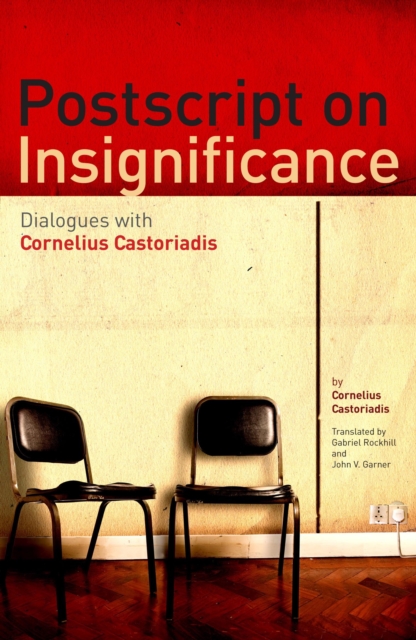
Postscript on Insignificance
Cornelius Castoriadis (1922-1997) was a philosopher, social critic, political activist, practicing psychoanalyst and professional economist.His work is widely recognized as one of the most singular and important contributions to twentieth-century thought.
eBook

The Good that Comes to Be: The Truth of Pleasure and the Experience of Learning in Plato's Philebus
In this dissertation, I argue that the Philebus presents an account of the good life as containing some pleasures which are intrinsically good. Socrates' arguments binding pleasure to becoming (as opposed to being) do not serve, as common interpretations of the dialogue suggest, to disqualify pleasure from the realm of goodness. Rather, as I argue, they serve to present pure pleasure both as becoming and yet also as intrinsically good. Following my exposition of the dialogue's basic dialectical concepts of the one and many, mixture, and cause in Part I, I defend in Part II an interpretation of the dialogue's final ranking of goods as a dialectical exposition of the good itself into an ordered mixture. Each stratum in the order defines and makes possible the human good while also exhibiting a different, special aspect of the good itself. Pure pleasure, while ranking fifth, plays a particularly important role. As I argue, its very nature as contingent and emergent allows it to positively present to us something about the good that no other good in the good life can present: It shows us that the good itself is not contained by being but has a scope transcending being, encompassing some non-being, i.e., some becoming. I conclude by expressing this special role of pure pleasure through an \"objective\" argument for why the good should \"descend\" or come to be for us—e.g., through learning or as pleasure—rather than merely remaining in and by itself without any relation to the affairs of this world order.
Dissertation

