
Catalogue Search | MBRL


Are you sure you want to remove the book from the shelf?

{{itemTitle}}
3
result(s) for
"Gavaler, Chris, author"
Sort by:

On the origin of superheroes : from the big bang to Action Comics no. 1
\"Most readers think that superheroes began with Superman in 1938, but that Kryptonian rocket didn't just drop out of the sky. By the time Superman's creators were born, the superhero's most defining elements--secret identities, aliases, disguises, signature symbols, traumatic origin stories, extraordinary powers, self-sacrificing altruism--were already well-rehearsed standards. Superheroes have a sprawling, action-packed history that predates Superman by decades and even centuries. On the Origin of Superheroes is a quirky, personal tour of the mythology, literature, philosophy, history, and grand swirl of ideas that have permeated western culture in the centuries that led up to the first appearance of superheroes as we know them today: Superman's appearance in Action Comics, no. 1 in 1938\"-- Provided by publisher.
Book

Superhero thought experiments : comic book philosophy
\"What if there's an alternative universe with a different moral code? What if we are being deceived by an evil genius? Examining the deep philosophical topics addressed in superhero comics, this entertaining book reads plot lines for the complex \"thought experiments\" they contain and analyzes their implications as if the comic authors were philosophers. In doing so, authors Chris Gavaler and Nathaniel Goldberg--a comics expert and a philosophy scholar, respectively--find that superhero comics often depict philosophical thought experiments more fully than philosophers do, and with surprising results. For example, Renâe Descartes briefly worries that we are being deceived by an evil genius, but Marvel Comics explores this concern--and its consequences--over decades. Similarly, in a few paragraphs philosophers Terry Horgan and Mark Timmons imagine a \"moral twin earth\" with deviant morality, while DC Comics dedicates multiple comics to different moral twin earths in which readers see multiple deviant moralities play out\"-- Provided by publisher.
Book
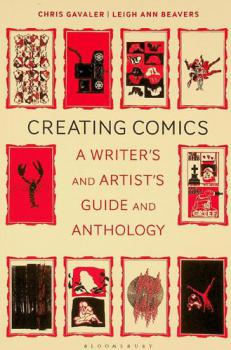
Creating comics : a writer's and artist's guide and anthology
\"For creative writers and artists, comics provide unique opportunities for expression - but unique challenges, too. Creating Comics brings together in one volume an authoritative guide to the creative process, with practical drawing exercises throughout and an anthology of comics demonstrating the eclectic possibilities of the form. Creating Comic covers: Using images to conceive and develop characters and stories · The complete range of possible relationships between two images· The step-by-step structure of visual narratives· How to approach each page like a unique canvas· Combining words and images to create new meanings Fully integrated with the main guide, the anthology section includes work by creators including: Lynda Barry, Alison Bechdel, Jaime Hernandez, Marjane Satrapi, Adrian Tomine, and many others\"-- Provided by publisher.
Book