
Catalogue Search | MBRL


Are you sure you want to remove the book from the shelf?

{{itemTitle}}
8
result(s) for
"Geczy, Adam, author"
Sort by:

Transorientalism in art, fashion, and film : inventions of identity
Combining transnationalism and exoticism, transorientalism is the new orientalism of the age of globalization. With its roots in earlier times, it is a term that emphasizes alteration, mutation, and exchange between cultures. While the familiar orientalisms persist, transorientalism is a term that covers notions like the adoption of a hat from a different country for Turkish nationalist dress, the fact that an Italian could be one of the most influential directors in recent Chinese cinema, that Muslim women artists explore Islamic womanhood in non-Islamic countries, that artists can embrace both indigenous and non-indigenous identity at the same time. This much-needed book offers a refreshing, informed, and incisive account of a paradigm shift in the ways in which identity and otherness is moulded, perceived, and portrayed.
Book

The Artificial Body in Fashion and Art
Artificial bodies constructed in human likeness, from uncanny automatons to mechanical dolls, have long played a complex and subtle role in human identity and culture. This book takes a range of these bodies, from antiquity to the present day, to explore how we seek out echoes, caricatures and replications of ourselves in order to make sense of the complex world in which we live. Packed with case studies, from the commedia del’arte to Hans Bellmer, and the work of André Courrèges to the 1980s supermodel, this volume explores the divide between the “real” and the constructed. Arguing that the body “other” plays a crucial role in the formation of the self physically and psychologically, leading scholar Adam Geczy contends that the “natural” body has been replaced by a series of imaginary archetypes in our post-modern world, central to which is the figure of the doll. The Artificial Body in Fashion and Art provides a much-needed synthesis of constructed bodies across time and place, drawing on fashion theory, theatre studies and material culture, to explore what the body means in the realms of identity, gender, performance and art.
eBook

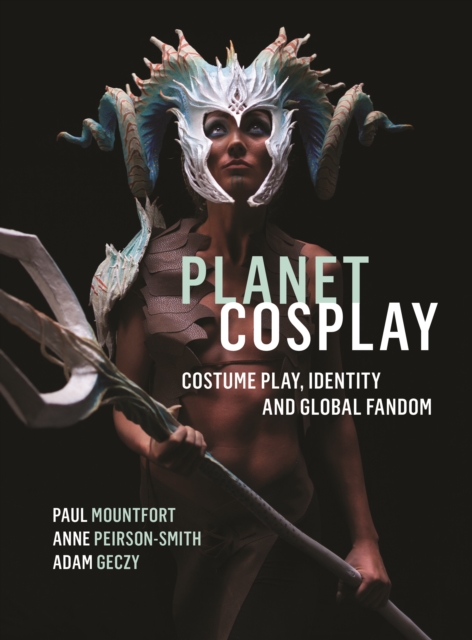
Planet Cosplay
This book examines cosplay from a set of groundbreaking disciplinary approaches, highlighting the latest and emerging discourses around this popular cultural practice. Planet Cosplay is authored by widely published scholars in this field, examining the central aspects of cosplay ranging from sources and sites to performance and play, from sex and gender to production and consumption. Topics discussed include the rise of cosplay as a cultural phenomenon and its role in personal, cultural and global identities. Planet Cosplay provides a unique, multifaceted examination of the practice from theoretical bases including popular cultural studies, performance studies, gender studies and transmedia studies. As the title suggests, the book's purview is global, encompassing some of the main centres of cosplay throughout the United States, Asia, Europe and Australasia. Each of the chapters offers not only a set of entry points into its subject matter, but also a narrative of the development of cosplay and scholarly approaches to it.
eBook


Litcomix
Critical studies of the graphic novel have often employed
methodologies taken from film theory and art criticism. Yet, as
graphic novels from Maus to Watchmen have
entered the literary canon, perhaps the time has come to
develop theories for interpreting and evaluating graphic novels
that are drawn from classic models of literary theory and
criticism. Using the methodology of Georg Lukács and his detailed
defense of literary realism as a socially embedded practice,
Litcomix tackles difficult questions about reading graphic
novels as literature. What critical standards should we use to
measure the quality of a graphic novel? How does the genre
contribute to our understanding of ourselves and the world? What
qualities distinguish it from other forms of literature?
LitComix hones its theoretical approach through case
studies taken from across the diverse world of comics, from
Yoshihiro Tatsumi's groundbreaking manga to the Hernandez Brothers'
influential alt-comix. Whether looking at graphic novel adaptations
of Proust or considering how Jack Kirby's use of intertextuality
makes him the Balzac of comics, this study offers fresh
perspectives on how we might appreciate graphic novels as
literature.
eBook

Critical fashion practice : from Westwood to Van Beirendonck
\"There is a new form of design practice within the contemporary fashion industry which is active in complex forms of social commentary and critique. While fashion in the modernist era has shown signs of criticism and subversion, these were either in the form of subcultures or perversions, such as punk or BDSM styling. Today, however, these genres have been absorbed into the fashion industry itself, meaning that \"critical fashion\" is now far from limited to the subcultures from which it came. This book explores this new space for criticism within the popular fashion sphere to demonstrate how designers are disrupting conventions, challenging beliefs and stirring change from within the system itself. Critical Fashion Practice considers a range of contemporary designers across the globe, from the US to Japan, whose conceptual designs embody this critical language, including case studies such as Rei Kawakubo's deconstructive silhouettes for Comme des Garًcons and Walter Van Beirendonck's sadomasochistic menswear collections, amongst other key players such as Miuccia Prada, Vivienne Westwood and Viktor & Rolf. Arguing that the rise of critical fashion coincides with a noticeable decline in the criticality of art, Geczy and Karaminas go beyond slotting fashion into previously established art theories. Conceiving a new cultural role for fashion that affords insight into identity, class, race, sexuality and gender, this book shows how fashion can not only reflect and comment on, but can also be a part of social change\"-- Provided by publisher.
Book

Planet cosplay : costume play, identity and global fandom
Planet cosplay is the first book to examine cosplay from a set of groundbreaking interdisciplinary approaches, highlighting the latest and emerging discourses around this popular cultural practice. Authored by widely published scholars in the field, it examines the central aspects of cosplay, ranging from sources and sites to performance and play, from sex and gender to production and consumption, Planet cosplay considers the rise of cosplay as a cultural phenomenon and its role in personal, cultural and global identities. It provides a unique, multifaceted examination of the practice, from theoretical bases including popular cultural studies, performance studies, gender studies and trans-media studies. As the title suggests, the book's purview is global, encompassing some of the main centres of cosplay throughout the United States, Asia, Europe and Australasia. Each of its three parts offers not only a set of entry points into its subject matter, but a narrative of the development of cosplay and scholarly approaches to it.
Book