
Catalogue Search | MBRL


Are you sure you want to remove the book from the shelf?

{{itemTitle}}
43
result(s) for
"Geddes, Louise"
Sort by:
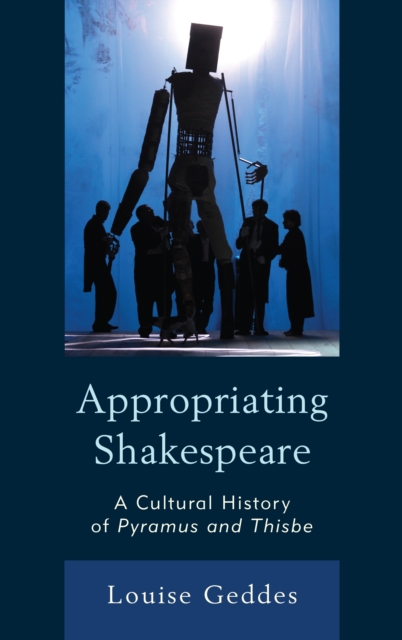
Appropriating Shakespeare
Appropriating Shakespeare argues that the vibrant history of Pyramus and Thisbe as an independent text affirms the place of artist as both consumer and producer of Shakespeare. The playlet's four-century history is one that identifies Shakespeare's value as a transformative agent of aesthetic inquiry.
eBook

Factors associated with satisfaction of the australian rural resident medical officer cadetship program: results from a cross-sectional study
Background
Australian Rural Resident Medical Officer Cadetships are awarded to medical students interested in a rural medical career. The Rural Residential Medical Officer Cadetship Program (Cadetship Program) is administered by the Rural Doctors Network on behalf of the NSW Ministry of Health. This study aimed to assess the overall experience of medical students and key factors that contributed to their satisfaction with the Cadetship Program.
Methods
A quantitative cross-sectional study was conducted among 107 former cadets who had completed the Cadetship Program. Data on medical students’ experience with the Cadetship Program (outcome variable) and potential explanatory variables were collected using a structured self-administered questionnaire. Explanatory variables included gender, geographical location, rural health club membership, rural clinical school attendance, financial support, mentorship benefits, networking opportunities, influence on career decisions, opportunity for preferential placements, and relocation. Both bivariate (Pearson’s chi-squared test) and multiple logistic regression analysis were employed to identify the factors associated with medical students’ overall experience with the Cadetship Program. The non-linear analysis was weighted to represent the rural/remote health workforce, in Stata/SE 14.1.
Results
Our results indicate that 91% of medical students were satisfied with the Cadetship Program. The logistic regression model identified two significant predictors of a positive experience with the Cadetship Program. Medical students who perceived financial support as beneficial were significantly more likely to report a satisfactory program experience (aOR = 6.22, 95% CI: 1.36–28.44,
p
= 0.019) than those who perceived financial support as not beneficial. Similarly, those who valued networking opportunities were more likely to have a positive view of their cadetship experience (aOR = 10.06, 95% CI: 1.11–91.06,
p
= 0.040) than their counterparts.
Conclusion
Our study found that students who valued financial support and networking opportunities had the most positive views of the Cadetship Program. These findings demonstrate that the Cadetship Program may be most helpful for those who need financial support and for students who seek networking opportunities. These findings increase our knowledge about the characteristics of medical students who have the most positive experiences with the Cadetship Program. They help us to understand the mechanisms of influence of such programs on individuals’ decisions to be part of the future rural health workforce.
Journal Article

Shakespeare in Fluff
Shakespeare in Fluff is a book that portrays rodents in staged Shakespearean performances. In doing so, Shakespeare in Fluff not only taps into a popular internet trend of anthropomorphized animals, and a particularly youth-oriented genre of nonhuman creatures performing Shakespeare, but raises more general questions about the use of animals in human entertainment.
Journal Article

This Bleeding Country of Old Men: Scriptive Shakespeare and Howard Brenton’s Measure for Measure
In 1972, Howard Brenton’s adaptation of Shakespeare’s Measure for Measure was threatened with legal action because it explicitly affiliated Angelo’s corruption with the racist British politician Enoch Powell and the Conservative party. Brenton’s play also cast Claudio and Isabella as Black British citizens from the West Indies “Windrush” generation of immigrants and rewrote the ending of the play so that Claudio is decapitated, the Duke committed to a senior hospital, and Isabella is deported on the S. S. Political Utopia. Brenton’s decision to write color-conscious casting into his adaptation suggests that there are limits to theater’s capacity to meaningfully comment on Shakespeare’s place in white cultural supremacy without textual intervention. This essay uses Robin Bernstein’s theory of scriptive things to suggest that Shakespeare is an object that performs its whiteness and activates a response that invites its participants to situate themselves in relation to it. Taking a new materialist approach, this essay suggests that performance alone is unable to adequately address the unmarked whiteness that Shakespeare scripts and examines how aesthetic interventions to challenge such scripts are variably conceived as either performance or appropriation. Brenton’s adaptation is a radical use of Shakespeare to comment on multicultural Britain during the 1970s that blurs these boundaries between performance and appropriation.
Journal Article

Afterword: The Fantasy of Relevance on the Shakespearean Stage
Reflecting on the cluster of essays on Shakespeare and the New York stage in this issue, we argue that the promise of relevance both sustains and constricts contemporary Shakespearean performance. Since Jan Kott coined the phrase in the middle of the twentieth century, the prevailing ethos in Shakespearean performance is that he is, and ever will be, our contemporary, and this claim exerts enormous pressure on the performing arts as it intersects with the palimpsestic temporality of the stage, advancing a fantasy of universal Shakespearean relevance. The assumption that Shakespeare can represent all communities or can speak to every geopolitical situation is a romantic proposition, and one laden with generalizations about universal humanism, engendering a top-down transmission of meaning that can often alienate the very audiences that it aspires to connect with. Presence, or even presentism, is not necessarily the same as relevance, and continuing contemporaneity is not inherent to this particular group of four hundred-year-old plays: to the extent that Shakespeare’s plays remain salient for today’s audiences, they do so through constant change. Therefore, although it is one of the commonly used terms applied to Shakespearean stagings and frequently lauded as the driving force behind classical company missions, relevance, this essay contends, is not always a guaranteed condition of performance—and nor should it be. Instead, this essay suggests that the very concept of theater refutes such a premise when it invites audiences to suspend disbelief and enter the fantastical world of a play.
Journal Article

A Mad Art, My Masters
Recently, critics have approached the cultural appropriation of “not-Shakespearean texts, arguing that the Jacobean revivals of the 1980s and 1990s “are as conservative as their Shakespearean counterparts” (Aebischer 282), due to their emphasis on historical continuity and coherence. However, the drama produced in the 1970s and 1980s asserted a new theatrical aesthetic that demands that the audience recognize its own complicity in perpetuating the myth of historical continuum through the stylistic assertion of disunity. Instead of employing a ‘usable history,’ the playwrights of this era created a ‘usable culture’ that used literature as historicity in order to highlight the inefficiency of both as a means of mediating the present. Barrie Keeffe's play, A Mad World My Masters, under the guise of Jacobean nostalgia, confronts the implications of the emergent Conservative cultural dictate that assumes governmental responsibility for defining and maintaining “the good standards and best things” (Thatcher) of postwar England—a missive that repeatedly conflated the form of outrage with the “good” art that should contain such protest. Keeffe challenges the audience's cultural expectations by putting the worst of Thatcher's “scroungers” onstage and demands that the audience recognized its complicity in the emergent fraudulent meritocracy that characterized political reform.
Journal Article
A Mad Art, My Masters
Recently, critics have approached the cultural appropriation of “not-Shakespearean texts, arguing that the Jacobean revivals of the 1980s and 1990s “are as conservative as their Shakespearean counterparts” (Aebischer 282), due to their emphasis on historical continuity and coherence. However, the drama produced in the 1970s and 1980s asserted a new theatrical aesthetic that demands that the audience recognize its own complicity in perpetuating the myth of historical continuum through the stylistic assertion of disunity. Instead of employing a ‘usable history,’ the playwrights of this era created a ‘usable culture’ that used literature as historicity in order to highlight the inefficiency of both as a means of mediating the present. Barrie Keeffe's play, A Mad World My Masters, under the guise of Jacobean nostalgia, confronts the implications of the emergent Conservative cultural dictate that assumes governmental responsibility for defining and maintaining “the good standards and best things” (Thatcher) of postwar England—a missive that repeatedly conflated the form of outrage with the “good” art that should contain such protest. Keeffe challenges the audience's cultural expectations by putting the worst of Thatcher's “scroungers” onstage and demands that the audience recognized its complicity in the emergent fraudulent meritocracy that characterized political reform.
Journal Article
'A Fair House built on another man's ground': Public Shakespeare at Seneca Village
Though scholars have sought to highlight how artists employ Shakespeare as an instrument of radical resistance, this essay reconsiders the relationship between Shakespeare and artistic subversion. We use Anna Watkins Fisher's concept of parasitic resistance to frame our analysis of the Public Theater's 2021 adaptation of The Merry Wives of Windsor . Rather than advocate for Shakespeare as either complicit or resistant to the corporatization of public theater, we suggest a spectrum of possibilities within this binary, possibilities which operationalize tactics that strategically place complicity and resistance in relation to one another. Merry Wives thus illuminates how performance can subtly subvert the intertwined pressures of capitalism and white patriarchy by appropriating and wielding the tools of performance itself, the specific cultural authority of the Shakespeare system, and the linguistic and artistic cultural capital imagined as inherent to that system, in order to lay bare some of the palimpsest historicities of settler colonialism.
Journal Article

Sexual Behavior of Older Adults Living with HIV in Uganda
Sexual behavior among older adults with HIV in Sub-Saharan Africa has been understudied despite the burgeoning of this population. We examined sexual behavior among older adults living with HIV in Uganda. Participants were eligible for the study if they were 50 years of age or older and living with HIV. Quantitative data were collected through face-to-face interviews, including demographic characteristics, health, sexual behavior and function, and mental health. Of respondents, 42 were men and 59 women. More than one-quarter of these HIV-positive older adults were sexually active. A greater proportion of older HIV-positive men reported being sexually active compared to women (54 vs. 15 %). Among those who are sexually active, a majority never use condoms. Sixty-one percent of men regarded sex as at least somewhat important (42 %), while few women shared this opinion (20 %). Multivariate logistic regression analyses revealed that odds of sexual activity in the past year were significantly increased by the availability of a partner (married/cohabitating), better physical functioning, and male gender. As more adults live longer with HIV, it is critical to understand their sexual behavior and related psychosocial variables in order to improve prevention efforts.
Journal Article