
Catalogue Search | MBRL


Are you sure you want to remove the book from the shelf?

{{itemTitle}}
9
result(s) for
"Gelvin, James L., 1951-"
Sort by:


Global Muslims in the age of steam and print
The second half of the nineteenth century marks a watershed in human history. Railroads linked remote hinterlands with cities; overland and undersea cables connected distant continents. New and accessible print technologies made the wide dissemination of ideas possible; oceangoing steamers carried goods to faraway markets and enabled the greatest long-distance migrations in recorded history. In this volume, leading scholars of the Islamic world recount the enduring consequences these technological, economic, social, and cultural revolutions had on Muslim communities from North Africa to South Asia, the Indian Ocean, and China. Drawing on a multiplicity of approaches and genres, from commodity history to biography to social network theory, the essays in Global Muslims in the Age of Steam and Print offer new and diverse perspectives on a transnational community in an era of global transformation.
eBook

The Modern Middle East : A History
\"The Modern Middle East: A History explores how the forces associated with global modernity have shaped the social, economic, cultural, and political life in the Middle East over the course of the past 500 years\" -- Provided by publisher.
Book

The contemporary Middle East in an age of upheaval
The US invasion of Iraq in 2003 and the Arab uprisings of 2010–11 left indelible imprints on the Middle East. Yet, these events have not reshaped the region as pundits once predicted. With this volume, top experts on the region offer wide-ranging considerations of the characteristics, continuities, and discontinuities of the contemporary Middle East, addressing topics from international politics to political Islam, hip hop to human security.
This book engages six themes to understand the contemporary Middle East—the spread of sectarianism, abandonment of principles of state sovereignty, the lack of a regional hegemonic power, increased Saudi-Iranian competition, decreased regional attention to the Israel-Palestine conflict, and fallout from the Arab uprisings—as well as offers individual country studies. With analysis from historians, political scientists, sociologists, and anthropologists, and up-to-date discussions of the Syrian Civil War, impacts of the Trump presidency, and the 2020 uprisings in Lebanon, Algeria, and Sudan, this book will be an essential guide for anyone seeking to understand the current state of the region.
eBook

The new Middle East : what everyone needs to know
\"[In this book, the author outlines] the social, political, and economic contours of the New Middle East, illuminates the current crisis in the region, and explores how the region will continue to change in the decades to come\"--Amazon.com.
BOOK

Arab Uprisings
Beginning in December 2010 popular revolt swept through the Middle East, shocking the world and ushering in a period of unprecedented unrest. Protestors took to the streets to demand greater freedom, democracy, human rights, social justice, and regime change. What caused these uprisings? What is their significance? And what are their likely consequences? In an engaging question-and-answer format, The Arab Uprisings explores all aspects of the revolutionary protests that have rocked the Middle East. Historian James Gelvin begins with an overview--What sparked the Arab uprisings? Where did the demands for democracy and human rights come from? How appropriate is the phrase \"Arab Spring\"?--before turning to specific countries around the region. He looks at such topics as the role of youth, labor, and religious groups in Tunisia and Egypt and discusses why the military turned against rulers in both countries. Exploring the uprisings in Libya and Yemen, Gelvin explains why these two states are considered \"weak,\" why that status is important for understanding the upheavals there, and why outside powers intervened in Libya but not in Yemen. Next, Gelvin compares two cases that defied expectations: Algeria, which experts assumed would experience a major upheaval after Egypt's, and Syria, which experts failed to foresee. He then looks at the monarchies of Morocco, Jordan, and the Gulf, exploring the commonalities and differences of protest movements in each. The final chapter discusses the implications of the uprisings. What do they mean for the United States? For Iran? Has al-Qaeda been strengthened or weakened? What effects have the uprisings had on the Israel-Palestine conflict? What conclusions might we draw from the uprisings so far? For anyone wishing to understand the dramatic events in the Middle East, The Arab Uprisings is the place to turn.
eBook

Global Muslims in the age of steam and print
\"The second half of the nineteenth century marks a watershed in human history. Railroads linked remote hinterlands with cities; overland and undersea cables connected distant continents. New and accessible print technologies made the wide dissemination of ideas possible; oceangoing steamers carried goods to distant markets and enabled the greatest long-distance migrations in recorded history. In this volume, leading scholars of the Islamic world recount the enduring consequences these technological, economic, social, and cultural revolutions had on Muslim communities from North Africa to South Asia, the Indian Ocean and China. Drawing from a multiplicity of approaches and genres, from commodity history to biography and social network theory, the essays in Global Muslims in the Age of Steam and Print, 1850-1930 offer new and diverse perspectives on a transnational community in an era of global transformation. \"-- Provided by publisher.
Book

The contemporary Middle East in an age of upheaval
\"The U.S. invasion of Iraq in 2003 and the Arab uprisings of 2010-2011 left indelible imprints on the Middle East. Yet, these events have not reshaped the region as pundits once predicted. With this volume, top experts on the region offer wide-ranging considerations of the characteristics, continuities, and discontinuities of the contemporary Middle East, addressing topics from international politics to political Islam, hip hop to human security. This book engages six themes to understand the contemporary Middle East--the spread of sectarianism, abandonment of principles of state sovereignty, the lack of a regional hegemonic power, increased Saudi-Iranian competition, decreased regional attention to the Israel-Palestine conflict, and fallout from the Arab uprisings--as well as offers individual country studies. With analysis from historians, political scientists, sociologists, and anthropologists, and up-to-date discussions of the Syrian Civil War, impacts of the Trump presidency, and the 2020 uprisings in Lebanon, Algeria, and Sudan, this book will be an essential guide for anyone seeking to understand the current state of the region\"-- Provided by publisher.
Book
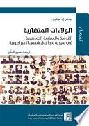
الولاءات المتضاربة : القومية والسياسة الجماهيرية في سورية مع أفول شمس الإمبراطورية
يقدم المؤلف في هذا الكتاب منظورا جديدا ومختلفا لموضوع القومية في البلدان العربية، ويشرح دور المجموعات غير النخبوية في السياسة القومية في الشطر الأول من القرن العشرين ويعتمد مصادر غير مستخدمة سابقا، فيوثق ظهور شكل جديد من التنظيم السياسي-اللجنة الشعبية-التي انتشرت في مدن سوريا الكبرى وقراها في أعقاب الحرب العالمية الأولى، ويقوم، بما يتعدى السرد، حقبة من تاريخ القومية في الشرق الأوسط العربي فيقدم، في فحصه المنشورات والكتابات على الجدران والخطب والشائعات والافتتاحيات، رؤى جديدة بشأن البناء الرمزي للمجتمعات الوطنية ويساهم تحليله الاحتفالات-الوطنية، والتظاهرات، والمسرح-في فهمنا لظهور السياسة الجماهيرية، وفي فهم القومية في المنطقة وخارجها.
Book