
Catalogue Search | MBRL


Are you sure you want to remove the book from the shelf?

{{itemTitle}}
48
result(s) for
"Genell J. Subak-Sharpe"
Sort by:
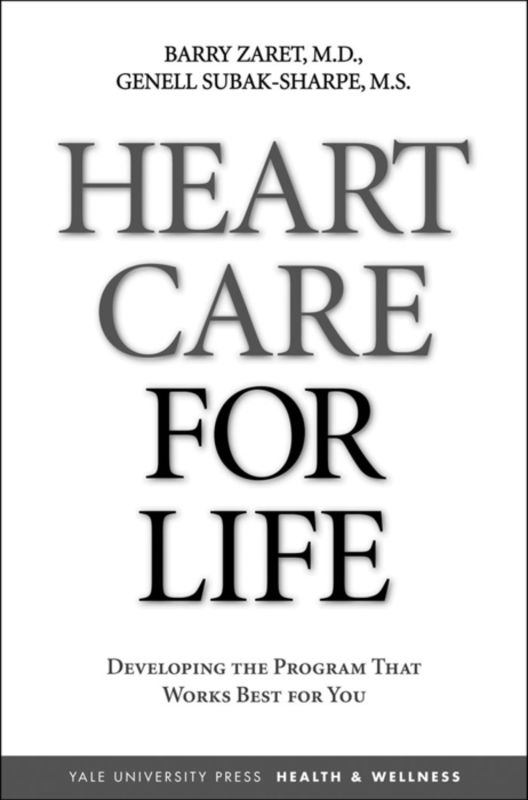
Heart Care for Life
More than 70 million Americans have some form of heart disease. For each of them, obtaining accurate information about the disease and the many options for dealing with it can be both empowering and life saving. In this book, cardiologist Dr. Barry L. Zaret and Genell Subak-Sharpe offer up-to-date facts about the best treatments available and an innovative approach that shows how treatment programs can be tailored to meet the needs of each unique patient.
There are no short-term fixes and no one-size-fitsall programs, explain Zaret and Subak-Sharpe. Although certain characteristics are common to each form of heart disease and its treatments,these constants must be tempered against individual variables. The authors outline the constants for the full range of cardiovascular conditions, from angina and heart attacks to high blood pressure and cardiac arrhythmias. They then guide readers through the process of assessing personal variables to develop an individual treatment and life-style program.
Written in a warmly reassuring style, this indispensable guide to heart care offers realistic hope and specific directions for designing a lifelong heart care program. Filled with practical advice, instructional case histories, a philosophy for controlling your health, self-tests to assess risk, and questions to ask your doctor, it looks toward an even better future for those with heart disease.
eBook
A Personalized Plan
Although people often think of heart disease as a single, well-defined problem that affects all patients similarly, nothing could be further from reality. Just as no two people are exactly alike, heart disease (and its risk factors, symptoms, and successful treatments) varies greatly from one person to another. In our experience, a one-plan-fits-all approach—be it diet, medication, or lifestyle modification—simply does not work. Thus, an essential first step toward developing your lifelong heart health regimen is to identify what makes you different from your parents, siblings, neighbors, and the other patients in your doctor’s office. This is why
Book Chapter

Exercise Your Way to a Healthy Heart and Body
Hundreds of scientific studies document the long-term benefits of regular exercise. These include increased longevity in both men and women and a markedly reduced risk of developing cardiovascular disease and type II diabetes. Regular exercise can produce modest reductions in blood pressure and total cholesterol, LDL (the bad cholesterol), and triglycerides (another blood lipid), while raising levels of HDL (the good cholesterol). (People who have significantly elevated cholesterol and high blood pressure, however, usually need medication in addition to exercise and dietary changes to bring these problems under control.)
Heart attack patients especially benefit from regular exercise. A statistical review
Book Chapter
Recently Developed Devices and Procedures
In recent decades, the treatment of cardiovascular disease has been revolutionized by the development of highly effective medications and exciting new procedures and operative techniques. Many of these treatments are now becoming routine in modern cardiovascular care, but they are only part of an ongoing process. New devices and procedures, as well as medications, are being introduced at an amazing pace, and even more are being developed and tested in laboratories and research centers throughout the United States and abroad. In this chapter, we offer a brief overview of some of the new devices and procedures. Given the scope and
Book Chapter
Stress, Depression, and Other Psychological Factors
Practicing physicians and researchers alike have long observed that a sizable percentage of heart attack patients are apparently free of the accepted risk factors, such as high blood pressure, elevated blood cholesterol, and tobacco use. Why do these seemingly healthy, low-risk persons fall victim to a heart attack? A number of studies conducted in the last two decades suggest that psychological factors may play an important role.
We are not trained psychologists, so although much of what we discuss here is based on our experience treating patients and observing family interactions, we cannot offer professional advice on how to treat
Book Chapter
Treating Your Heart Condition
Great advances in the medical treatment of heart disease now enable millions of Americans to lead longer, more productive lives than would have been possible just a few decades ago. Indeed, some forms of cardiovascular disease that were once common and claimed many lives are now rare or virtually nonexistent. Take malignant hypertension, the disease responsible for the stroke that killed President Franklin D. Roosevelt in 1945. At that time, there was no effective drug treatment for high blood pressure, which often progressed to heart and kidney failure or, as in the case of FDR, the highly lethal malignant hypertension
Book Chapter
EPILOGUE
Throughout this book, we described short case histories that illustrate the type of problems faced by heart patients.Virtually all patients will experience occasional lapses and setbacks, and our sample patients are no different. Stanley, the fifty-five-year-old executive, continues to work long hours but he is more diligent about taking the medications to control his high blood pressure and elevated cholesterol. He also has kept his weight down to around normal. After undergoing knee-replacement surgery, rehab, and physical therapy, he again can work out at his gym without suffering severe knee pain.When he’s not on a business trip, he enjoys long
Book Chapter