
Catalogue Search | MBRL


Are you sure you want to remove the book from the shelf?

{{itemTitle}}
96
result(s) for
"Gervers, Michael"
Sort by:

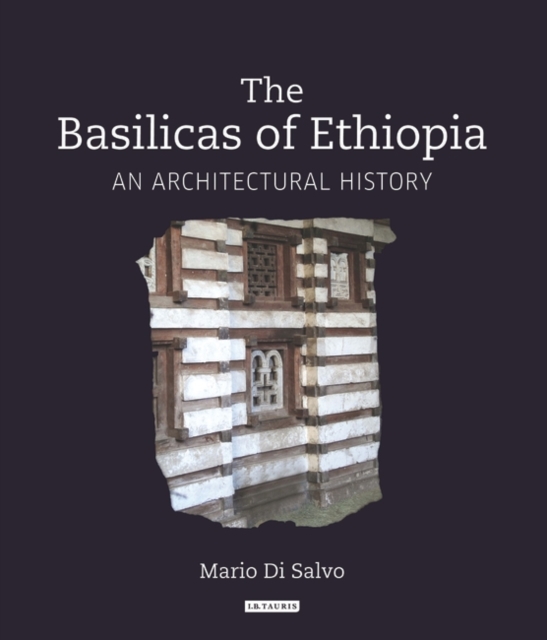
The Basilicas of Ethiopia
The basilica is symbolic of the history of Christianity in Ethiopia. Aizan, the first Christian king of the Aksumite empire was responsible for the creation of the large, five-aisled church of M?ry?m ??yon, sadly destroyed in 1535, and since then many hundreds of basilicas have been built in Ethiopia, many, including the UNESCO World Heritage site of Lalibela, literally 'hewn from the rock'. In this book, architectural historian and architect Mario di Salvo considers the unique architectural features of Ethiopia's basilicas and explains how they developed over time. Featuring almost 200 colour illustrations, this book is an attractive and comprehensive guide to some of Ethiopia's most inspiring religious buildings.
eBook

Ethiopia at the crossroads
\"Ethiopia at the Crossroads celebrates the artistic traditions of Ethiopia from their origins to the present day, spanning over 1,700 years of history. Seated in the Horn of Africa between Europe and the Middle East, the country is an intersection of diverse climates, religions, and cultures. This landmark catalogue examines Ethiopian art as representative of the nation's notable history and demonstrates the enormous cultural significance of this often-overlooked African nation through the themes of cross-cultural exchange and the human role in the creation and movement of art objects. It features more than 250 images of objects including painted icons, illuminated manuscripts, coins, textiles, metalwork, and carved wooden crosses in addition to works by contemporary Ethiopian artists. Because the artistic production of Ethiopia is still relatively unknown to Western audiences, Ethiopia at the Crossroads provides an accessible overview of the history and culture of the region. The book includes a series of scholarly essays that expand upon the themes and historical moments of encounter between Ethiopia and surrounding cultures, as well as an illustrated checklist of objects in the exhibition and technical findings of the Walters conservation team\"-- Provided by publisher.
Book

Between History, Theory, and Practice: Iconographic Analysis and Re-Creation of the Silk and Cotton Tablet-Woven Hangings of Ethiopia
The world’s largest known tablet-woven textiles have been found in Ethiopia and are dated to the second and third quarters of the eighteenth century. Used as partitions to separate the sanctuary from the body of Orthodox Christian churches, these “textile walls” were made of anywhere from three to fifteen panels of silk or cotton, measuring up to 5 meters in length and 70 centimeters in width. The art vanished from Ethiopia several centuries ago, leaving no archaeological traces or written or oral traditions. Scholars must therefore rely on the few extant objects to understand their meanings and makings. The first half of this article analyzes two such silk hangings that are said to have been royal gifts to churches in the former capital of Gondär—both are now in Western museum collections—as well as the cotton counterparts that have been identified in churches, largely of the Tämben region, in the distant Təgray province and demonstrates that the iconographical scenes woven into a number of figurative registers on the silk examples reflect coronation ceremonies. It also argues that weavers interpreted and transferred this iconography to similar registers on the cotton hangings, where the contextual meaning was lost and their purpose shifted to decorative symbolism. Images on the cotton examples exhibit a rich variety of ecclesiastical and courtly paraphernalia. Building on earlier technical studies by Mary Frame, in the second half of the article, tablet weaver Claire Gérentet de Saluneaux presents the methodology and results of her trials since 2002 to recreate and recapture technical aspects of Ethiopian tablet weaving.
Journal Article
Between History, Theory, and Practice: Iconographic Analysis and Re-Creation of the Silk and Cotton Tablet-Woven Hangings of Ethiopia
The world's largest known tablet-woven textiles have been found in Ethiopia and are dated to the second and third quarters of the eighteenth century. Used as partitions to separate the sanctuary from the body of Orthodox Christian churches, these \"textile walls\" were made of anywhere from three to fifteen panels of silk or cotton, measuring up to 5 meters in length and 70 centimeters in width. The art vanished from Ethiopia several centuries ago, leaving no archaeological traces or written or oral traditions. Scholars must therefore rely on the few extant objects to understand their meanings and makings. The first half of this article analyzes two such silk hangings that are said to have been royal gifts to churches in the former capital of Gondar-both are now in Western museum collections-as well as the cotton counterparts that have been identified in churches, largely of the Tamben region, in the distant Tagray province and demonstrates that the iconographical scenes woven into a number of figurative registers on the silk examples reflect coronation ceremonies. It also argues that weavers interpreted and transferred this iconography to similar registers on the cotton hangings, where the contextual meaning was lost and their purpose shifted to decorative symbolism. Images on the cotton examples exhibit a rich variety of ecclesiastical and courtly paraphernalia. Building on earlier technical studies by Mary Frame, in the second half of the article, tablet weaver Claire Gerentet de Saluneaux presents the methodology and results of her trials since 2002 to recreate and recapture technical aspects of Ethiopian tablet weaving.
Journal Article

DATING MEDIEVAL ENGLISH CHARTERS
Deeds, or charters, dealing with property rights, provide a continuous documentation which can be used by historians to study the evolution of social, economic and political changes. This study is concerned with charters (written in Latin) dating from the tenth through early fourteenth centuries in England. Of these, at least one million were left undated, largely due to administrative changes introduced by William the Conqueror in 1066. Correctly dating such charters is of vital importance in the study of English medieval history. This paper is concerned with computer-automated statistical methods for dating such document collections, with the goal of reducing the considerable efforts required to date them manually and of improving the accuracy of assigned dates. Proposed methods are based on such data as the variation over time of word and phrase usage, and on measures of distance between documents. The extensive (and dated) Documents of Early England Data Set (DEEDS) maintained at the University of Toronto was used for this purpose.
Journal Article

Automated Transcription of Gə'əz Manuscripts Using Deep Learning
This paper describes a collaborative project designed to meet the needs of communities interested in Gə'əz language texts – and other under-resourced manuscript traditions – by developing an easy-to-use open-source tool that converts images of manuscript pages into a transcription using optical character recognition (OCR). Our computational tool incorporates a custom data curation process to address the language-specific facets of Gə'əz coupled with a Convolutional Recurrent Neural Network to perform the transcription. An open-source OCR transcription tool for digitized Gə'əz manuscripts can be used by students and scholars of Ethiopian manuscripts to create a substantial and computer-searchable corpus of transcribed and digitized Gə'əz texts, opening access to vital resources for sustaining the history and living culture of Ethiopia and its people. With suitable ground-truth, our open-source OCR transcription tool can also be retrained to read other under-resourced scripts. The tool we developed can be run without a graphics processing unit (GPU), meaning that it requires much less computing power than most other modern AI systems. It can be run offline from a personal computer, or accessed via a web client and potentially in the web browser of a smartphone. The paper describes our team’s collaborative development of this first open-source tool for Gə'əz manuscript transcription that is both highly accurate and accessible to communities interested in Gə'əz books and the texts they contain.
Journal Article
Globalisation and the Manufacture of Tablet-Woven Sanctuary Curtains in Ethiopia in the Eighteenth Century
AbstractThis chapter examines tablet-woven sanctuary curtains in eighteenth-century Ethiopia, arguing that the translation of Indian silk relied on the mobility of textile matter and textile experts. In this case, presumably Egyptian weavers processed Indian silk under royal patronage in Ethiopia. The chapter also includes a weave remaking experiment that reveals the astonishing degree of innovation and creativity resulting from such transculturally translated textiles. Keywords: tablet-weaving; Ethiopia; Indian silk; material translation; remakingContext and Historical BackgroundFive tablet-woven hangings from Ethiopia are an obvious example of global trade, exchange, and knowledge transfer in the eighteenth century. They are made of silk apparently of Indian origin and were woven in Ethiopia under royal patronage by what were most likely to have been a weaver or weavers from Egypt. Consisting of panels measuring approximately 70 centimetres in width and just over 5 metres in length, they also represent the largest tablet-woven textiles ever known to have been produced anywhere on the face of the globe at any time in human history. Three of the five are today located in Western museums: two, each consisting of a single panel, are in the British Museum (BM) (Fig. 15.1) and another, made of three panels, is in the Royal Ontario Museum, Toronto (ROM) (Fig. 15.2). Two other triple-panelled examples are preserved in the ancient monastery of Abba Gärima, in Tǝgray Province, Ethiopia (Figs. 15.3–4). Their origins are entirely undocumented, although the iconography apparent on the BM and ROM pieces associates them with the reigns of the Gondärine Kings Bäkaffa (r.1721–1730) and his son Iyasu II (r.1730–1755). Since the time they were acquired during the British punitive expedition to Ethiopia in 1868, they have frequently been referred to as “Gondär” hangings and are thought to have hung in royal foundations in that capital town. The patronage of the hangings from Abba Gärima is attributed to Ras Mika’el “Sǝḥul,” governor of Tǝgray Province from 1759 to his death in 1777 and, from 1768, the son-in-law of Mǝntǝwwab, the consort of King Bäkaffa. The monks of Abba Gärima claim that their hangings were made by a foreign people known as Seglin or Sehlin working in the village of May Zbi south of Adwa.
Book Chapter

Temporal Sequencing of Documents
We outline an unsupervised method for temporal rank ordering of sets of historical documents, namely American State of the Union Addresses and DEEDS, a corpus of medieval English property transfer documents. Our method relies upon effectively capturing the gradual change in word usage via a bandwidth estimate for the non-parametric Generalized Linear Models (Fan, Heckman, and Wand, 1995). The number of possible rank orders needed to search through for cost functions related to the bandwidth can be quite large, even for a small set of documents. We tackle this problem of combinatorial optimization using the Simulated Annealing algorithm, which allows us to obtain the optimal document temporal orders. Our rank ordering method significantly improved the temporal sequencing of both corpora compared to a randomly sequenced baseline. This unsupervised approach should enable the temporal ordering of undated document sets.
Paper