
Catalogue Search | MBRL


Are you sure you want to remove the book from the shelf?

{{itemTitle}}
200
result(s) for
"Gerwarth, Robert"
Sort by:

Hitler's Hangman
A chilling biography of the head of Nazi Germany's terror apparatus, a key player in the Third Reich whose full story has never before been told.
Reinhard Heydrich is widely recognized as one of the great iconic villains of the twentieth century, an appalling figure even within the context of the Nazi leadership. Chief of the Nazi Criminal Police, the SS Security Service, and the Gestapo, ruthless overlord of Nazi-occupied Bohemia and Moravia, and leading planner of the \"Final Solution,\" Heydrich played a central role in Hitler's Germany. He shouldered a major share of responsibility for some of the worst Nazi atrocities, and up to his assassination in Prague in 1942, he was widely seen as one of the most dangerous men in Nazi Germany. Yet Heydrich has received remarkably modest attention in the extensive literature of the Third Reich.
Robert Gerwarth weaves together little-known stories of Heydrich's private life with his deeds as head of the Nazi Reich Security Main Office. Fully exploring Heydrich's progression from a privileged middle-class youth to a rapacious mass murderer, Gerwarth sheds new light on the complexity of Heydrich's adult character, his motivations, the incremental steps that led to unimaginable atrocities, and the consequences of his murderous efforts toward re-creating the entire ethnic makeup of Europe.
\"This admirable biography makes plausible what actually happened and makes human what we might prefer to dismiss as monstrous.\"—Timothy Snyder, Wall Street Journal
\"[A] probing biography…. Gerwarth's fine study shows in chilling detail how genocide emerged from the practicalities of implementing a demented belief system.\"— Publishers Weekly
\"A thoroughly documented, scholarly, and eminently readable account of this mass murderer.\"— The New Republic
eBook


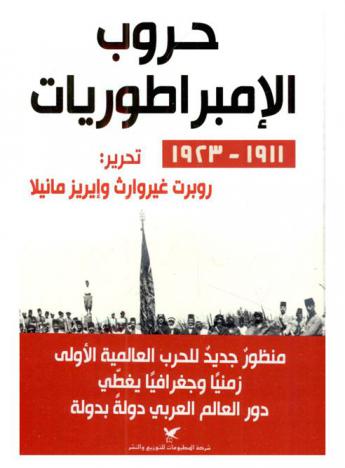
حروب الإمبراطوريات 1911-1923 /
یبدأ الكتاب بعرض القضیة العثمانیة من وجھة نظر مؤرخ الشرق الأوسط الحدیث مصطفى أكساكال متحدثا عن مختلف الشعوب التي تعایشت في إطار الإمبریالیة وعن ترحیل القادة العرب وعملیات الشنق العلني التي بدأت في العام 1915 في سوریا وجبل لبنان، بالإضافة إلى العوامل التي ساھمت في تضعیف شرعیة الإمبراطوریة العثمانیة مخصصا جزءا كبیرا للبلدان العربیة. وكذلك یسلط الضوء على أحداث عدیدة، منھا : استبدال الإمبراطوریة البلشفیة في روسیا بالإمبراطوریة العائلیة وضرب ألمانیا الباحثة عن مستعمرات أسوة بالدول الأخرى وصراع الیابان والصین من جھة وتفاھم فرنسا وبریطانیا على اقتسام المغانم والتراضي من جھة أخرى.
BOOK

The Central European Counter-Revolution: Paramilitary Violence in Germany, Austria and Hungary after the Great War
Gerwarth offers a new perspective on paramilitary violence that differs from previous investigations in two ways. He conceptualizes post-war Central Europe as a transnational theater of paramilitary ultra-violence in which a new type of warrior, born out of Central Europe's 'culture of defeat' and unrestrained by conventional military discipline and moral reservations, staged bloody rituals of retribution against real and imagined enemies. He engages closely with the cultural, social and psychological preconditions and group dynamics that shaped the activists' response to defeat and revolution. He also investigates the social origins and composition of ultra-violent paramilitary movements in Central Europe, it therefore places particular emphasis on the human agency of individuals.
Journal Article

Hannah Arendt's Ghosts: Reflections on the Disputable Path from Windhoek to Auschwitz
Historians on both sides of the Atlantic are currently engaged in a controversy about the allegedly genocidal nature of western colonialism and its connections with the mass violence unleashed by Nazi Germany between 1939 and 1945. The debate touches upon some of the most “sensitive” issues of twentieth-century history: the violent “dark side” of modern western civilization, the impact of colonial massacres on the European societies that generated this violence and, perhaps most controversially, the origins and uniqueness of the Holocaust.
Journal Article


Vectors of Violence: Paramilitarism in Europe after the Great War, 1917–1923
\"Paramilitary violence\" means military or quasi-military organizations and practices that either expanded or replaced the activities of conventional military formations. Sometimes this violence occurred in the vacuum left by collapsing states; on other occasions it served as an adjunct to state power; in yet others it was deployed against the state. It included revolutionary and counterrevolutionary violence committed in the name of secular ideologies as well as ethnic violence linked to the founding of new nation-states or to minority groups that resisted this process. It shared the stage with other violence, such as social protest, insurrection, terrorism, police repression, criminality, and conventional armed combat. Here, Gerwarth and Horne explore the origins, manifestations, and legacies of paramilitarism as it emerged between 1917 and 1923.
Journal Article

Hitler's Hangman
Reinhard Heydrich is widely recognized as one of the great iconic villains of the twentieth century, an appalling figure even within the context of the Nazi leadership. Chief of the Nazi Criminal Police, the SS Security Service, and the Gestapo, ruthless overlord of Nazi-occupied Bohemia and Moravia, and leading planner of the \"Final Solution,\" Heydrich played a central role in Hitler's Germany. He shouldered a major share of responsibility for some of the worst Nazi atrocities, and up to his assassination in Prague in 1942, he was widely seen as one of the most dangerous men in Nazi Germany. Yet Heydrich has received remarkably modest attention in the extensive literature of the Third Reich.
Robert Gerwarth weaves together little-known stories of Heydrich's private life with his deeds as head of the Nazi Reich Security Main Office. Fully exploring Heydrich's progression from a privileged middle-class youth to a rapacious mass murderer, Gerwarth sheds new light on the complexity of Heydrich's adult character, his motivations, the incremental steps that led to unimaginable atrocities, and the consequences of his murderous efforts toward re-creating the entire ethnic makeup of Europe.
eBook