
Catalogue Search | MBRL


Are you sure you want to remove the book from the shelf?

{{itemTitle}}
161
result(s) for
"Giacaman, Rita"
Sort by:

Reflections on the meaning of ‘resilience’ in the Palestinian context
Abstract
This reflective piece offers an alternative perspective to understanding the components which support the Palestinian capacity to endure and resist 100 years of violation and injustice, in context. It traces the development of the author’s understanding over time as part of the Palestinian community living under Israeli military rule in chronic warlike conditions. It combines this lived experience with research results which raise question about what resilience means, the difficulties encountered in its measurement, and the utility of the concept in explaining the Palestinian reality. It emphasizes the need to include the contextual experiences of those who live in wars and conflicts in future research and for knowledge production. It ends by stressing that it is not sufficient to offer humanitarian aid to the victims of wars and conflicts without also advocating for justice not only for Palestinians but also in other contexts of injustice worldwide.
Journal Article
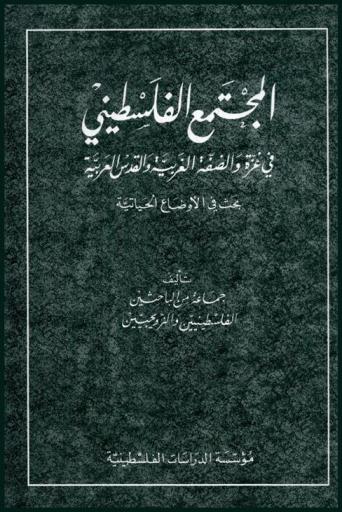
المجتمع الفلسطيني في غزة والضفة الغربية والقدس العربية : بحث في الأوضاع الحياتية = al-Mujtamaʻ al-Filasṭīnī fī Ghazzah wa-al-Ḍiffah al-Gharbīyah wa-al-Quds al-ʻArabīyah : baḥth al-awḍāʻ al-ḥayātīyah
يقدم هذا الكتاب دراسة معمقة عن الأوضاع المعيشية للفلسطينيين تحت الاحتلال، تستند إلى مقابلات أجريت مع عينة تمثيلية من الفلسطينيين في صيف سنة 1992. تغطي الدراسة جميع القضايا الأساسية، كالعمل، والصحة، والإسكان، وموارد الدخل، ووضع المرأة، والتعليم، والأوضاع الاجتماعية. وتهدف الدراسة إلى تقديم صورة موضوعية ودقيقة وغير متحيزة للأوضاع الاجتماعية ـ الاقتصادية للفلسطينيين، وبالتالي فهي تحتوي على دلالات مهمة بالنسبة إلى أمن المنطقة واستقرارها.
Book

The hidden burden of dysmenorrhea among adolescent girls in Palestine refugee camps: a focus on well-being and academic performance
Background
Dysmenorrhea (painful menstruation) is a condition that may have a profound effect on adolescent girls’ health status and well-being. It can impede their engagement in daily activities and hamper their regular school attendance. This study aims to explore the relationship between dysmenorrhea, well-being, and academic performance among adolescent girls living in Palestine refugee camps in the West Bank and Jordan.
Methods
We conducted a household survey between June and September 2019, with a total sample of 2737 adolescent girls 15 to 18 years old. Dysmenorrhea severity was assessed using the Working Ability, Location, Intensity, Duration of pain Dysmenorrhea scale (WaLIDD). The WHO-5 scale was used to evaluate the girls’ overall well-being. Menstrual academic disruption (MAD) was measured using a self-reported scale. Multiple linear regression models were employed to evaluate the association between dysmenorrhea, well-being, and academic performance. Directed Acyclic Graphs (DAGs) were employed to identify variables for control in regression models.
Results
The mean dysmenorrhea score was 6.6 ± 2.6, with 37.9% and 41.2% expressing moderate and severe symptoms, respectively. The mean WHO-5 score was 58.7 ± 25.1, and 34.9% reported a low well-being status. The mean MAD score was 3.1 ± 3.3. 26% reported missing school due to dysmenorrhea, 36% said dysmenorrhea impacted their ability to concentrate, and 39% were unable to study for tests, and complete homework. The first regression analysis showed a reduction of 1.45 units in WHO-5 score for each unit increase in dysmenorrhea. The second regression analysis showed a non-linear increase in MAD score for increasing dysmenorrhea. For each dysmenorrhea score less than 4 (mild) there was a modest increase in MAD scores (coefficient 0.08, p-value = 0.006), and for each dysmenorrhea score above 4 there was a stronger increase in MAD scores (coefficient 0.95,
p
< 0.001).
Conclusion
Dysmenorrhea poses significant challenges to the well-being and academic performance of adolescent girls living in Palestine refugee camps. Collaborative efforts and multifaceted approaches are crucial to address dysmenorrhea effectively. This involves research, targeted interventions, culturally sensitive strategies, and fostering a supportive environment that empowers girls to thrive academically and beyond.
Journal Article

Social and political determinants of health in the occupied Palestine territory (oPt) during the COVID-19 pandemic: who is responsible?
Since the spike, shorter lockdown measures have been instituted, but have been met with protests due to the lack of economic protection for the population. COVID-19 and mental health The stunted, under-resourced and fragmented health system drives the climate of uncertainty in accessing adequate health services and fuels wider uncertainty stemming from the political situation. [...]socially, as people were asked to stay physically away from their social support network—a foreign concept for Palestinians, who in times of political crises have drawn heavily on social solidarity. [...]the delivery of healthcare in the form of projects allows international actors to provide aid without questioning the status quo of Israeli occupation and involvement of Europe and the USA in the quagmire; that is, it allows aid provision without laying bare and questioning historical injustices to address the root causes of the Palestine Question and develop long-term, sustainable development of the health sector.
Journal Article

The political origins of health inequity: prospects for change
Despite large gains in health over the past few decades, the distribution of health risks worldwide remains extremely and unacceptably uneven. Although the health sector has a crucial role in addressing health inequalities, its efforts often come into conflict with powerful global actors in pursuit of other interests such as protection of national security, safeguarding of sovereignty, or economic goals.
Journal Article

The Profile of Non-Communicable Disease (NCD) research in the Middle East and North Africa (MENA) region: Analyzing the NCD burden, research outputs and international research collaboration
Despite the rising risk factor exposure and non-communicable disease (NCD) mortality across the Middle East and the North African (MENA) region, public health policy responses have been slow and appear discordant with the social, economic and political circumstances in each country. Good health policy and outcomes are intimately linked to a research-active culture, particularly in NCD. In this study we present the results of a comprehensive analysis of NCD research with particular a focus on cancer, diabetes and cardiovascular disease in 10 key countries that represent a spectrum across MENA between 1991 and 2018.
The study uses a well validated bibliometric approach to undertake a quantitative analysis of research output in the ten leading countries in biomedical research in the MENA region on the basis of articles and reviews in the Web of Science database. We used filters for each of the three NCDs and biomedical research to identify relevant papers in the WoS. The countries selected for the analyses were based on the volume of research outputs during the period of analysis and stability, included Egypt, Iran, Jordan, Kuwait, Lebanon, Oman, Qatar, Saudi Arabia, Turkey and the United Arab Emirates.
A total of 495,108 biomedical papers were found in 12,341 journals for the ten MENA countries (here we consider Turkey in the context of MENA). For all three NCDs, Turkey's output is consistently the highest. Iran has had considerable growth in research output to occupy second place across all three NCDs. It appears that, relative to their wealth (measured by GDP), some MENA countries, particularly Oman, Qatar, Kuwait and the United Arab Emirates, are substantially under-investing in biomedical research. In terms of investment on particular NCDs, we note the relatively greater commitment on cancer research compared with diabetes or cardiovascular disease in most MENA countries, despite cardiovascular disease causing the greatest health-related burden. When considering the citation impact of research outputs, there have been marked rises in citation scores in Qatar, Lebanon, United Arab Emirates and Oman. However, Turkey, which has the largest biomedical research output in the Middle East has the lowest citation scores overall. The level of intra-regional collaboration in NCD research is highly variable. Saudi Arabia and Egypt are the dominant research collaborators across the MENA region. However, Turkey and Iran, which are amongst the leading research-active countries in the area, show little evidence of collaboration. With respect to international collaboration, the United States and United Kingdom are the dominant research partners across the region followed by Germany and France.
The increase in research activity in NCDs across the MENA region countries during the time period of analysis may signal both an increasing focus on NCDs which reflects general global trends, and greater investment in research in some countries. However, there are several risks to the sustainability of these improvements that have been identified in particular countries within the region. For example, a lack of suitably trained researchers, low political commitment and poor financial support, and minimal international collaboration which is essential for wider global impact.
Journal Article
Exposure to violence and other determinants of health literacy among Palestinian adolescents: a cross-sectional study
Background
Understanding health literacy and its predictors is fundamental for adolescents to have healthy lives. This study investigated the association between exposure to violence and other factors with health literacy levels among Palestinian middle school students.
Methods
This cross-sectional study included middle school students. We used the validated Arabic version of the Health Literacy Assessment Scale for Adolescents to measure health literacy levels, and asked adolescents 11 questions to assess whether they were exposed to various forms of violence. We used binary logistic regression to identify the factors associated with each health literacy subscale.
Results
Among the 816 students, 20.4%, 30.5%, and 50.5% had low functional, confusion, and communication health literacy levels, respectively. Exposure to political violence was significantly associated with lower levels of functional health literacy (OR: 2.65, 95%CI: 1.71–4.08) and low confusion health literacy (OR: 1.96, 95%CI: 1.31–2.94). Domestic and school violence were associated with low levels of confusion health literacy (OR: 1.82, 95%CI: 1.30–2.55).
Conclusion
Exposure to different forms of violence predicted low levels of health literacy among Palestinian middle school students. This study identified the need for middle school students to acquire the skills required to analyse and integrate the health information they receive. Therefore, there is a need for regular interventions that target an increase in their critical health literacy.
Journal Article
Child abuse in the West Bank of the occupied Palestinian territory (WB/oPt): social and political determinants
Background
Child maltreatment is a global epidemic. It affects morbidity, mortality, social behavior, wellbeing, and quality of life of children. This study aims to assess prevalence of child abuse in the West Bank (WB) of the occupied Palestinian territory (oPt) and to determine some of its social and political associated factors.
Methods
We analyzed secondary data obtained from a cross sectional study conducted on a sample representing Palestinian children on the West Bank and using the International Society for the Prevention of Child Abuse and Neglect (ISPCAN) tool. The ISPCAN Child Abuse Screening Tool for parents (ICAST-P) questionnaire was completed by 1107 Palestinian mothers to estimate physical and emotional child abusive practices at home for children aged 0–12 years. Univariate, bivariate, and multivariate binary logistic regression analyses were performed using the SPSS® version 20 to assess prevalence and predictors of child abuse.
Results
Overall, around 34% of the West Bank-children were abused by their mothers. Results of the logistic regression analysis indicated that male children, children of younger mothers, children whose fathers were with low levels of education, children whose mothers reported low levels of parental warmth, and children whose parents were exposed to political violence were at greater risk of being abused.
Conclusions
Child abuse is highly prevalent among children of the Palestinian society in the West Bank. Policy makers need to pay more attention to this epidemic. The association between child abuse and political violence found in this study makes a just solution for Palestinians essential for improving the welfare of children and families.
Journal Article
Disability among Palestinian elderly in the occupied Palestinian territory (oPt): prevalence and associated factors
Background
Disability poses an important challenge to countries all over the world since it affects more than 15% of the global population. The disability prevalence is higher in developing countries compared to developed ones. Disability has negative consequences on health, wellbeing, and quality of life. The goal of this study is to assess the prevalence of disability and to determine some of its associated factors among Palestinian elderly in the occupied Palestinian territory (oPt), a country marked by a chronic lack of political, economic, and social stability which affect various aspects of the population’s life.
Methods
We used data from the Palestinian Central Bureau of Statistics (PCBS) disability survey conducted in 2011 using a nationally representative sample of the Palestinians living in the West Bank (WB) and Gaza Strip (GS). Data were collected using a standardized questionnaire developed and adopted by the World Health Organization (WHO) and the Washington Group (WG) for Disability Statistics, adapted to satisfy the Palestinian context.
Results
Overall, 31.2% of the Palestinian elderly 60 years and above reported one or more type of disability. Binary logistic regression with disability as the dependent variable showed that older people [OR = 2.88, 95% CI: 2.31–3.60], women [OR = 1.65, 95% CI: 1.33–2.04], illiterate people [OR = 2.37, 95% CI: 1.83–3.06], people reporting small family sizes with 1 to 2 members [OR = 1.69, 95% CI: 1.34–2.14], people who reported that they were not working at the time of the survey [OR = 4.59, 95% CI: 3.13–6.73], and Palestinian refugees [OR = 1.22, 95% CI: 1.04–1.42] were more likely to have a disability. However, residents of the Centre of WB were less likely to have disability compared to residents of the GS [OR = 0.46, 95% CI: 0.37–0.58].
Conclusions
The study found a high prevalence of disability among Palestinian elderly, as has been reported by the majority of studies performed in developing countries. However, results indicate that demographic and socioeconomic differences among the disabled should be taken into special consideration in setting policies and practices to improve the health and wellbeing of the disabled.
Journal Article